
GRS Scope Questions in a Textile Supply Chain: The Two Rolls That Share a Certificate and Not a Claim
A GRS certificate is a scope document before it is a product document. This note follows the questions a curtain buyer should ask between the certificate on file and the roll on the table, and closes on the wording that belongs in the approval note.

PRODUCTS
Products in this report
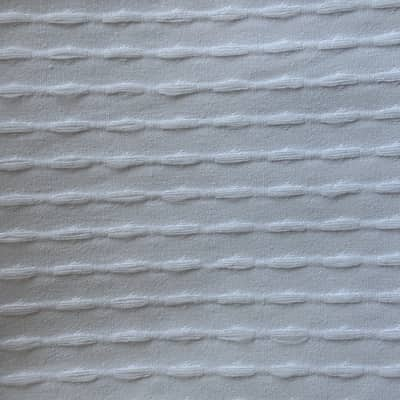
Vertical Dash Jacquard Fabric
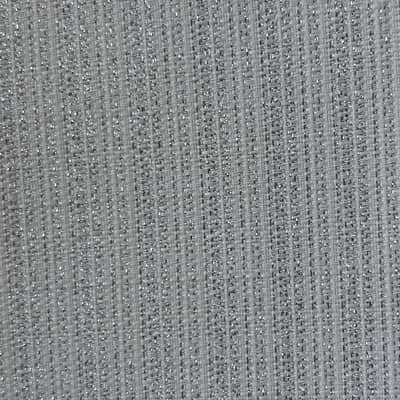
Metallic-Yarn Linen-Look Fabric
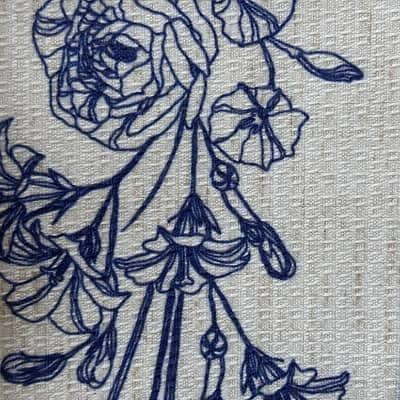
27-001-F Navy Floral Polyester-Linen Fabric
Two Rolls, One Certificate, Two Different Sentences
Two curtain rolls sit side by side in a sample room. Both are polyester-dominant, both are listed as printable, both would photograph as the same soft structured ground for the same guestroom. On the specification sheet the difference is one line: one roll is offered with recycled content under a GRS scope, the other is not.
The practical question that separates them is not weight, composition or hand. It is what sentence the buyer intends to print, and whether the paperwork behind that sentence reaches the roll in front of them. A certificate that covers a mill's processing scope does not automatically describe a particular fabric, and a fabric that contains recycled input does not automatically carry a claim the buyer can publish. Those two facts are often collapsed into one green tick on a sourcing sheet.
This matters more for curtains than for a flat apparel ground, because the same roll may be cut into a shower curtain, a drape and a tablecloth, sold under three different brand stories, and reordered next season. Each of those moments reopens the scope question.
What a Scope Document Is Actually For
A GRS scope certificate is a statement about a certified operation: which materials it is certified to handle, and in what capacity. It is a map of a facility's permission, not a passport for a shipment. The document that travels with a specific order is a different instrument, and the buyer who treats the first as the second will eventually write a claim the file cannot support.
The distinction has a practical shape. The scope certificate answers whether a supplier is inside the system. The transaction-level document answers whether this quantity of this product, in this order, is inside it. A buyer planning a hotel replacement cycle or a private-label season needs both, because the second order is where the claim usually has to be repeated without the original conversation.
We treat GRS as an available option rather than a default, and that framing is deliberate. Whether it belongs in a brief depends on what the buyer intends to say publicly, not on what the range can technically be made from.
Where the Chain Gets Thin
A textile chain has several handoffs between fibre and finished roll: yarn, greige, dyeing and finishing, printing, and in some programmes cutting and sewing. Each handoff is a place where certified input can be mixed, separated or lost from the record. The buyer's question is not whether every stage is certified. It is which stages are, and where the certified portion stops being traceable as a distinct stream.
For a curtain programme, the finishing and printing stages deserve particular attention, because that is where a base becomes the product the buyer actually sells. A printable base that carries recycled input through yarn and greige still has to be tracked through whatever print development follows. If the print is added outside the certified scope, the finished panel may not support the sentence the buyer had in mind.
This is a question to put to the supplier in writing, not a conclusion to assume in either direction. The answer will differ by base and by programme, and it should be recorded against the SKU rather than against the supplier relationship as a whole.
Two Verified Bases as Boundary Cases
The comparison becomes concrete when two rolls differ in construction and in print status at the same time. 27-DS001-E is a 195 GSM vertical dash jacquard, 90% polyester and 10% cotton, listed as printable. 27-1759-B is a 125 GSM metallic-yarn linen-look, 88% polyester and 12% metallic yarn, and it is not printable. Put them side by side and the scope conversation changes shape, because the questions a buyer would ask about each are not the same questions.
Vertical Dash Jacquard Fabric
Metallic-Yarn Linen-Look Fabric
On the heavier printable jacquard, the scope question follows the print. If a motif is developed on this base, the buyer needs to know whether the printed panel still sits inside the certified chain, and the answer belongs in the print development conversation rather than arriving with the invoice. On the lighter metallic-look base, the question is different: the surface is fixed, so the scope discussion is about the roll as delivered and about whether the metallic component is accounted for in the way the certification describes.
Neither roll is a recommendation here. They are two shapes of the same problem, and the buyer's job is to recognise which shape their brief has. A third base, 27-001-F-PRINT, a 150 GSM navy floral polyester-linen listed as printable, adds a further case: a base where print is already part of the product, so the scope and print questions arrive together rather than in sequence.
One limitation is worth stating plainly. We can describe the construction and print status of these rolls from our own records. We cannot, in this article, tell a buyer what any particular certificate covers for any particular order, because that depends on documents we have not been shown for that order. That is exactly the question to raise in the RFQ.
The Sample Test That Settles the Wording
A certificate review and a fabric sample are usually handled by different people in the buyer's organisation, and the gap between them is where claims go wrong. The useful test joins them: take the exact roll you intend to buy, and ask for the documentation that would accompany that roll on that order, then read the two together.
Three things are worth checking in that reading. First, whether the product description on the documentation matches the SKU and construction you are approving, not a family name. Second, whether the stage at which your print or finish is added sits inside or outside the described scope. Third, whether the wording you intend to publish is supportable by what the documents actually say, rather than by what the certificate's existence implies.
A retained reference panel from the approved roll is a useful companion to this, because the next delivery will be judged against it, and a claim repeated across seasons needs the same discipline as a shade or a surface.
What Belongs in the Approval Note
When the scope question is settled, the outcome should be written down where the next person will find it. A short note naming the SKU, the construction, the print status and the exact claim the documentation supports is more useful than a certificate filed in a folder with no link to the product.
Shaoxing Haowen Textile Clothing Co., Ltd. (the company behind the curtains.vip team) develops curtain, shower-curtain and table-linen fabrics, including custom print development and finished shower curtain OEM/ODM, so a scope question can be worked through against a specific base and a specific print rather than in the abstract. Where a buyer needs to compare constructions before that conversation, the fabric range at /products lists the verified SKUs with composition, weight and print status, and scope questions for a particular programme can be put through /contact.
The usual reference MOQ is 2,000 m per SKU, and orders below that are accepted with a slightly higher unit price, which matters here only because a small first order is often how a buyer tests a claim before committing a season to it. The usual reference MOQ is 2,000 m per SKU; orders below 2,000 m are also accepted, with a slightly higher unit price.
The RFQ Line That Prevents the Problem
For the RFQ, write the claim rather than the certificate. State the sentence the brand intends to publish, name the SKU it will appear against, and ask which documentation would accompany that order and which stage of the process it covers. A supplier who can answer that specifically is telling you something useful about how the second order will be handled.
Approval should then record the claim, the SKU, the construction and the print status together, and name who will check the next delivery against them. A scope question left in the certificate folder is a question that will be asked again by someone less prepared.
Questions buyers ask
Does a GRS scope certificate cover the fabric I am buying?
Not by itself. A scope certificate describes a certified operation and the materials it is certified to handle. The product and the order need their own documentation, and the buyer should ask for the documents that would accompany the specific SKU on the specific order.
Can a printable base lose its scope when a print is added?
That depends on where the print is added and whether that stage sits inside the certified chain. It is a question to put to the supplier in writing for the exact base and programme, not a general rule.
How does this affect a small first order?
The usual reference MOQ is 2,000 m per SKU, and orders below that are accepted with a slightly higher unit price. A smaller first order is a reasonable way to test the documentation before committing a full season to a claim.