
A Jacquard and Linen Look Fabric Assortment, Built From One Planning Brief
This is a planning scenario, not a client case. A mid-size importer needs a jacquard and linen look fabric assortment for a shower-curtain and table-linen programme, and has not yet decided how much of the range should be printable. The note follows the brief from requirements to shortlist, sample plan, quotation inputs and approval.

PRODUCTS
Products in this report
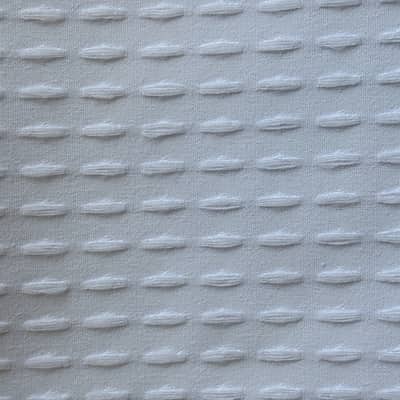
Raised Dash Jacquard Fabric
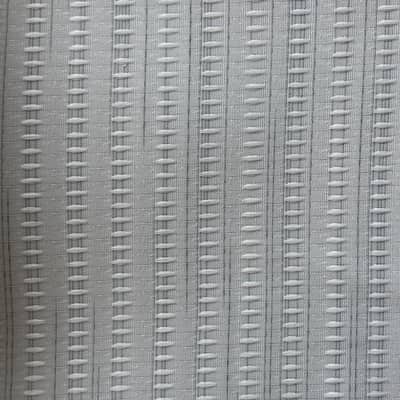
Ladder-Stripe Jacquard Fabric
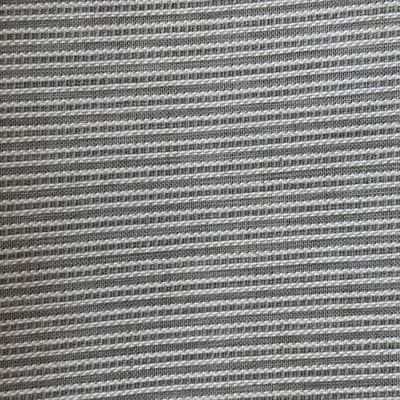
Vertical-Channel Polyester-Linen Fabric
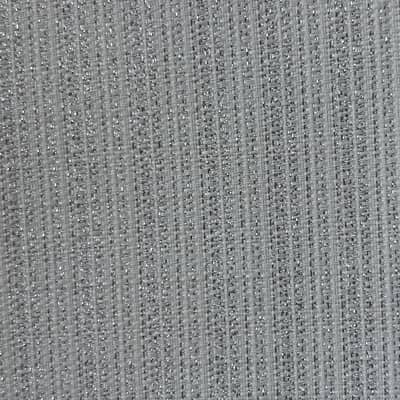
Metallic-Yarn Linen-Look Fabric
The Brief: Two Surfaces, One Range, One Unresolved Question
A mid-size home-textile importer is planning a shower-curtain and table-linen range for the coming season. The brief is deliberately narrow. The buyer wants two surface families in the assortment: a jacquard group that carries visible structure, and a linen look group that reads quiet and natural from a distance. Both families will be shown to the same retail accounts, so they have to sit together without one making the other look cheap.
What is not settled is print. The buyer has not decided whether the jacquard side of the range should be printable, whether the linen look side should carry the seasonal colourway, or whether the two families should split the work. That single unresolved question changes which rolls belong on the shortlist, because a printable base and a non-printable base can look nearly identical on a specification sheet and behave completely differently once a motif is involved.
This is a planning scenario, not a real client case. The numbers below are the kind a buyer would bring to a first range meeting: an end use, a desired appearance, and a decision still open.
Why the Print Question Sits Before the Shortlist
In a mixed jacquard and linen look assortment, print status is not a finishing detail. It decides how the range absorbs change. A jacquard with raised structure is often chosen precisely because the structure itself is the design; it can earn its place on surface alone. A linen look base is usually chosen for calm, and calm surfaces are the ones a buyer most often wants to print later, when a colourway or a private-label story arrives.
That creates a useful split. If the jacquard family is allowed to be non-printable, the buyer gains structure and can stop worrying about ink behaviour on those SKUs. If the linen look family is required to be printable, the buyer keeps a route to future colourways but narrows the linen look options to bases that have been developed to accept ink.
The reverse arrangement is also workable, but it has to be chosen rather than inherited. A printable jacquard and a non-printable linen look would put the range's future flexibility on the structured side, which is the harder surface to print cleanly. The buyer should decide which family carries the change, then shortlist inside that decision.
Forming the Shortlist: Structure on One Side, Calm on the Other
With the print question framed, the shortlist can be built from verified constructions rather than from photographs. On the jacquard side, 27-DS001-F Raised Dash Jacquard Fabric is a 100% polyester base at 185 GSM with a raised dash structure and printable status. It is the kind of roll that answers the brief's structural requirement directly: the surface does the work, and the printable flag keeps a later colourway open. A second jacquard option, 27-09-08 Ladder-Stripe Jacquard Fabric, sits much lighter at 120 GSM, also 100% polyester and also printable. It would suit a lighter hanging product, but in a range where the jacquard family is meant to read substantial, the weight gap between these two is itself a decision the buyer has to make.
Raised Dash Jacquard Fabric
Ladder-Stripe Jacquard Fabric
On the linen look side, 27-001-1-A Vertical-Channel Polyester-Linen Fabric is a 93% polyester / 7% linen base at 165 GSM with a woven vertical channel and printable status. It carries the linen look register the brief asks for and keeps the print route open. A contrasting linen look roll, 27-1759-B Metallic-Yarn Linen-Look Fabric, is 88% polyester with 12% metallic yarn at 125 GSM and is not printable. It would give the range a light-catching accent, but it cannot absorb a future print programme.
Vertical-Channel Polyester-Linen Fabric
Metallic-Yarn Linen-Look Fabric
That contrast is where a shortlist becomes real. 27-1759-B might be rejected for the printable linen look slot and still be selected for a separate accent role, because its metallic yarn is the reason to include it. Rejection and selection are not the same judgement in a mixed assortment; a roll can fail one job and pass another.
The Sample Plan: What Each Candidate Has to Prove
A shortlist is only useful if the sample plan tests the question that is still open. For this brief, the sample plan has three parts.
First, the jacquard candidates should be viewed as they will hang, not flat. Raised structure changes how light crosses a surface, and a dash or ladder pattern that reads evenly on a table can compress where the cloth folds. The buyer should ask for a panel from the same roll, hung or draped, under the lighting the retail account actually uses.
Second, the printable linen look candidate should be sampled with the intended motif, not a generic swatch. Print status is a capability statement; it does not promise that a specific motif will register cleanly on a specific surface. If the seasonal colourway is already known, it belongs in the sample request.
Third, the accent candidate should be sampled beside the calm linen look base, because a metallic yarn is judged in relation to what sits next to it. A silver accent that looks restrained alone can read loud when placed against a quiet natural register. That is a range decision, not a single-roll decision.
What Goes Into the Quotation Request
Once the sample plan is agreed, the quotation inputs should follow the shortlist rather than the other way round. For each candidate the buyer keeps, the request should name the exact SKU, the GSM, the composition and the print status, and state the intended end use. Those four items are what make two quotations comparable; without them, a lower unit price may simply describe a different roll.
Quantity is the other input. The usual reference MOQ is 2,000 m per SKU, and orders below 2,000 m are accepted with a slightly higher unit price. In a mixed assortment this matters more than in a single-SKU order, because a pilot range spread across four or five candidates will not reach the reference quantity on any one of them. The buyer should expect that and price it into the pilot rather than discover it at the order stage.
The quotation should also state whether the price holds for a repeat order on the same specification. A range that cannot be reordered at the same numbers is not a range; it is a one-season purchase.
Approval, and the Information Still Missing
Approval in this brief should name the SKU, the GSM, the composition and the print status for every roll that survives, and it should retain a reference panel from the approved roll. That panel is the only reliable comparison for the next delivery, particularly where a surface is structured or carries a metallic accent.
What the brief still needs from the buyer is narrower than it looks. It needs one answer: which family in the assortment is expected to carry the next print, colourway or logo programme. If the answer is the linen look family, the printable candidate 27-001-1-A is the anchor and the metallic accent is a supporting roll. If the answer is the jacquard family, the weight gap between 27-DS001-F and 27-09-08 has to be settled first, because the two would carry a print programme very differently.
That is the completed brief: a two-family assortment, a shortlist built on verified constructions, a sample plan that tests the open question, and one decision left with the buyer. When the print-carrying family is named, the range can move from planning to sampling without reopening the structure. Our team at curtains.vip works from verified SKUs across curtain, shower-curtain and table-linen fabrics, including custom print development and finished shower curtain OEM/ODM, and the product range can be reviewed at /products or discussed through /contact. Shaoxing Haowen Textile Clothing Co., Ltd. (the company behind the curtains.vip team) develops these fabrics from Shaoxing, Zhejiang, China.
Questions buyers ask
Can a non-printable jacquard still belong in a range that will be printed later?
Yes, if the range has a separate printable base to carry the print. A non-printable jacquard can earn its place on structure alone, but the buyer should name which SKU will absorb the future colourway before the range is approved, rather than assuming the structured surface will take ink.
Why sample the metallic linen look roll beside the calm linen look base rather than alone?
A metallic yarn is judged in relation to what sits next to it. Sampled alone it may look restrained; placed against a quiet natural register it can read much louder. Since both rolls would appear in the same assortment, the comparison is the relevant test.
How should a pilot range be priced when it spreads across several SKUs?
The usual reference MOQ is 2,000 m per SKU, and orders below that are accepted with a slightly higher unit price. A pilot spread across four or five candidates will not reach the reference quantity on any single SKU, so the buyer should expect the higher unit price on the pilot and treat it as part of the validation cost.