
Hospitality Curtain Fabric Selection: Why Two Rolls That Look Identical Can Fail Differently
Two rolls can look identical on a supplier's website yet fail differently in a hotel guestroom. This article breaks down the failure modes in hospitality curtain fabric selection and how to prevent them with a sharper specification.

PRODUCTS
Products in this report
The Mistake That Costs a Reorder
A buyer for a mid-sized hotel group once approved a curtain fabric after comparing two swatches side by side. Both were grey, both had a similar hand feel, and both were quoted at the same price point. The order was placed, the curtains were sewn, and within three months the property manager reported that the fabric had started to pill near the grommets. The supplier pointed to the specification sheet: the GSM matched, the composition was within tolerance, and the fabric had passed a basic drape test. What the sheet did not show was that one roll was a plain weave with a soft finish, while the other was a slub weave with a slightly looser yarn structure. The difference was invisible in a swatch but obvious in daily use.
Hospitality curtain fabric selection rarely fails at the level of the obvious numbers. It fails in the interaction between construction, finish, and the way a curtain is actually used in a guestroom. A fabric that performs well in a sample room can disappoint in a corridor with constant sunlight, or in a bathroom where humidity cycles stress the yarn. The buyer's job is not to pick a fabric that looks right; it is to specify a fabric that will not fail in the conditions it will face.
The Failure Modes That Hiding in a Swatch
The most common failure modes in hospitality curtain fabric are not dramatic. They are gradual and operational: pilling on the surface, seam slippage at the hem, colour change in the first few washes, and a drape that looks fine on a hanger but collapses when the curtain is drawn. Each of these failures points to a different root cause.
Pilling is often a yarn or finish issue. A slub yarn with a protruding fibre can pill faster than a tightly twisted filament yarn, even at the same GSM. Seam slippage is a construction issue: a loose weave allows the yarns to shift when the fabric is sewn or laundered. Colour change can be a dye or print issue, but it can also be a fibre issue if the blend contains a component that absorbs dye differently. Drape failure is usually a weight and finish issue, but it can also be a weave issue if the fabric is too stiff or too floppy for the intended heading style.
The point is that a swatch cannot reveal these failure modes. A swatch shows you the surface, the colour, and the hand feel. It does not show you how the fabric behaves under tension, after laundering, or in a humid environment. The only way to detect these issues is to test the fabric under conditions that approximate real use, and to specify the construction details that control them.
Why GSM Alone Misleads
GSM is the first number buyers reach for, and it is a useful screening tool. But two fabrics at the same GSM can be completely different products. A 165 GSM polyester-linen slub and a 165 GSM polyester-cotton metallic weave are both 165 grams per square metre, but they have different yarn structures, different surface characteristics, and different print behaviour. The slub has a visible irregular texture that catches light; the metallic weave has a flat, reflective surface that can glare under certain lighting. In a hospitality setting, that difference matters: one fabric reads as relaxed and natural, the other as a deliberate accent.
The GSM number also does not tell you how the fabric was constructed. A 120 GSM waffle weave has a three-dimensional structure that makes it feel heavier than a flat 120 GSM plain weave. A 225 GSM waffle is a completely different product from a 225 GSM plain weave, even if both are 100% polyester. The GSM is a starting point, not a specification. To select a fabric that will not fail, you need to know the weave structure, the yarn type, and the finish.
The Hidden Variable: Printability
Printability is a binary that is often overlooked in hospitality curtain fabric selection. A fabric is either suitable for printing or it is not, and the difference is not visible in a swatch. A metallic yarn, for example, creates a surface that does not accept ink evenly. The polyester-cotton silver metallic fabric in our range is not printable, and that is not a defect; it is a design choice. If a buyer orders a printed design on a non-printable base, the result is a muddy, uneven pattern that fails the brand standard.
Printability is determined by the fibre composition and the surface structure. A smooth, tightly woven polyester base takes ink differently from a slubby linen blend. A textured waffle weave can distort a fine-line pattern. The only way to know if a fabric is printable is to check the specification, and the only way to know if it prints well is to run a strike-off on the exact base you intend to use.
For hospitality projects, printability is often a requirement, not an option. A branded pattern, a subtle stripe, or a custom design all need a base that can carry the ink without bleeding or losing detail. If you are comparing two fabrics that look similar, check the print status before you commit. A non-printable base will limit your design options later.
How to Detect the Difference Before You Order
The practical way to detect the difference between two similar-looking fabrics is to test them under conditions that mimic real use. This does not require a laboratory; it requires a sample and a few simple checks.
First, examine the weave structure with a magnifying glass or a loupe. Look at the yarn twist and the density of the weave. A slub yarn will have visible thick and thin sections; a tightly twisted filament yarn will look uniform. Second, check the drape by hanging a full-width sample from a rod. A fabric that looks flat on a table will reveal its true behaviour when it hangs. Third, run a simple seam-slippage test: sew a seam and pull it gently to see if the yarns shift. Fourth, if you plan to print, request a strike-off on the exact base and check the colour accuracy and line definition.
These checks are not expensive and they do not require a specialist. They are the kind of verification that separates a buyer who is selecting a fabric from a buyer who is gambling on a swatch. The cost of a failed order is far higher than the cost of a few samples and a day of testing.
A Specification Checklist for Hospitality Curtains
Before you send an inquiry, put the following into your specification. This is the minimum that will protect you from the failure modes described above.
Weave structure: plain, slub, waffle, jacquard, or metallic. Name the construction, not just the look.
Yarn type: filament, spun, or textured. This affects pilling and drape.
Finish: soft, crisp, or water-repellent. A finish can change the hand feel and the way the fabric behaves.
Print status: printable or not printable. If you need printing, confirm the base is suitable.
GSM and composition: these are necessary but not sufficient. Use them to screen, not to decide.
- Weave structure: plain, slub, waffle, jacquard, or metallic
- Yarn type: filament, spun, or textured
- Finish: soft, crisp, or water-repellent
- Print status: printable or not printable
- GSM and composition: screening numbers, not decision numbers
- Sample requirement: full-width sample for drape and seam tests
Two Fabrics, Two Different Decisions
To make this concrete, consider two fabrics from the curtains.vip range. The 27-MA Green Polyester-Linen Slub Fabric is a 95% polyester, 5% linen slub at 165 GSM, and it is printable. The Polyester-Cotton Silver Metallic Fabric A is an 85% polyester, 10% cotton, 5% metallic yarn weave, also at 165 GSM, but it is not printable. On a spec sheet, they look similar: both are 165 GSM and both are suitable for curtains. In a guestroom, they are different products. The slub has a natural, textured surface that softens light and accepts a custom print. The metallic weave has a reflective surface that catches the eye and cannot be printed.
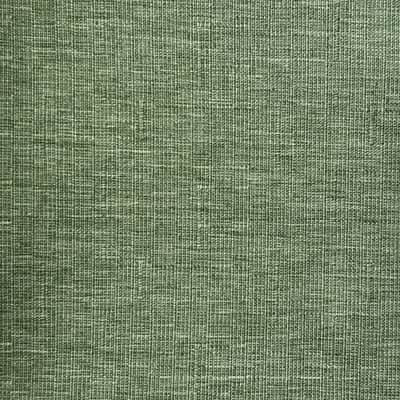
Green Polyester-Linen Slub Fabric
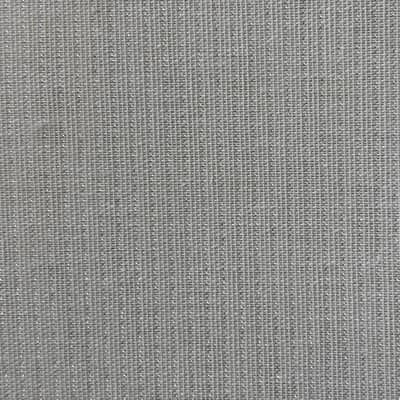
Polyester-Cotton Silver Metallic Fabric A
If your project calls for a quiet, natural backdrop with a subtle pattern, the slub is the right choice. If you want a feature wall with a metallic glint and no print, the metallic weave is the right choice. The failure mode occurs when a buyer chooses the metallic weave for a printed design, or the slub for a project that needs a flat, uniform surface. The specification sheet should name the SKU, the GSM, the composition, and the print status, so that the decision is based on evidence, not on a swatch that looks similar.
Shaoxing Haowen Textile Clothing Co., Ltd. (the company behind the curtains.vip team) supplies both of these fabrics, and we publish the GSM, composition, and print status for each SKU. That transparency is part of our approach to helping buyers avoid the mistake of comparing swatches instead of specifications.
Questions buyers ask
Why do two fabrics with the same GSM behave differently in a hotel curtain?
GSM measures weight per square metre, but it does not capture weave structure, yarn type, or finish. A slub weave and a metallic weave at the same GSM have different surfaces, drape, and print behaviour. Always specify the construction details, not just the weight.
How can I test if a fabric will print well before ordering bulk?
Request a strike-off on the exact base you intend to use. Check the colour accuracy and line definition. Also verify the fabric's print status in the specification, as some bases, such as those with metallic yarns, are not printable.
What is the most common failure mode in hospitality curtain fabric?
The most common failures are gradual and operational: pilling, seam slippage, colour change, and poor drape. These are rarely visible in a swatch and are caused by yarn structure, weave tightness, and finish. Testing a full-width sample under real conditions is the best prevention.
What should I include in a hospitality curtain fabric specification?
Include the weave structure, yarn type, finish, print status, GSM, and composition. Name the exact SKU and request a full-width sample for drape and seam tests. This prevents the mistake of comparing swatches that look similar but perform differently.