
Hotel Opening Textile Procurement Timeline: The Base-Cloth Lock That Sits Before the Order
A hotel opening date is fixed long before the curtain and shower-curtain rolls are specified. This field note works through the base-cloth lock that sits inside the procurement timeline, compares verified jacquard and slub bases, and closes on the sample approval that has to happen before the order is placed.

PRODUCTS
Products in this report
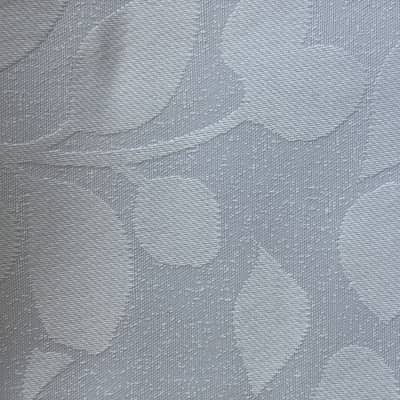
56 Large Leaf Jacquard Fabric
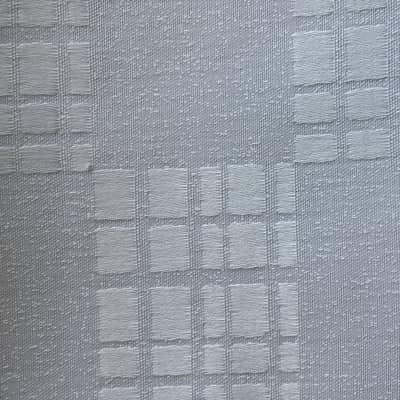
57 Large Square Jacquard Fabric
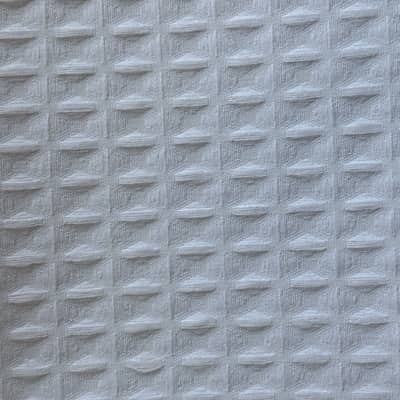
Diamond Jacquard Fabric
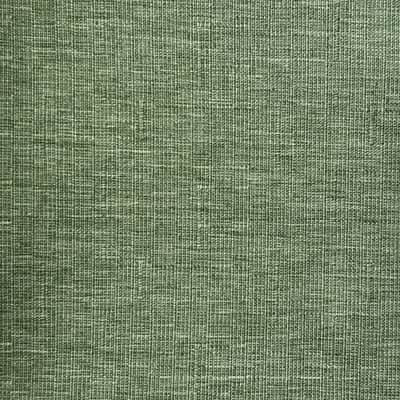
Green Polyester-Linen Slub Fabric
Two Rolls on the Same Page, Two Different Opening Risks
56# and 57# sit next to each other in a sample room and most buyers would file them together. Both are 100% polyester, both are 160 GSM, both carry a large jacquard motif and both are listed as printable. On a screen they are near-interchangeable. In a hotel opening programme they are not, because the question that separates them is not weight or composition. It is which one the property can still reorder in the same surface two years after the opening date, when the first replacement rooms come due.
56 Large Leaf Jacquard Fabric
57 Large Square Jacquard Fabric
That question belongs to the buyer, not the mill. A hotel opening date is fixed by the developer, the operator and the brand standard long before anyone signs a fabric approval. The procurement timeline is usually drawn backwards from that date, and the base-cloth decision is the step that has to be locked early enough to survive it. Get the lock wrong and the risk does not appear at installation. It appears at the first reorder, when the roll that was approved is no longer the roll that can be supplied.
What the Opening Calendar Actually Constrains
An opening programme compresses three normally separate decisions into one window: the design intent, the brand standard and the procurement route. The design team wants the guestroom to read as a deliberate update. The operator wants a surface that still presents properly after repeated service. Procurement wants a specification that can be repeated across room types without a second approval cycle. Those three pressures do not resolve at the same moment, and the base cloth is where they collide.
The practical constraint is not the lead time on the first order. It is the reorder window. A hotel that opens with 180 rooms will start replacing textiles in the first tranche of rooms well before the whole property is due for a refresh, and the replacement roll has to match the original surface under the property's own lighting. If the base was chosen because it photographed well rather than because it could be repeated, the opening date is met and the replacement date is missed.
Where the Base-Cloth Lock Belongs in the Sequence
The lock is the point at which the buyer commits to a specific base, a specific print status and a retained reference panel from the approved roll. It sits after the design intent is settled and before the print file, the colourway or the logo programme is released, because a base that cannot carry the next chapter is not a shortlist candidate no matter how well it reads on the opening day.
Two variables decide whether the lock will hold. The first is print status: whether the roll can accept ink at some point in its commercial life. The second is surface repeatability: whether the same construction can be supplied again at the same weight and the same face. A jacquard motif is a construction decision, and construction decisions are easier to repeat than finishing effects that depend on a particular run. That is why the lock conversation is usually about structure, not colour.
Three Verified Bases and the Opening Role Each Can Carry
56# and 57# are the two large-motif jacquards at 160 GSM, both 100% polyester and both printable. They suit a guestroom where the curtain is meant to carry visible structure without a print, and they leave the print option open for a later logo or colourway programme. The limitation to validate is the motif scale itself: a large leaf or square repeat has to be checked against the actual window width and the finished drop, because a motif that reads as a balanced all-over on a flat panel can read as a partial repeat once the curtain is gathered.
27-DS001-A is a diamond jacquard at 180 GSM, 100% polyester and printable, with a raised texture that sits heavier in the hand than the two 160 GSM rolls. It suits a public-area or corridor curtain where the surface has to hold a shadow and read from a distance. The question to validate is whether the raised diamond still reads as intended under the property's own lighting, because a texture that depends on shadow behaves differently in a bright corridor than in a sample room.
27-MA is a 165 GSM polyester-linen slub, 95% polyester with 5% linen, and printable. It suits a quieter guestroom where the surface should read natural and slightly irregular rather than structured. The limitation is directional: a slub is not a uniform face, so the approval has to state which way the cloth will be cut and hung, and the reference panel has to come from the same roll.
The Sample Test That Replaces the Spec Sheet
A flat swatch cannot answer the opening question. The test that does is a full-drop panel from the shortlisted roll, hung on a rail at the width the finished curtain will actually be pulled to, under the lighting of the room it is bought for, with a reference panel retained from that same roll. That panel is the only reliable comparison for the replacement order, and it is the piece of evidence the procurement timeline usually forgets to schedule.
Run the test against the room type, not the range. A guestroom curtain is viewed at close range in soft light; a corridor curtain is viewed at distance under harder light; a bathroom curtain is viewed close up in a small, bright, hard-surfaced room. The same 160 GSM jacquard can pass one of those tests and fail another, and the failure is a lighting and viewing-distance problem rather than a fabric fault.
Where Our Own Search Rows Sit in This
Searches for hospitality and contract textile terms have reached curtains.vip, but the volumes involved are small and the rows describe our own site rather than the wider market. They tell us which questions buyers bring to our catalogue. They do not establish market size, market share, growth or direction, and we do not treat them as evidence of a trend. The useful signal is narrower: buyers arrive with an opening date and a room count, and they are trying to work out which decisions have to be locked before the order is placed.
That is an inference from our own enquiry pattern, not a market forecast. It is worth stating plainly because an opening timeline is a commercial document, and a procurement team that mistakes a supplier's site traffic for demand evidence will build its schedule on the wrong assumption.
The Acceptance Decision and the RFQ Note
Approval should name the SKU, the GSM, the composition and the print status, and it should retain a reference panel from the approved roll. Where the property expects a future logo or colourway programme, the printable status of the base belongs in the same approval, because a base that reads correctly and cannot carry the next chapter will force a re-specification at the worst possible moment in the opening calendar.
The usual reference MOQ is 2,000 m per SKU, and orders below that are accepted with a slightly higher unit price, which lets a single room type or a pilot floor be tested before a property-wide commitment. Shaoxing Haowen Textile Clothing Co., Ltd. (the company behind the curtains.vip team) develops curtain, shower-curtain and table-linen fabrics, including custom print development and finished shower curtain OEM/ODM, so a single opening programme can be worked across the three end uses against one specification conversation. When the shortlist is ready, the RFQ should carry the SKU, the GSM, the composition, the print status, the finished drop and the room type, and the sample request should ask for a panel from the exact roll rather than a similar one. The verified range at /products lists those facts per roll, which is enough to decide which bases deserve a panel and which do not. The usual reference MOQ is 2,000 m per SKU; orders below 2,000 m are also accepted, with a slightly higher unit price.
Questions buyers ask
How early in a hotel opening programme should the base cloth be locked?
Early enough that the print file, colourway or logo programme is released against a base that has already been tested in position. The lock has to happen before artwork is finalised, because a base that cannot carry the next chapter will force a re-specification later in the calendar.
Does a 160 GSM jacquard and a 180 GSM jacquard behave differently in a guestroom?
They can. 56# and 57# sit at 160 GSM with a large motif, while 27-DS001-A sits at 180 GSM with a raised diamond texture. The heavier roll holds more shadow and reads further, which suits a corridor or public area, while the lighter rolls suit a guestroom where the surface should not dominate the room.
What should the sample approval record for an opening order?
The SKU, the GSM, the composition, the print status and a retained reference panel from the approved roll. Without the panel, the replacement order is judged against memory rather than against evidence.