
Hotel Bathroom Textile Assortment Planning: What the Cloth Has to Do Between Two Towel Rails
A hotel bathroom is a small, bright, hard-surfaced room, and the shower curtain is the largest soft surface in it. This field note reads the cloth the way a guest does, then moves to what a buyer has to measure, test and price before the assortment is signed off.

PRODUCTS
Products in this report
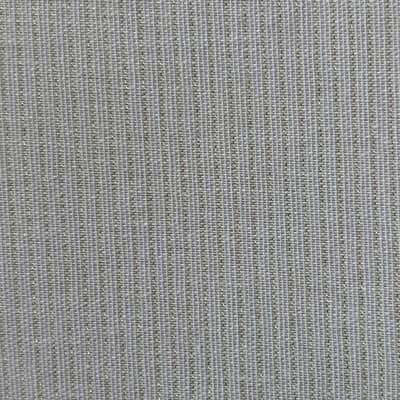
Polyester-Cotton Gold Metallic Fabric A
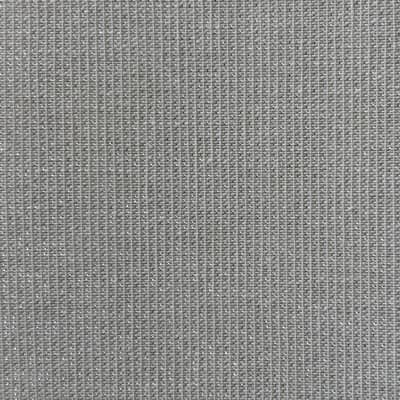
Polyester-Cotton Silver Metallic Fabric B
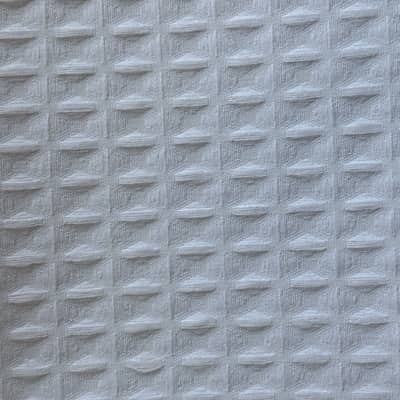
Diamond Jacquard Fabric

Fine Grid Jacquard Fabric
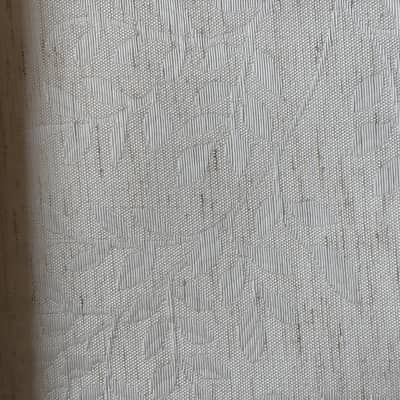
55 Large Floral Jacquard Fabric
A Metre of Cloth, Held Up in a Bathroom
Hold a metre of jacquard up against a bathroom window and the weave shows you everything at once: the raised cells catching the light, the flat ground between them, the slight shadow where the pattern repeats. Take the same cloth into the room and hang it on a rail, and the reading changes. The bathroom is small, the light is hard and comes from one side, and the guest stands close enough to see the yarn.
That shift is the whole problem in hotel bathroom textile assortment planning. The bathroom is the only room in a property where the guest is alone, close to the textile, and looking at it under a bright, unflattering light. A curtain that reads as quiet structure in a sample room can read as busy noise at 60 centimetres. A surface that photographs as soft can show its weave as a grid.
The Bathroom Is Not a Small Bedroom
Most hotel textile ranges are built around the guestroom window, and the bathroom is treated as an afterthought: take the guestroom neutral, add a plain white option, move on. That logic misses the fact that the two rooms put different demands on the same cloth.
A guestroom curtain is seen from across the room, usually against daylight, and it is expected to sit still. A shower curtain is seen from close range, against a hard wall, in a room with a mirror that doubles every surface. It is also handled: pulled, pushed, gathered and left bunched at one end of the rail for most of its service life. The drape that matters is not the full drop, it is the gathered state, which is the state the guest actually sees.
This is why assortment planning for the bathroom tends to fail in a specific way. The range looks varied on a catalogue page, where every roll is photographed flat and evenly lit. In the room, several of those rolls collapse into the same visual answer: a mid-tone surface with a faint texture that disappears at close range. The assortment has width but no separation.
What the Cloth Has to Do in Three Positions
A bathroom textile is judged in three positions, and they do not reward the same construction.
Gathered on the rail is the position that dominates service life. Here, a structured jacquard with a raised motif holds volume and reads as deliberate even when bunched, because the pattern continues to break the light. A flat plain weave in the same weight tends to compress into a soft mass with no readable surface.
Hanging at full drop, seen from the doorway, is the position the operator photographs and the position the guest registers first. Here the question is whether the surface carries across the width of the room without becoming a pattern the guest has to interpret. Large motifs read as a statement; fine grids and fine textures read as a material.
Folded or stacked in housekeeping is the position nobody plans for and everybody pays for. A curtain pulled from a stack and hung shows the crease line for the first hour of a stay. A cloth that creases hard in the fold is a cloth the housekeeping team notices before the guest does.
Where Weight Sits in the Decision
Weight is the number buyers reach for first, and in the bathroom it is the least decisive of the measurable figures. A 160 GSM jacquard and a 190 GSM jacquard can read almost identically on a rail, because what the guest sees is the surface structure, not the mass behind it.
Weight starts to matter at the two ends of the range. Below roughly 150 GSM, a shower curtain can feel thin in the hand at close range, and the cloth has less body to hold a gathered fold. Above roughly 200 GSM, the cloth can become stiff enough that it stands away from the rail rather than falling, which reads as a hotel laundry problem rather than a design choice. Between those ends, the buyer is usually choosing a surface, and the GSM figure is confirming that the surface has enough body to behave.
The practical consequence for assortment planning is that weight should not be the axis along which the bathroom range is organised. If two rolls in the range differ only by 20 or 30 GSM and share a surface family, they are not two assortment positions. They are one position with a duplicated SKU.
Print Status Is a Range Decision, Not a Product Decision
Whether a base is printable changes what the assortment can do later, and it is the one attribute that is genuinely hard to retrofit. A printable base can carry a property's own mark, a retail programme's seasonal artwork or a private-label colourway. A non-printable surface is fixed at the point of weaving, and its value in the range is that it needs no print programme at all.
Metallic constructions sit at that fixed end. The Polyester-Cotton Gold Metallic Fabric A, at 165 GSM in 85% polyester, 10% cotton and 5% metallic yarn, is not printable, and the Polyester-Cotton Silver Metallic Fabric B, at 160 GSM in 83% polyester, 10% cotton and 7% metallic yarn, is not printable either. Their contribution to a bathroom assortment is a light-catching accent surface that a plain or jacquard base cannot imitate, and the trade-off is that the accent cannot be recoloured by print.
Polyester-Cotton Gold Metallic Fabric A
Polyester-Cotton Silver Metallic Fabric B
The printable end is broader. The 27-DS001-A Diamond Jacquard Fabric, 100% polyester at 180 GSM, and the 27-DS001-H Fine Grid Jacquard Fabric, 100% polyester at 190 GSM, are both printable, which means a property or a programme can put its own direction onto a surface that already has structure. The 55 Large Floral Jacquard Fabric, 95% polyester with 5% linen at 165 GSM, is also printable, and its linen content gives the surface a slightly different hand from the all-polyester jacquards.
Read as assortment positions rather than SKUs, those five rolls describe three jobs: a structured printable surface, a finer printable surface, and a non-printable accent. A bathroom range that holds all three can answer a property brief, a retail brief and a private-label brief without adding a fourth roll that does the same work as the second.
What the Buyer Has to Measure, Test and Price
Once the surface is chosen, three things have to leave the sample room as numbers. The first is the specification itself: SKU, GSM, composition and print status, written down and attached to the approved panel. The second is the gathered width, because a curtain that has to bunch at one end of the rail needs enough cloth to do it without pulling flat. The third is the fold behaviour, which is a housekeeping cost before it is a guest complaint.
Pricing follows the same structure. A bathroom range that mixes printable and non-printable bases is not priced on a single ladder, because the print programme sits on some rolls and not others. Where a property wants to test a single bathroom type before committing to a group-wide specification, the usual reference MOQ of 2,000 m per SKU applies, and orders below that are accepted with a slightly higher unit price. That is a planning fact, not a barrier, and it belongs in the range document rather than in a separate negotiation. The usual reference MOQ is 2,000 m per SKU; orders below 2,000 m are also accepted, with a slightly higher unit price.
Curtains.vip develops curtain, shower-curtain and table-linen fabrics, including custom print development and finished shower curtain OEM/ODM, so a bathroom brief can be worked against a range that also covers the other textiles in the same project. Shaoxing Haowen Textile Clothing Co., Ltd. (the company behind the curtains.vip team) supplies these rolls from Shaoxing, Zhejiang, China. Our own search rows show that bathroom and hotel textile questions reach this site, but the volumes are small and describe our own traffic, not the wider market, so we treat them as a record of what buyers ask us rather than as evidence of where the market is going.
The Sample Question That Settles the Bathroom Range
Before the assortment is signed off, one question does most of the work: can the supplier show the shortlisted base gathered on a rail at the width the curtain will actually be pulled to, under the property's own bathroom lighting, and retain a reference panel from that same roll for the next order?
A flat swatch cannot answer that. A rail test can. If the gathered surface still reads as a deliberate material rather than a compressed mass, the roll belongs in the bathroom range. If it does not, the range is being widened with a roll that will only ever be judged in the one position it was never tested in.