
Hotel Shower Curtain Texture Direction: Why Three Buyers Read the Same Roll Differently
Hotel, retail and private-label programmes can approve the same textured shower curtain roll for three different reasons, and reject it for three different reasons. This demand note maps where texture direction actually sits in each buyer's decision.

PRODUCTS
Products in this report
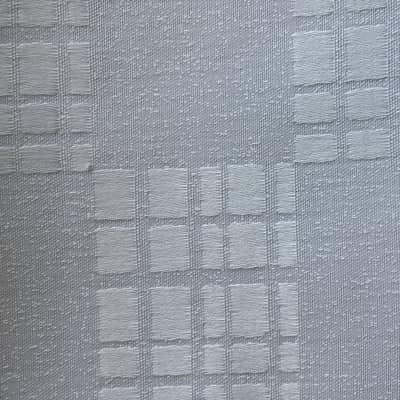
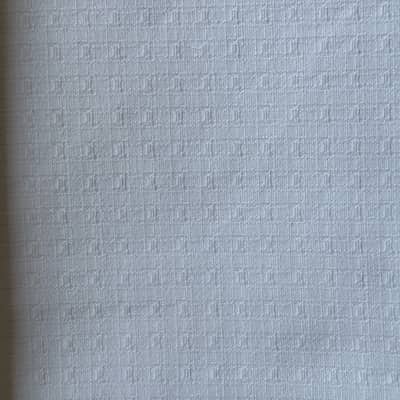
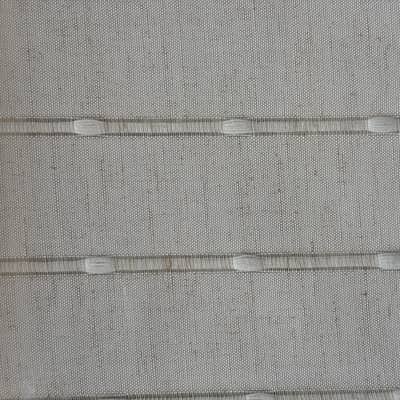
Three Buyers, One Textured Roll, Three Verdicts
A hotel project manager walks into a bathroom and sees whether the curtain reads as part of the room. A retail buyer sees a hanging product on a shelf and asks whether it looks worth its ticket. A private-label programme manager sees a base that has to carry a brand story for several seasons without becoming a reorder problem. Put the same textured shower curtain roll in front of all three and you can get three different verdicts before anyone checks a specification sheet.
That gap is where texture direction for hotels actually lives. The phrase suggests a single aesthetic answer, but the commercial answer depends on which buyer is judging the surface and what they will be asked to defend six months later. Texture is not a finish applied at the end of a spec; it is a positioning decision that changes what the roll has to prove.
This note looks at the demand side of that decision. It does not forecast the market, and it does not treat our own search data as a proxy for global appetite. It maps the buyer scenarios we can see from the roll side and the questions that separate a texture that works from one that merely photographs well.
Where Texture Sits in a Hotel Replacement Cycle
In a hotel programme, a shower curtain is rarely bought as a design object. It is bought as a replaceable component of a guestroom standard, and the texture has to survive that framing. A pronounced jacquard or a raised dash surface can read as deliberate and premium in a mock-up room, but the same surface becomes a maintenance question once the property is running at occupancy.
The practical consequence is that hotel texture direction usually moves toward surfaces that stay legible at a distance and do not depend on a print to carry the design. A woven motif does that work in the cloth itself. The 57 Large Square Jacquard Fabric, a 100% polyester base at 160 GSM, is the kind of roll that fits this scenario: the square motif is built into the weave, so the curtain can present texture without a print layer that a future refurbishment would have to match.
The limitation is equally plain. A woven motif locks the design. If the property later wants a different pattern, it changes the roll, not the artwork. For a hotel buyer, that is often acceptable because the texture is meant to be quiet and repeatable rather than seasonal. For a buyer who needs the surface to change with a brand campaign, it is the wrong instrument.
Retail Wants Texture That Sells From a Hanging Position
A retail buyer judges texture in a completely different setting. The curtain is not part of a fixed room; it is a product competing for attention in a hanging position, often under store lighting, often next to a cheaper flat weave. Texture here has to do commercial work quickly, and that pushes the direction toward surfaces with visible relief or a light-catching element.
The 27-DS001-C Polyester-Cotton Fine Grid Fabric shows how this scenario reads. At 190 GSM with an 88% polyester and 12% cotton blend, the fine grid gives a soft white surface a visible structure that survives being seen from a metre away. It is printable, which matters for a retail programme that wants to pair a textured base with a seasonal print rather than sell texture alone.
The trade-off is that a retail texture direction is judged on shelf appeal first and specification second. That is a different order of priorities from a hotel programme, and it is why a roll can be strong for one and unremarkable for the other. A retail buyer will also ask whether the same base can carry two or three print stories across a season, because a texture that only works once is expensive to keep in range.
Private Label Buys the Surface, Then Buys the Right to Change It
A private-label programme sits between the two. It needs a surface that belongs to the brand, but it also needs the freedom to refresh the range without redeveloping the base every season. That makes printability a structural question rather than a nice-to-have, and it pushes texture direction toward bases that can hold a print while still reading as textured.
The 27-008-8-A Horizontal-Slub Polyester-Linen Fabric is a useful example of that middle position. A 96% polyester and 4% linen blend at 140 GSM, it carries a horizontal slub that gives the surface a natural, slightly irregular character without relying on ink. Because it is printable, a private-label buyer can use the same base for a plain textured story in one season and a printed story in the next.
The limitation is that slub character is not uniform by nature. A programme that needs a perfectly even surface for a tight geometric print will find the slub working against the artwork. That is not a defect; it is a direction decision. The buyer who wants the linen look has to accept that the surface will assert itself in the print.
What Our Own Search Signals Do and Do Not Show
On the first-party side, the keyword cluster around hotel shower curtain texture direction has reached curtains.vip with zero recorded impressions and zero clicks over the last 28 days. That is a factual statement about our own site visibility, and nothing more. It does not describe hotel demand, it does not measure the category, and it should not be read as evidence that buyers are or are not moving toward textured surfaces.
What the zero does tell us is narrower and still useful: this is not yet a query pattern that finds us, which means the buyers arriving with texture questions are likely coming through broader terms or through direct contact. For a supplier, that is a signal about where the conversation starts, not about where the market is going.
We treat the wider texture direction as inference from the roll side, not as measured demand. The scenarios above come from the product characteristics we can verify, and from the way hotel, retail and private-label buyers tend to frame the same surface differently. Anything beyond that would be a claim we cannot support.
The Shortlist Framework Before You Commit to a Direction
A buyer can narrow texture direction with three questions rather than a catalogue sweep. First, does the surface have to carry the design on its own, or will a print do that work? A woven motif answers the first case; a printable base answers the second. Second, how often will the design be allowed to change? A hotel standard can hold a fixed texture for years, while a private-label range may need to refresh every season on the same base. Third, what will the surface be judged against in the room or on the shelf? A quiet relief and a light-catching grid are not competing answers; they are answers to different questions.
Answer those three and the texture direction usually resolves itself before sampling begins. If it does not, the ambiguity is usually in the buyer's own brief rather than in the rolls.
Shaoxing Haowen Textile Clothing Co., Ltd. (the company behind the curtains.vip team) develops curtain, shower-curtain and table-linen fabrics, including custom print development and finished shower curtain OEM/ODM. The usual reference MOQ is 2,000 m per SKU, and orders below 2,000 m are accepted with a slightly higher unit price, which lets a buyer pilot a texture direction before committing a full range to it. If the shortlist is still open, the verified roll options sit at /products, and a specification conversation can start at /contact.