
Fullness Ratio Is Not a Fabric Property: Rethinking Cutting Yield on Window Curtain Rolls
Most buying desks treat a fullness ratio as a constant and a cutting yield as a mill figure. Both move. This study works through the variables that change them, from heading type and trim loss to the difference between a flat swatch and a gathered panel, and closes with a conditional rule rather than a universal one.

PRODUCTS
Products in this report
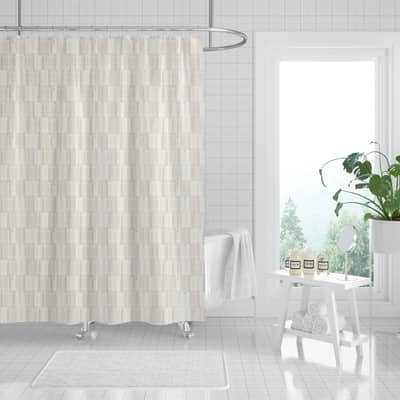
Woven Stripe
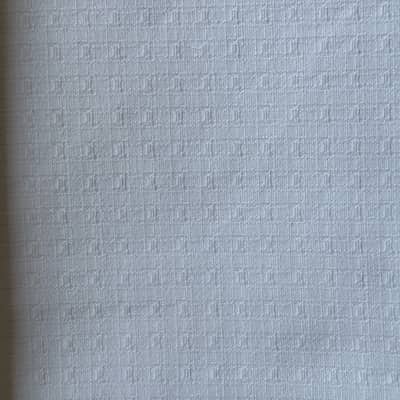
Polyester-Cotton Fine Grid Fabric
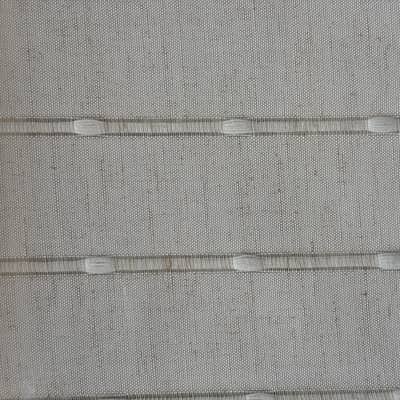
Horizontal-Slub Polyester-Linen Fabric
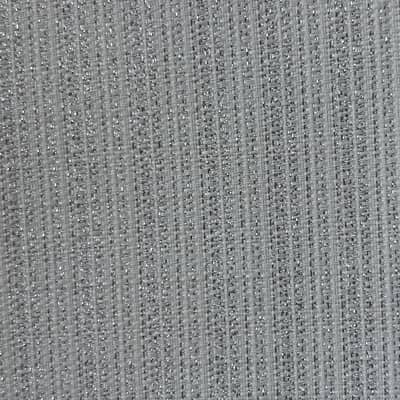
Metallic-Yarn Linen-Look Fabric
The Ratio That Gets Copied From the Last Project
A fullness ratio is one of the few numbers that travels between projects without anyone re-checking it. It arrives in a brief because the previous hotel, the previous retail door or the previous season used it, and it is applied again because it produced a result nobody complained about. That is a reasonable way to work, and it is also where window curtain fabric fullness and cutting yield quietly stop being connected to each other.
The assumption is useful in one specific situation: when the new project repeats the same heading type, the same rail width, the same drop and the same base cloth as the project the ratio came from. Under those conditions the ratio is not a guess, it is a record. The moment any one of those four changes, the ratio is a starting point rather than an answer, and the cutting yield that follows from it has to be recalculated rather than inherited.
Fullness Is a Behaviour, Not a Specification
Fullness describes how much cloth is fed into a given opening. Two panels can carry the same ratio and hang completely differently, because the ratio says nothing about how the cloth behaves once it is gathered. A stiff, tightly constructed base holds its folds and reads as a series of vertical planes. A softer, more mobile base collapses into narrower, denser folds at the same ratio. The number is identical; the visual result is not.
This is why a ratio approved on a flat swatch is unreliable. Flat, the cloth is a surface. Gathered, it is a set of shadows, and the depth of those shadows is what a guest or a shopper actually reads. A base with visible structure — a grid, a slub, a jacquard motif — will show its pattern differently once the folds compress it horizontally, and that compression is a direct consequence of the fullness decision rather than a separate aesthetic one.
The practical implication is that fullness should be settled with the base cloth in hand and gathered, not chosen from a table and then matched to a roll. When the two are decided in the wrong order, the buyer ends up adjusting the ratio to rescue a surface that was never suited to being gathered that tightly.
Where Cutting Yield Actually Leaks
Cutting yield is usually discussed as a mill number, as though it were a property of the roll. It is not. It is the result of the roll's usable width after selvedge, the trim allowance the heading and side hems consume, the repeat position relative to the cut line, and the number of panels the cutter can realistically take across the width. Change the heading type and the trim allowance changes. Change the repeat and the number of clean panels across the width changes. Neither of those is a fabric property in isolation.
The consequence is that a single yield figure quoted across a range is close to meaningless unless it is tied to a named heading, a named drop and a named base. A buyer comparing two rolls on yield alone is comparing two different calculations and calling them the same number.
This is also where a directional or structured surface costs more than its price per metre suggests. A base with a visible grid or a woven stripe has to be cut so the structure runs true across the finished panel. That constraint can reduce the number of panels taken across the width, which raises the effective cost of every finished curtain even though the roll price has not moved.
For a buyer working across several bases, the useful comparison is not yield per roll but panels per roll under the actual heading and drop. That reframing is what turns a mill figure into a procurement decision.
Two Rolls, Two Different Yield Conversations
The contrast is easier to see on specific rolls. 27-DS001-C is an 88% polyester, 12% cotton fine grid at 190 GSM, printable, with a structure that has to run true across the panel. 27-008-8-A is a 96% polyester, 4% linen horizontal slub at 140 GSM, also printable, but its structure runs the other way. Put both in the same window programme at the same fullness and the trim conversation changes, because the axis of the structure decides which edges the cutter has to protect.
Polyester-Cotton Fine Grid Fabric
Horizontal-Slub Polyester-Linen Fabric
The weight difference matters too, though not in the way buyers usually expect. The heavier grid base gathers into broader, fewer folds at a given ratio; the lighter slub gathers more finely. That changes how much of the repeat stays visible once the panel is closed, and therefore how much of the print or structure the customer will actually see. Yield and fullness are being decided by the same physical behaviour, which is why treating them as two separate departments — one commercial, one aesthetic — tends to produce a specification nobody can defend later.
A third case sits at the other end of the range. 27-1759-B is an 88% polyester, 12% metallic yarn linen-look base at 125 GSM, and it is not printable. It is a legitimate choice for a feature panel where the accent is the point, but it cannot absorb a later colourway. In a fullness discussion that matters, because a base that cannot be reprinted has to earn its place on the first specification rather than being adjusted in the second season.
The End Use Rewrites Both Numbers
A hotel replacement programme and a retail programme will not land on the same fullness even when they use the same roll. The hotel is buying a predictable replacement: the panel ordered next year has to read the same as the panel installed this year, in the same room, under the same lighting. That pushes toward a fuller, more forgiving gather, because generous folds hide small variations in surface and tone between production lots. The retail programme is buying a hanging moment at a fixed distance under store lighting, where a tighter gather can read as more deliberate and more expensive — until the folds become so dense that the print disappears.
Private label sits between the two. The programme manager is buying the right to change the story next season, which means the fullness decision has to leave room for a future print or colourway on the same base. A ratio chosen to flatter one specific motif can be the wrong ratio for the next one, and re-cutting the heading specification mid-programme is far more expensive than choosing a slightly more neutral gather at the start.
None of these is a better or worse choice. They are three different briefs pulling the same two numbers in different directions, and the buyer who writes down which brief is being served will usually find the ratio argument resolves itself.
What Our Own Enquiry Rows Do and Do Not Show
Searches for window curtain terms have reached curtains.vip, but the volumes are small and the rows describe our own site rather than the wider market. They tell us which questions buyers bring to our catalogue. They do not establish market size, market share, growth or direction, and we do not treat them as evidence of a trend. The keyword behind this article currently shows no impressions and no clicks in our own data, which is a statement about one site's visibility, not about demand anywhere else.
What the enquiry pattern does support is narrower and more useful: buyers arrive with a ratio in mind and a yield assumption attached to it, and the two are rarely checked against each other. That is a practical problem we can answer with a sample and a calculation, and it is the reason this article stays on the specification rather than on the market.
The Conditional Answer
Choose the inherited fullness ratio and the yield figure that came with it when the heading type, rail width, drop and base cloth all repeat a project you have already run and measured. In that case the numbers are evidence, and re-deriving them wastes time.
Choose a fresh calculation when any one of those four has changed — and treat the yield as a panels-per-roll figure under the actual heading, not a mill number. When the base carries a directional structure, add the cutting constraint to the comparison before the roll is shortlisted, because a structure that must run true can cost more in trim than it saves in price.
Where the brief involves a print, a colourway or a private-label programme, the ratio and the yield should be settled on the base that will carry the next chapter, not only the current one. Shaoxing Haowen Textile Clothing Co., Ltd. (the company behind the curtains.vip team) develops curtain, shower-curtain and table-linen fabrics, including custom print development and finished shower curtain OEM/ODM, so a single gathered panel test can be run against the base you intend to reorder. The usual reference MOQ is 2,000 m per SKU, and orders below that are accepted with a slightly higher unit price, which lets a buyer pilot one heading and one drop before committing the range. The verified range at /products lists composition, weight and print status for each roll, which is enough to decide which bases deserve a gathered panel test. The usual reference MOQ is 2,000 m per SKU; orders below 2,000 m are also accepted, with a slightly higher unit price.
Questions buyers ask
Does a higher fullness ratio always improve the finished curtain?
No. Fuller gathering hides small variation between production lots, which suits a hotel replacement programme, but it also compresses the horizontal scale of a print or woven structure. Past a certain point the motif stops reading and the panel simply looks heavy. The right ratio depends on the heading, the drop and the base.
Why can two rolls quote the same cutting yield and still cost differently per finished panel?
Because yield depends on usable width after selvedge, trim allowance and how many clean panels the cutter can take across the width. A directional or structured base may have to be cut so the structure runs true, which can reduce panels per roll even when the roll price and nominal yield are unchanged.
Can a non-printable base still work in a curtain programme?
Yes, where the surface itself is the point and no future colourway or logo programme is planned. 27-1759-B is an 88% polyester, 12% metallic yarn linen-look base at 125 GSM and is not printable, so it earns its place on the first specification rather than being adjusted in a later season.