
Two Grey Rolls, One Guestroom: How Hotel Window Curtain Fabric Gets Specified
Two rolls can share a grey tone, a similar weight and a plausible price, yet only one belongs in a hotel guestroom window. This is a working comparison of verified fabrics, the trade-offs that separate them, and the sample test that settles the specification.

PRODUCTS
Products in this report
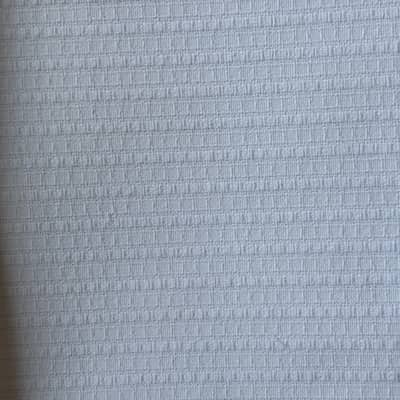
Fine Textured Jacquard Fabric
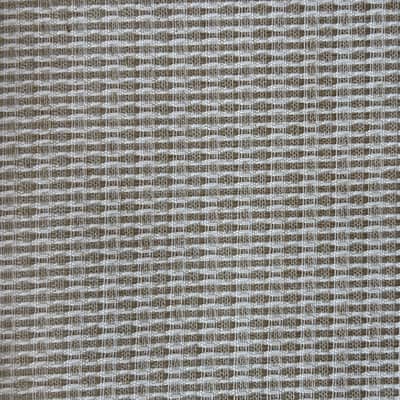
Windowpane Polyester-Cotton Jacquard Fabric
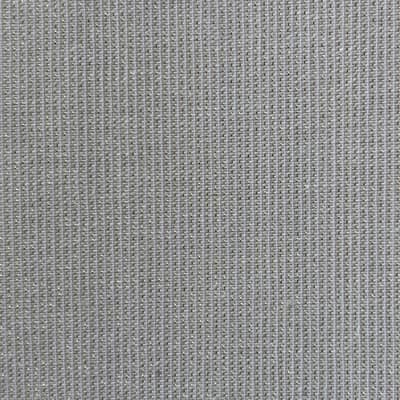
Polyester-Cotton Gold Metallic Fabric B
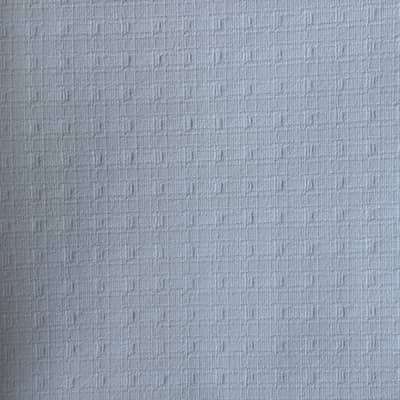
Fine Grid Jacquard Fabric
The Two Rolls That Start the Argument
Put 27-DS001-D and 27-008-F-1 next to each other in a sample room and the difference is almost invisible at arm's length. Both are polyester-dominant, both sit in the same weight band, and both would photograph as a soft neutral. On a hotel window, they will not behave the same way, and the buyer who treats them as interchangeable will discover that at installation rather than at approval.
Fine Textured Jacquard Fabric
Windowpane Polyester-Cotton Jacquard Fabric
The question that separates them is not weight or colour. It is how much surface structure the window can carry before the room starts reading the fabric instead of the view, the light and the furniture. That question belongs to the project, not to the mill. A specification written around it will survive a reorder; one written around a swatch will not.
Where Structure Comes From in a Hotel Window
Window curtain fabric for hotel projects is usually specified for one of two jobs: a quiet plane that closes off a guestroom at night, or a deliberate surface that gives a repetitive room type some character. Both are legitimate, but they pull the specification in opposite directions.
27-DS001-D is a 180 GSM 100% polyester fine-textured jacquard. The texture is woven in, not printed, so the surface reads as a subtle grid rather than a pattern. In a room where the headboard, carpet and joinery already carry pattern, that restraint is the point. The trade-off is that a fine jacquard gives the eye very little to hold onto from across a large room, and in a wide window it can flatten into a plain grey.
27-008-F-1 is a 165 GSM 93% polyester / 7% cotton windowpane jacquard. The windowpane grid is a larger, more legible structure, and the cotton content changes how the cloth handles light. It gives a guestroom window a recognisable graphic without introducing colour. The limitation to validate is scale: a windowpane that reads as crisp on a one-metre sample can look coarse across a three-metre drop, and the repeat has to be checked against the finished panel width, not the roll width.
Neither roll is printable in the sense of carrying a full photographic design. Both are listed as printable, which is a statement about the base accepting ink, not a promise that any artwork will sit correctly on a woven grid. If your project depends on a printed motif, the jacquard structure is working against you.
The Metallic Option and What It Costs You
FAB-PC-GOLD-B is the roll that changes the conversation. At 160 GSM it is an 83% polyester / 10% cotton / 7% metallic yarn fabric, and it is the only roll in this comparison listed as not printable. That single fact should be read before the aesthetic one, because it removes the option of adding a printed border, logo or co-ordinated design later without changing the base.
In a hotel project, a metallic yarn is a specification decision about light. It will catch a bedside lamp and a window reflection differently from the two jacquards, which is exactly why some designers want it in a corridor-facing room and why others reject it in a room with a strong exterior view. The limitation to validate is not performance but consistency: metallic yarns are the component most likely to show batch-to-batch variation, so the approval sample and the bulk roll should be compared under the same lighting before the order is placed.
If the project brief includes any print at all, this roll is out. That is not a defect. It is the trade-off that makes the metallic surface possible.
Weight Tells You Less Than You Expect
The three rolls sit between 160 and 180 GSM, a range that most hotel specifications would treat as one band. Within that band, weight does not predict how a curtain will hang in a guestroom, because the jacquard structure and the yarn content are doing more work than the number.
27-DS001-H, at 190 GSM, is the heaviest verified option here, a 100% polyester fine-grid jacquard. The extra weight is modest, but combined with a grid structure it gives a fuller fold and a more solid read at the window. For a room type where the curtain is expected to sit closed for long periods, that solidity is worth specifying. For a sheer-layered scheme, it is the wrong direction.
The practical point is that a buyer comparing quotations on GSM alone will not see the difference between a fine texture and a large windowpane. The number is a starting filter, not the decision.
Three Buyer Scenarios and the Roll That Fits
A hotel group refreshing a repetitive room type with a neutral scheme is best served by 27-DS001-D. The fine texture adds surface without competing with the rest of the room, and the 100% polyester base keeps the specification simple across a multi-property rollout.
A property that wants the window to carry a graphic identity without introducing colour should look at 27-008-F-1. The windowpane gives the curtain a designed read, and the small cotton content softens the hand. The buyer should confirm the repeat against the widest finished panel in the project before approving.
A design-led project where the curtain is meant to catch light and act as a feature should evaluate FAB-PC-GOLD-B, with the print limitation accepted up front. If the same project later needs a printed co-ordinate, the metallic roll cannot serve it, and a second base will have to be specified.
Where a heavier, more architectural grid is wanted, 27-DS001-H is the closest verified match at 190 GSM. It is not a substitute for the windowpane; it is a different answer to the same question about structure.
The Sample Test That Settles It
A swatch cannot answer the question this article opened with. The test that can is a hanging sample at the project's actual drop length, viewed from the doorway and from the bed, in both daylight and evening light. A one-metre cut will make a fine jacquard look more textured than it will at three metres, and it will make a windowpane look tighter than it will in a full panel.
Alongside the hanging test, two checks belong in the same sample round. First, confirm that the roll supplied for approval matches the roll intended for bulk, particularly for the metallic fabric where yarn variation is the main risk. Second, confirm the print status of the exact SKU in writing, because printability is a property of the base and not a category-wide assumption.
If the project involves any custom print development, that work should be tested on the specific base before the curtain specification is frozen. A print that sits well on a plain weave may not sit well on a woven grid.
What to Put in the RFQ
An RFQ for hotel window curtain fabric is more useful when it names the SKU, the GSM, the composition and the print status, and states the finished panel width and drop. Those five items let a supplier confirm whether the roll you approved is the roll that will ship, and they make quotations comparable across suppliers.
This is also where the commercial terms belong. The usual reference MOQ is 2,000 m per SKU, and orders below that are accepted with a slightly higher unit price, which allows a single property or a pilot room type to be tested before a group-wide commitment. Shaoxing Haowen Textile Clothing Co., Ltd. (the company behind the curtains.vip team) supplies these rolls as part of a range covering curtain, shower-curtain and table-linen fabrics, with custom print development and finished shower curtain OEM/ODM. The usual reference MOQ is 2,000 m per SKU; orders below 2,000 m are also accepted, with a slightly higher unit price.
The next step is not a purchase order. It is a sample approval that names the exact SKU, the GSM, the composition and the print status, signed off against a hanging sample at the project's real drop. Review the verified fabrics at /products, then send the specification through /contact and ask for the approval sample to be cut from the roll you intend to order.
Questions buyers ask
Can a jacquard window curtain fabric for hotel projects also be printed?
Printability is a property of the specific base, not of jacquard as a category. In the verified range here, 27-DS001-D, 27-008-F-1 and 27-DS001-H are listed as printable, while FAB-PC-GOLD-B is not. Even where a base is listed as printable, a woven grid or windowpane structure will interact with the artwork, so the print should be tested on the exact SKU before the specification is frozen.
Does a higher GSM make a better hotel window curtain?
Not on its own. The rolls compared here sit between 160 and 180 GSM, with 27-DS001-H at 190 GSM, and the jacquard structure and yarn content affect drape and light handling more than the weight difference within that band. GSM is a useful first filter, but the hanging sample at the project's drop length is what confirms the curtain will read correctly in the room.
What should a buyer confirm before approving a metallic window curtain fabric?
Confirm two things. First, that no printed element is required, because FAB-PC-GOLD-B is not printable and a printed co-ordinate would need a different base. Second, that the approval sample and the bulk roll are compared under the same lighting, since metallic yarn is the component most likely to vary between batches.