
Contract Curtain Fabrics: The Reorder Question Buyers Ask After the First Delivery
Contract curtain fabrics are usually chosen against the first delivery. The question that decides whether a programme survives is whether the same surface can be bought again. This note separates one small first-party signal from wider inference and sets out what to test.

PRODUCTS
Products in this report
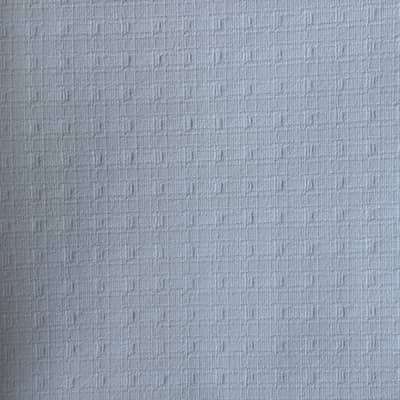
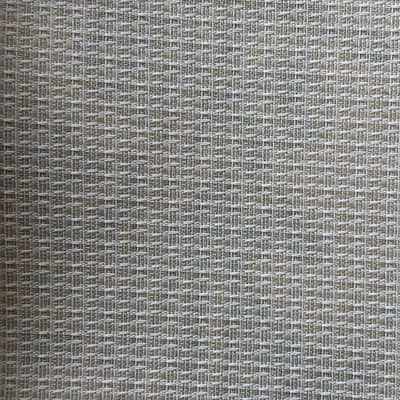
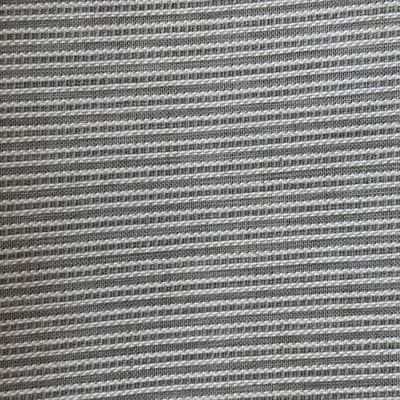
Which question does a contract buyer actually bring to a fabric catalogue?
Most contract curtain fabric enquiries arrive with a specification already half-written: a weight band, a colour direction, a budget per metre, and a date. The question underneath is rarely about any of those. It is whether the roll chosen now can still be bought in the same surface when the second phase, the replacement rooms or the next season comes due.
That question is commercially awkward because it cannot be answered from a sample. A sample proves what one roll looks like. It does not prove that the surface will repeat, that the base will still be available, or that the same construction will still be the sensible choice two years later. Buyers who treat the first delivery as the decision tend to discover the reorder problem at the worst point in the calendar.
One small first-party signal, read for what it is worth
Over the last 28 days, three impressions on the term contract curtain fabrics reached curtains.vip, with no clicks and an average position around 18.7. Those rows describe searches that arrived at our own site. They do not measure the contract market, its size, its direction or its share, and we do not treat three impressions as evidence of demand. What they do suggest, cautiously, is that a small number of buyers are phrasing the problem in contract terms rather than product terms, and that the page they landed on was a specification note rather than a product listing.
The useful reading is narrow. A buyer searching in contract language is usually carrying a project constraint: a replacement cycle, a phase-two order, a specification that has to hold across more than one delivery. The signal is too thin to support any claim about where the wider market is going. It is not too thin to justify writing down the reorder question before a base is locked.
Why the reorder risk sits in the base, not in the colour
Colour is the visible variable, so it absorbs most of the negotiation. The base cloth is where the reorder risk actually accumulates. Two rolls can sit in the same weight band, carry a similar surface and read almost identically on a screen, yet behave very differently when a programme has to be repeated.
The differences that matter are structural. A jacquard carries its pattern in the weave, so the surface is the product and the loom decides how it reads. A linen-look plain weave carries its character in the yarn and the finish, which makes it more tolerant of a later print or colourway but less distinctive on its own. A metallic accent changes how the cloth behaves under light, and that behaviour is difficult to reproduce casually across lots. None of these is a quality ranking. They are different answers to the same question: what has to stay constant when the second order arrives?
Where print status changes the shape of a contract range
Print status is the variable that most often decides whether a contract range can absorb change. A non-printable base has to earn its place on surface alone, which is a legitimate strategy for a feature panel or a fixed design. A printable base can carry a later colourway, a property mark or a seasonal motif without a full re-specification.
The practical consequence is concentration risk. If a contract range holds only one printable base, every future print, logo or colourway programme depends on that single SKU. If it holds two printable bases that have each been printed and viewed in position, the range has somewhere to move. That is a range-architecture decision, and it is cheaper to make before the first order than after.
Three verified bases as illustrations, not recommendations
The point is easier to see against real specifications. 27-DS001-H is a 190 GSM fine-grid jacquard in 100% polyester, printable, with the structure carried in the weave. 27-001-E is a 155 GSM crosshatch linen-look in 100% polyester, also printable, where the surface is quieter and the cloth is lighter. 27-001-1-A is a 165 GSM vertical-channel polyester-linen blend, printable, with a directional surface that reads as texture rather than pattern.
Each answers a different reorder question. The jacquard is the strongest choice where the surface itself is the specification and the programme does not expect to print over it. The crosshatch is the more flexible base where a colourway or motif may arrive later. The vertical channel is the one to shortlist when direction is part of the design intent, because a directional surface has to be cut and hung consistently, and that constraint belongs in the specification rather than in the cutting room. Mentioning these three is not a shortlist; it is a way of showing that the reorder question produces different answers depending on which variable the programme cannot afford to lose.
What the interpretation does not cover
Several things cannot be concluded from a catalogue or from a handful of search rows. Nothing here establishes how large the contract segment is, how fast it is moving, or what competitors are doing. The three impressions are a site observation, not a market measurement, and a term with no impressions is simply a term with no impressions.
There is also a limit to what a supplier can promise. A base can be held to a specification, and a reference panel can be retained from an approved roll, but no supplier can guarantee that a buyer's own brief will stay still. If the end use changes between the first and second order, the honest answer is that the specification has changed too, and the range should be re-examined rather than quietly reordered against an old approval.
Three implications to test before the next contract order
First, name the roll that is expected to carry the next print, colourway or mark, and check whether it has been tested with the actual motif rather than a generic swatch. If the answer is a single SKU, the concentration risk is worth pricing before the order is placed.
Second, ask for the shortlisted base to be shown gathered or hung at the width the finished curtain will actually be pulled to, under the lighting of the room it is bought for, and retain a reference panel from that same roll. A flat swatch cannot answer the presentation question, and the presentation question is what the guest or the shopper sees.
Third, confirm that the specification can be repeated. The usual reference MOQ is 2,000 m per SKU, and orders below that are accepted with a slightly higher unit price, which lets a buyer test one base against one end use before committing a range. Shaoxing Haowen Textile Clothing Co., Ltd. (the company behind the curtains.vip team) develops curtain, shower-curtain and table-linen fabrics, including custom print development and finished shower curtain OEM/ODM, and works from published SKU specifications so that a sampled roll and a bulk roll can be compared on the same facts. A restrained next step is to review the range at /products or raise a specific reorder question through /contact. The usual reference MOQ is 2,000 m per SKU; orders below 2,000 m are also accepted, with a slightly higher unit price.