
Contract Textile Sourcing Outlook: Two 125 GSM Rolls and the Sample That Decides Between Them
Two rolls can share a weight, a linen-look surface and a neutral tone, yet only one belongs in a contract programme. This comparison works through the observation, comparison, sample test and acceptance decision that separate them, using verified SKUs.

PRODUCTS
Products in this report
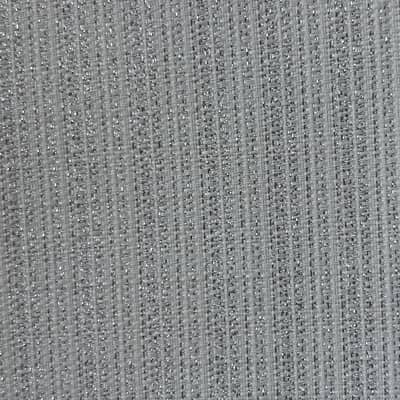
Metallic-Yarn Linen-Look Fabric
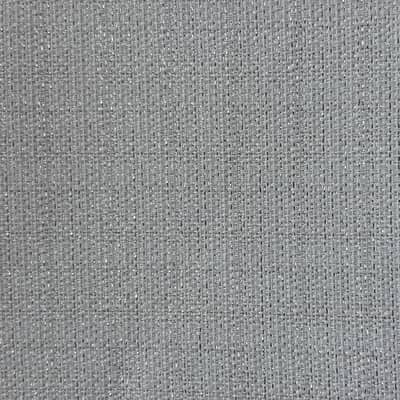
Metallic-Yarn Linen-Look Fabric
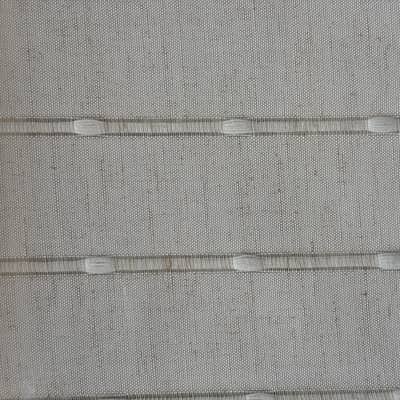
Horizontal-Slub Polyester-Linen Fabric
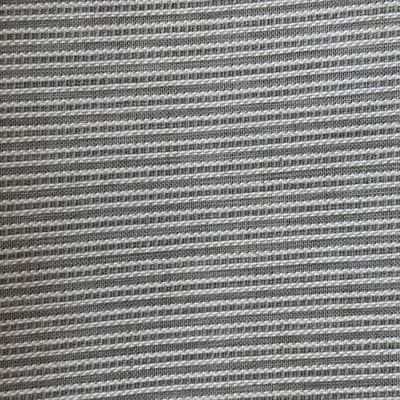
Vertical-Channel Polyester-Linen Fabric
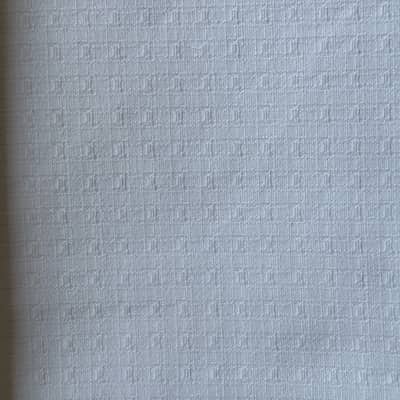
Polyester-Cotton Fine Grid Fabric
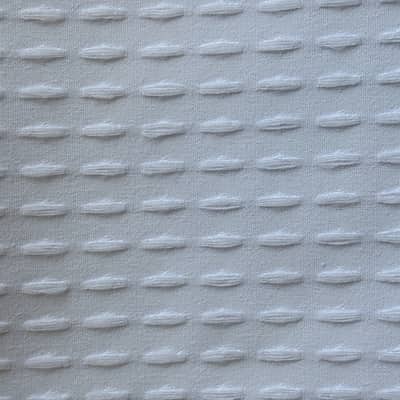
Raised Dash Jacquard Fabric
Two Rolls, One Weight, Two Different Contracts
Place 27-1759-B and 27-1759-B1 side by side in a sample room and most buyers would call them the same fabric. Both are 125 GSM, both are 88% polyester with 12% metallic yarn, and both carry the same linen-look surface with a silver accent. The difference that matters is not visible at arm's length. It appears when the roll has to do a job: one may be specified into a quiet guestroom drape, the other into a feature panel that is meant to catch light.
Metallic-Yarn Linen-Look Fabric
Metallic-Yarn Linen-Look Fabric
The question that separates them is not weight, colour or price. It is whether the contract can tolerate a surface that is not printable, and whether the metallic yarn is being used as an accent or as the main event. That is the practical starting point for any contract textile sourcing outlook, because the answer changes which roll is approved, which sample is retained and what the reorder is checked against.
Where the Surface Comes From, and What It Costs
Metallic yarn does not behave like a pigment. In 27-1759-B and 27-1759-B1 the 12% metallic content is part of the woven structure, so the accent is permanent rather than applied, and it will read differently under downlights, daylight and photography. That permanence is the reason to specify it. It is also the reason to be careful: a metallic surface competes with whatever else is in the room, and in a long corridor of identical panels the effect multiplies.
The trade-off is printability. Both SKUs are listed as not printable, which is a hard limit rather than a preference. If the programme needs a printed motif, a logo repeat or a seasonal artwork, these two rolls are out of the running regardless of how well they sample. The buyer who likes the surface but needs print is looking at the wrong part of the range, and the faster that is recognised, the less sampling budget is wasted.
The Printable Bases That Change the Comparison
Once print enters the brief, the shortlist moves to bases where the ink has somewhere to sit. 27-008-8-A is a 140 GSM horizontal-slub polyester-linen at 96% polyester and 4% linen, and it is printable. 27-001-1-A is a 165 GSM vertical-channel polyester-linen at 93% polyester and 7% linen, also printable. 27-DS001-C is a 190 GSM polyester-cotton fine grid at 88% polyester and 12% cotton, printable as well.
Horizontal-Slub Polyester-Linen Fabric
Vertical-Channel Polyester-Linen Fabric
Polyester-Cotton Fine Grid Fabric
These three do not compete on weight alone. The slub in 27-008-8-A breaks the surface into small irregular patches, so a fine line in the artwork can soften where it crosses a slub. The vertical channel in 27-001-1-A imposes a direction on the panel, which is useful for a tall window and awkward for a wide one. The fine grid in 27-DS001-C is the calmest of the three and the heaviest, which matters when the panel has to hang straight without a lining doing the work.
A fourth option sits outside the print conversation entirely. 27-DS001-F is a 185 GSM 100% polyester raised-dash jacquard, printable, with a white texture that reads as structure rather than pattern. It is the roll to consider when the contract wants surface interest without committing to artwork.
- 27-1759-B and 27-1759-B1 — 125 GSM, 88% polyester / 12% metallic yarn, not printable
- 27-008-8-A — 140 GSM, 96% polyester / 4% linen, printable, horizontal slub
- 27-001-1-A — 165 GSM, 93% polyester / 7% linen, printable, vertical channel
- 27-DS001-C — 190 GSM, 88% polyester / 12% cotton, printable, fine grid
- 27-DS001-F — 185 GSM, 100% polyester, printable, raised-dash jacquard
What the Sample Has to Prove
A contract sample is not a colour check. It is a test of the variables that will be repeated on the next order. For the metallic rolls, the test is whether the accent still reads as intended at the distance the guest will actually see it, and whether two panels cut from different parts of the roll match each other under the project's lighting. For the printable bases, the test is whether the artwork holds its edge across the slub, the channel or the grid, and whether the printed panel still drapes the way the unprinted sample did.
One question should be written into the sample request rather than assumed: is the roll you are testing the roll that will ship in bulk? A swatch and a bulk roll can differ in surface direction, which is the failure mode that shows up at the second order rather than the first. Asking for the SKU, the GSM and the print status on the sample record costs nothing and prevents a reorder that arrives looking like a different fabric.
This is also where the commercial terms belong. The usual reference MOQ is 2,000 m per SKU, and orders below that are accepted with a slightly higher unit price, which allows a single property or a pilot room type to be tested before a group-wide commitment. Shaoxing Haowen Textile Clothing Co., Ltd. (the company behind the curtains.vip team) supplies these rolls as part of a range covering curtain, shower-curtain and table-linen fabrics, with custom print development and finished shower curtain OEM/ODM. The usual reference MOQ is 2,000 m per SKU; orders below 2,000 m are also accepted, with a slightly higher unit price.
Matching the Roll to the Buyer, Not the Brief
A hotel project replacing curtains across a room type is buying repeatability. It needs a roll that can be reordered at the same specification, and it usually benefits from a printable base so that a future refurbishment can change the artwork without changing the fabric. 27-001-1-A suits a tall window where the vertical channel reinforces the drop; 27-DS001-C suits a wide window where a directional surface would fight the panel.
A retail or private-label programme is buying a surface that sells from a hanging position and a base that can carry a seasonal print. 27-008-8-A is the natural candidate when the artwork has texture of its own, because the slub and the print are doing similar work. 27-DS001-F is the candidate when the collection needs a white texture that photographs well and does not depend on a print run to look finished.
A buyer specifying a feature panel or a lobby treatment is the one who should look at 27-1759-B and 27-1759-B1. The metallic yarn is the reason to choose them, and the absence of printability is the reason to keep them out of any programme that may later need artwork. Treating them as a general-purpose neutral is the mistake that turns a good surface into a reorder problem.
The Acceptance Decision and What to Write Into the RFQ
Approval should name the SKU, the GSM, the composition and the print status, and it should retain a reference panel from the approved roll. That panel is the only reliable comparison for the next delivery, particularly where a surface is directional or where a metallic accent is involved. Without it, the second order is judged against memory rather than against evidence.
When the sample is approved, the RFQ should carry four things: the exact SKU, the target quantity, the print status the programme requires, and the reference panel or sample number. Include the end use as well, because a roll specified for a guestroom drape and a roll specified for a shower curtain are not interchangeable even when the weight matches. Buyers can review the verified bases on /products or send the specification through /contact for a quotation against the approved sample.
Questions buyers ask
Can a metallic-yarn roll be printed if the contract later needs artwork?
Not on the two 125 GSM SKUs in this comparison. 27-1759-B and 27-1759-B1 are listed as not printable, so a programme that may need a printed motif should shortlist a printable base such as 27-008-8-A, 27-001-1-A, 27-DS001-C or 27-DS001-F instead.
Does a higher GSM always mean a better contract curtain?
No. Weight affects how a panel hangs and how much structure it carries, but it does not tell you whether the surface is printable or directional. A 140 GSM printable slub and a 125 GSM non-printable metallic roll are answering different briefs, not competing on quality.
What should be retained after sample approval?
A reference panel from the approved roll, together with the SKU, GSM, composition and print status. The panel is what the next delivery is compared against, which matters most where the surface is directional or carries a metallic accent.