
Contract Curtain Fabric: The Tactile Reading That Precedes the Specification
A buyer's first contact with contract curtain fabric is a hand on a roll, not a line on a spec sheet. This field note moves from that tactile reading to the measurements, tests and price decisions that follow, using verified rolls as comparison evidence.

PRODUCTS
Products in this report
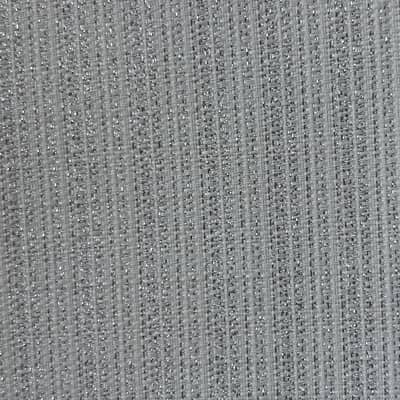
Metallic-Yarn Linen-Look Fabric
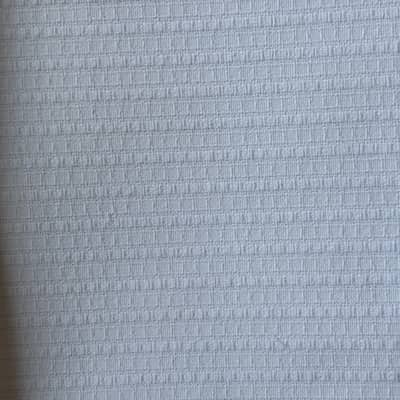
Fine Textured Jacquard Fabric
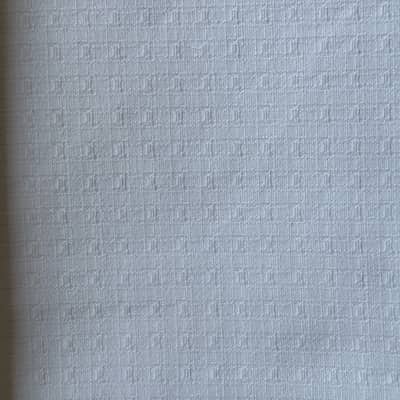
Polyester-Cotton Fine Grid Fabric
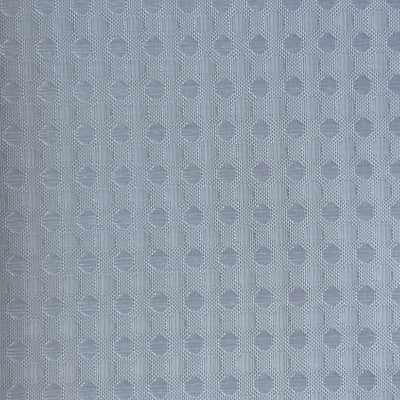
Dotted-Waffle Polyester Fabric
Polyester Waffle Fabric
The Roll Answers Before the Spec Sheet Does
Run a palm across a roll of 27-1759-B and the surface answers immediately. The linen-look weave breaks light into small uneven patches, and every few centimetres a metallic yarn catches and releases a thin silver line. The hand feels dry, slightly rough, and lighter than the eye expects from a fabric with visible structure. None of that is a specification. All of it is the reason a buyer shortlists one roll over another.
That first tactile reading is where most contract curtain fabric decisions actually begin. A hotel project manager, a retail buyer and a private-label programme manager may all touch the same roll, but each is testing it against a different future: a replacement cycle, a shelf reset, a season of colourways. The hand tells them whether the surface has enough presence to survive that future. The spec sheet only tells them whether the surface can be repeated.
What the Hand Can and Cannot Confirm
The hand is reliable for a narrow set of facts. It can confirm whether a surface is flat or structured, whether a slub reads as irregularity or as a defect, whether a metallic accent sits in the cloth or on top of it. It can confirm whether a roll feels dense enough to fall into folds rather than stand away from a rail. Those are real buying signals, and they arrive faster than any document.
The hand cannot confirm what happens next. It cannot tell a buyer whether the surface will still read the same way after a laundering cycle, whether the metallic yarn will dull, whether the weave will hold its shape once the curtain is gathered, or whether the roll can accept ink if a colourway or logo programme arrives later. Those questions belong to measurement and testing, and they are the reason a tactile shortlist is a starting point rather than a decision.
Where Structure Changes the Commercial Conversation
27-DS001-D is a 100% polyester fine textured jacquard at 180 GSM, printable. 27-1759-B is an 88% polyester and 12% metallic yarn linen-look at 125 GSM, not printable. Held side by side, they read as two answers to the same brief: one quiet and structured, one lighter with a metallic accent. The difference that matters commercially is not the weight gap. It is that one roll can absorb a future print or colourway and the other cannot.
That single fact changes how a range is planned. A contract programme that expects a logo, a seasonal motif or a private-label colourway has to place at least one printable base at the centre of the shortlist, because a non-printable roll has to earn its place on surface alone. A programme that will never print can choose freely on hand and structure, and may prefer the metallic accent precisely because it does something a print cannot.
The Measurements That Follow the Shortlist
Once the tactile shortlist is set, three numbers do most of the work. The first is weight, because it governs how the cloth falls and how much of the window or opening it can cover without a lining. The second is composition, because a polyester-cotton blend behaves differently from a pure polyester or a polyester-linen blend in the hand and in the fold. The third is print status, because it decides whether the roll can carry the next chapter of the programme.
27-DS001-C illustrates why composition belongs in the same conversation as weight. It is 88% polyester and 12% cotton at 190 GSM, printable, with a fine grid and a soft white ground. The cotton share is small, but it changes the surface reading and the way the grid catches light. A buyer who shortlists on weight alone would file it beside a pure polyester roll of similar weight and miss the difference the blend creates.
Two Rolls That Widen the Comparison
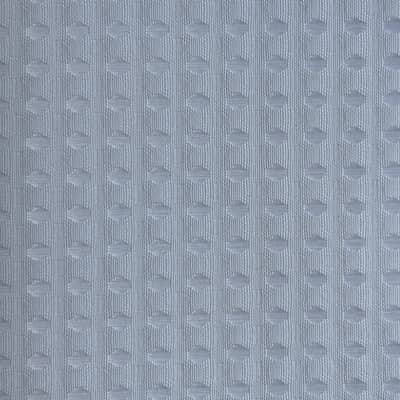
FAB-WAFFLE-DOT-120 is a 100% polyester dotted-waffle at 120 GSM, printable. FAB-WAFFLE-225 is a 100% polyester waffle at 225 GSM, also printable. Both carry a raised cell structure, but they sit at opposite ends of the weight range, and that gap changes what each roll can do in a contract setting.
Dotted-Waffle Polyester Fabric
Polyester Waffle Fabric
The 120 GSM waffle is light enough to gather tightly and to read as a fine texture across a small opening. The 225 GSM waffle is heavy enough to hold a deeper cell and a more deliberate surface, and it will fall with more weight in the fold. Neither is a better roll. They are two different answers to the question of how much surface a contract can carry before the fabric starts reading as the room's main feature rather than its backdrop.
What Our Own Search Rows Show, and What They Cannot
Searches for contract curtain fabric have reached curtains.vip, but the volumes are very small and the rows describe our own site only. They tell us that a handful of buyers arrive with this term and land on a specification note. They do not establish market size, market share, growth or any wider industry direction, and we do not treat them as evidence of a trend.
The useful signal is narrower. Buyers who search this term are usually trying to connect a surface they can see with a specification they can repeat. That is a product question, not a market question, and it is the question this note is built around.
The Sample Question That Settles Approval
Before a contract curtain fabric is approved, one question does most of the work: can the supplier show the shortlisted roll gathered on a rail at the width the finished curtain will actually be pulled to, under the project's own lighting, and retain a reference panel from that same roll for the next delivery? A flat swatch cannot answer the presentation question, and the presentation question is the one the guest or the shopper actually sees.
If the answer is yes, the tactile reading becomes testable and the second order can be judged against evidence rather than memory. If the answer is no, the surface is being approved from a photograph, and the drape, the structure and the print status will all be settled later, at the buyer's cost. Shaoxing Haowen Textile Clothing Co., Ltd. (the company behind the curtains.vip team) develops curtain, shower-curtain and table-linen fabrics, including custom print development, and can supply the reference panel alongside the sample. The usual reference MOQ is 2,000 m per SKU, and orders below that are accepted with a slightly higher unit price, which lets a buyer test one base against one end use before committing a range. Shortlisted rolls can be reviewed at /products, and a specification conversation can start at /contact. The usual reference MOQ is 2,000 m per SKU; orders below 2,000 m are also accepted, with a slightly higher unit price.
Questions buyers ask
Can a non-printable contract curtain fabric still be the right choice?
Yes, when the surface itself is the product's visual argument and no future print, colourway or logo programme is expected. A roll such as 27-1759-B, an 88% polyester and 12% metallic yarn linen-look at 125 GSM, earns its place on hand and structure alone. It becomes the wrong choice the moment the programme needs to carry a print later, because that decision cannot be retrofitted to the base.
Does weight alone tell a buyer which contract curtain fabric will drape correctly?
No. Weight is one input, but composition and construction change how the same weight behaves. 27-DS001-C at 190 GSM is 88% polyester and 12% cotton with a fine grid, while a pure polyester roll of similar weight would read differently in the fold and in the light. The drape question is settled by seeing the intended roll gathered on a rail, not by comparing GSM figures on a sheet.
What should be retained after a contract curtain fabric sample is approved?
A reference panel from the approved roll, together with the SKU, the GSM, the composition and the print status written into the approval note. That panel is the only reliable comparison for the next delivery. Without it, the second order is judged against memory rather than against evidence.