
Lab Dip Approval for Custom Dyed Curtain Fabrics: What the Signed Chip Does Not Measure
A lab dip is signed as proof that a custom dyed curtain shade is achievable. It is better read as a record of one controlled dyeing. This field note works from the chip in the hand to the bulk lot on the rail, using verified bases as boundary cases, and closes on the one sample question that decides approval.

PRODUCTS
Products in this report
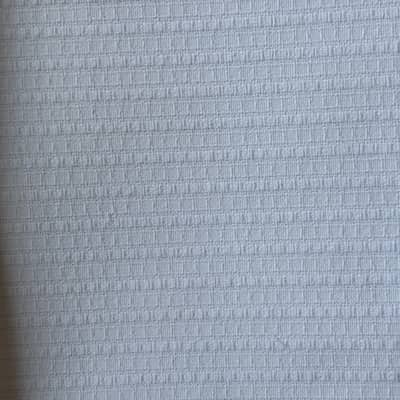
Fine Textured Jacquard Fabric
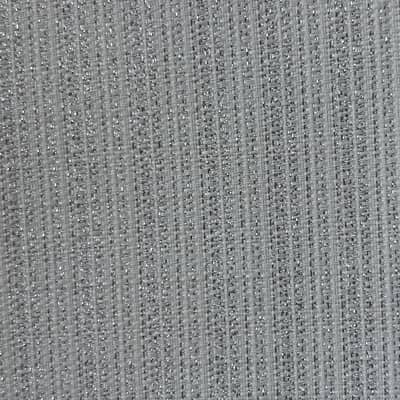
Metallic-Yarn Linen-Look Fabric
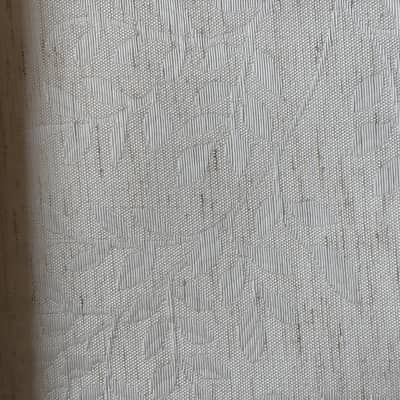
55 Large Floral Jacquard Fabric
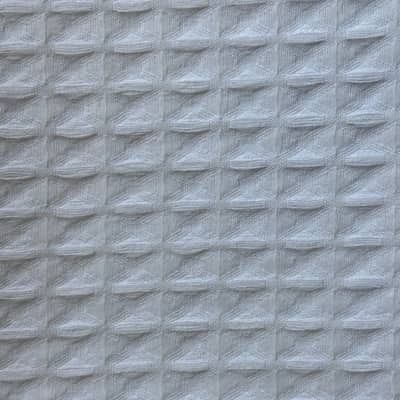
Textured Diamond Jacquard Fabric
The Chip in the Hand, and the Roll It Has Not Met
A lab dip arrives as a small square of cloth, usually stapled to a card with the shade reference written beside it. Hold it up and the colour is flat, even and legible. Turn it under a warm lamp and the surface answers with whatever structure the base carries: a faint grid, a slub, a raised cell. The chip is a controlled object. It was dyed on a small piece, under conditions the dyehouse chose, and it is being judged in a light the buyer did not specify.
That is the whole problem behind lab dip approval for custom dyed curtain fabrics. The signature on the card is read as a decision about the colour. It is more accurately a decision about one dyeing. The bulk lot will be dyed on a different machine, at a different liquor ratio, on a base that may come from a different production run, and it will be judged on a curtain that hangs in folds rather than on a chip that lies flat. The buyer is not approving a colour. The buyer is approving a target and accepting a tolerance, whether or not the tolerance was ever written down.
What a Custom Dye Programme Actually Asks the Mill to Repeat
A stock colour is bought from a card. A custom dye is built. The buyer supplies a reference, the dyehouse matches it, and from that point the colour exists only as a set of process conditions attached to a specific base. If the base changes, the recipe changes with it. If the base is a blend, the two fibre families take dye differently and the shade that reads correct on the chip can shift once the same recipe runs at bulk scale.
This is why the base belongs in the lab dip conversation before the shade does. A 100% polyester base dyes as one system. A polyester-cotton blend dyes as two, and the visual result depends on how the two components share the colour. A surface with a metallic yarn introduces a third element that does not take the same dye at all. None of that is visible on a chip that has already been dyed successfully. It becomes visible on the second lot.
Where the Chip Stops Predicting the Bulk Lot
Three variables move between the dip and the bulk lot, and each one moves the colour in a different direction.
The first is the light the shade is judged under. A chip approved in a sample room with warm light can read cooler or greener in a hotel corridor with a different source. The colour has not changed; the viewing condition has. This is the same problem that affects any dyed textile, and it is settled by naming the light source in the approval note rather than by arguing about the chip.
The second is the base construction. A fine textured jacquard and a plain linen-look surface take the same recipe and return different visual results, because the structure breaks the light differently. A 180 GSM fine-textured jacquard such as 27-DS001-D reads its shade across a raised surface, while a 155 GSM contrast-grid linen-look base reads it across a flatter ground. The dyehouse can match both to the chip. The buyer has to decide whether the two surfaces are meant to read as the same colour in the finished room.
The third is lot-to-lot variation. A custom dye programme that will be reordered has to accept that the second lot is a new dyeing, not a copy. The question is not whether the second lot is identical. It is whether the difference is inside a tolerance the buyer has agreed to and can measure.
Three Bases, Three Different Dyeing Conversations
The verified range makes the trade-off concrete. A 125 GSM linen-look base with 12% metallic yarn, such as 27-1759-B, carries a silver accent that does not dye with the polyester ground. A custom shade on this base is really two colours in one cloth: the dyed ground and the metallic yarn's own tone. The chip will show the combination, but the buyer should understand that the accent is a fixed element, not a variable the recipe controls.
A 165 GSM polyester-linen jacquard such as 55# behaves differently again. The linen content takes dye on a different curve from the polyester, and the large floral motif means the shade is read across a raised pattern rather than a flat field. A custom dye on this base is a decision about how the motif should read, not only about the ground colour.
A 185 GSM polyester-cotton diamond jacquard such as 27-DS001-B adds the blend variable to the structure variable. Two fibre families, a raised diamond texture and a heavier cloth. The chip can still be matched. What it cannot show is how the two fibres will age the shade at different rates under service conditions. That is a question for a wash test, not a lab dip.
What the Buyer Owns and What the Dyehouse Owns
The dyehouse owns the recipe and the process control. The buyer owns the tolerance, the light source and the reference panel. Those three things are what make a custom dye programme repeatable, and none of them is settled by signing a chip.
The tolerance is the hardest to write because it requires the buyer to say how much difference is acceptable before the shade stops being the shade. A hotel replacing curtains room by room can tolerate less than a retail programme refreshing a colourway each season. A private-label programme that carries one colour across several seasons has the least room of all, because the brand promise is the consistency itself.
The reference panel is the practical instrument. A chip is a small square; a panel is a piece of the approved base, dyed to the approved shade, retained from the same dyeing and kept by both parties. When the second lot arrives, it is compared against the panel, not against memory. This is the single most useful document in a custom dye programme, and it costs nothing to retain.
What Our Own Search Rows Can and Cannot Show
Searches for lab dip and custom dye terms have reached curtains.vip, but the volumes are small and the rows describe our own site, not the wider market. They tell us which questions buyers bring to our catalogue. They do not establish market size, share, growth or direction, and we do not treat them as evidence of a trend. The useful signal is narrower: buyers arrive with a shade in mind and a specification that has not yet been written down.
That is the gap this note is trying to close. The commercial structure behind it is straightforward. Shaoxing Haowen Textile Clothing Co., Ltd. (the company behind the curtains.vip team) develops curtain, shower-curtain and table-linen fabrics, including custom print development, and works with buyers on shade approval across those end uses. The usual reference MOQ is 2,000 m per SKU, and orders below that are accepted with a slightly higher unit price, which allows a single property or a pilot colourway to be dyed and judged before a wider commitment. The usual reference MOQ is 2,000 m per SKU; orders below 2,000 m are also accepted, with a slightly higher unit price.
The Sample Question That Decides Approval
Before a custom dyed curtain shade is signed off, one question does most of the work: can the supplier show the approved shade on the exact base you are shortlisting, in the presentation the finished curtain will actually occupy, under the light source the project will actually use, and retain a reference panel from that same dyeing?
If the answer is yes, the colour is testable and the second lot can be judged against evidence rather than against a chip in a drawer. If the answer is no, the programme is being approved on a controlled small piece, and the bulk lot will settle the question at the buyer's cost.
Questions buyers ask
Does an approved lab dip guarantee the bulk lot will match?
No. A lab dip proves the shade is achievable on a small piece under controlled conditions. The bulk lot is a new dyeing on a different machine, and the match depends on the base construction, the fibre blend and the tolerance the buyer has agreed to. The lab dip is a target, not a guarantee.
Why does the base construction matter for a custom dye?
Because the same recipe returns a different visual result on different surfaces. A raised jacquard and a flat linen-look ground break light differently, and a blend of two fibre families takes dye on two different curves. The dyehouse can match both to the chip; the buyer has to decide whether they should read as the same colour in the finished room.
What should be retained after a custom dye is approved?
A reference panel from the approved dyeing, kept by both the buyer and the supplier, plus a written note naming the base, the light source the shade was judged under, and the tolerance the buyer accepts. The panel is what the next lot is compared against.