
Curtain Fabric Weight and Drape: What the Fold Line Tells You Before the Spec Sheet Does
Two rolls can share a weight band and still hang like different cloths. This field note reads curtain fabric weight and drape from the fold line outward, then sets out what has to be tested before a drape specification is priced.

PRODUCTS
Products in this report
The Fold Line Is the First Honest Reading
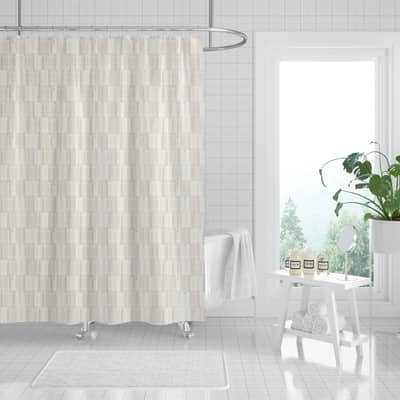
Fold a metre of curtain cloth in half and hold it against a window. Where the crease crosses the weave, one of two things happens. Either the surface closes into a soft shadow that fades within a few centimetres of the fold, or it holds a hard ridge that stays visible when the cloth is opened flat again. The weight number on the spec sheet is identical in both cases. The drape is not.
That crease is the cheapest drape test a buyer has, and it is the one most often skipped because the sample arrives flat. A curtain spends its commercial life folded in a carton, hung in soft vertical waves, and viewed from three to five metres away. None of those conditions matches a swatch laid on a table. Weight tells you how much mass the cloth carries per square metre. Drape tells you what that mass does once gravity, fold geometry and the heading tape get involved.
Weight Is a Number; Drape Is a Behaviour
Two rolls at 165 GSM can hang completely differently if one is a plain weave and the other carries a raised jacquard structure. The jacquard adds yarn to the surface without necessarily adding much mass, so the cloth reads heavier to the eye while hanging with more stiffness than its weight suggests. A buyer who shortlists on GSM alone is comparing the wrong variable.
The practical sequence is to read weight as a band, not a point. A 130 GSM woven stripe and a 195 GSM vertical dash jacquard sit at opposite ends of a working curtain range, and each answers a different brief. The lighter cloth folds into more waves per metre and reads quieter from a distance. The heavier cloth holds fewer, deeper folds and keeps a visible structure in the room. Neither is better. They are two different drape behaviours, and the brief should name which one the window needs.
Where End Use Rewrites the Drape Brief
A hotel guestroom window and a retail hanging display ask the same roll to do different work. The hotel wants a drape that survives a replacement cycle without the fold pattern drifting, because a curtain that hangs differently after the second order is a visible defect in a corridor. The retail buyer wants a cloth that reads from three metres under store lighting, where drape is judged as a silhouette rather than as a hand feel.
Private label adds a third condition. If the base has to carry a future print or colourway, the drape decision is tied to the print decision, because a heavier structured cloth can mask a fine motif where a lighter plain weave would let it read. That is why the drape brief and the print brief should be written in the same conversation rather than in sequence. A base that drapes correctly but cannot carry the next season's artwork is not a shortlist candidate.
Two Rolls That Make the Trade-Off Concrete
27-008-3 is a 130 GSM polyester-linen woven stripe, 92% polyester with 8% linen, printable, in a natural ivory register. Its weight sits at the light end, which means more folds per metre and a softer vertical line. 27-DS001-E is a 195 GSM vertical dash jacquard, 90% polyester with 10% cotton, also printable. The raised dash structure gives it a surface that holds a shadow, so it hangs with fewer, broader folds and reads as a heavier curtain from across a room.
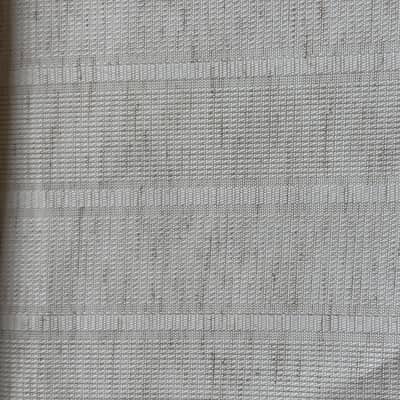
Polyester-Linen Stripe Fabric
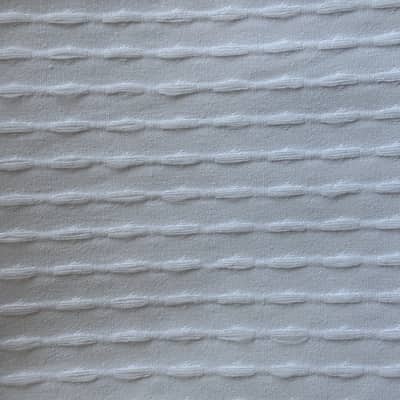
Vertical Dash Jacquard Fabric
The two rolls are not interchangeable, and the difference is not quality. A buyer specifying a large window with high ceilings may want the 195 GSM structure to keep the drape from looking thin at scale. A buyer dressing a smaller window under warm light may find the 130 GSM stripe gives a more relaxed fall. The drape question is therefore a room question before it is a fabric question.
What Has to Be Measured, Tested and Priced
Once the drape direction is chosen, three things have to be pinned down before a quotation is meaningful. The first is the weight band, stated as a range rather than a single figure, because a roll that arrives at the top of a 165 to 175 GSM band will hang slightly differently from one at the bottom. The second is the fold behaviour under the actual heading, since a pencil-pleat heading and an eyelet heading produce different wave counts from the same cloth. The third is print status, because a printable base opens a colourway route that a non-printable roll closes.
Sampling should test the cloth in the position it will occupy. Hang a full-drop panel, not a swatch, and view it under the project's real light at the distance the end user will stand. A panel viewed at one metre tells you about surface. A panel viewed at four metres tells you about drape. The second view is the one that decides whether the curtain belongs in the room.
What Our Own Search Rows Show, and What They Cannot
Searches for curtain fabric weight and drape have reached curtains.vip, but the volumes involved are small and the rows describe our own site only. They tell us which questions buyers bring to our catalogue. They do not establish market size, market share, growth or any wider industry trend, and we do not present them as such. The useful signal is narrower: buyers arrive wanting to connect a weight figure to a hanging behaviour, which is exactly the gap this note addresses.
Shaoxing Haowen Textile Clothing Co., Ltd. (the company behind the curtains.vip team) develops curtain, shower-curtain and table-linen fabrics, including custom print development and finished shower curtain OEM/ODM, so a drape brief can be worked against a range that also covers the other textiles in the same project. The usual reference MOQ is 2,000 m per SKU, and orders below that are accepted with a slightly higher unit price, which allows a single window or a pilot room type to be tested before a wider commitment. The usual reference MOQ is 2,000 m per SKU; orders below 2,000 m are also accepted, with a slightly higher unit price.
The One Specification Question to Settle First
Before the drape specification is approved, the question that does most of the work is this: can the supplier show the intended cloth hung as a full-drop panel, under the project's own light, at the distance the end user will actually view it, and retain a reference panel from that same roll for the next order? If the answer is yes, the drape is testable and the second delivery can be judged against evidence rather than memory. If the answer is no, the specification is being approved on a flat swatch, and the fold line will decide the outcome instead of the buyer.
Questions buyers ask
Does a higher GSM always mean a better drape?
No. Weight is one input. Weave structure, heading type and the width of the drop all change how a cloth falls. A 195 GSM jacquard and a 130 GSM stripe can both drape correctly for different windows.
Can a printable base change the drape decision?
It can. If the base has to carry a future print or colourway, print status belongs in the same conversation as weight and fold behaviour, because a structured surface can mask a fine motif.