
Custom Printed Curtain Fabric for Retail Collections: What Retail Buyers Are Actually Asking For
Retail buyers asking for custom printed curtain fabric are not all asking the same question. This demand note separates what curtains.vip sees in its own search signals from wider-market inference, and sets out what to test before a printed base earns range space.

PRODUCTS
Products in this report
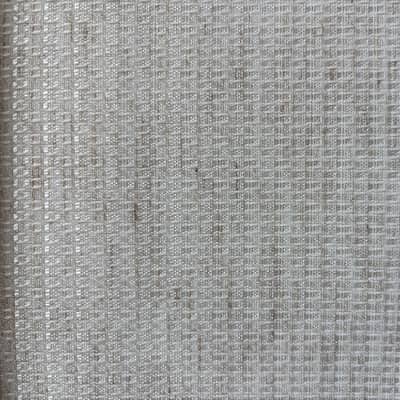
Polyester-Linen Textured Fabric
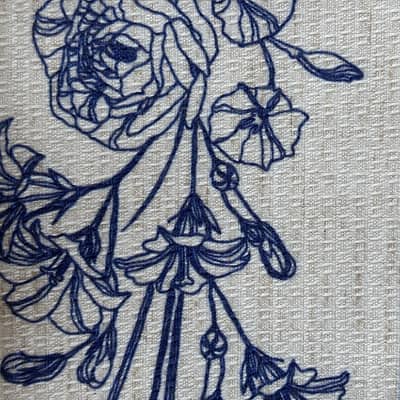
27-001-F Navy Floral Polyester-Linen Fabric
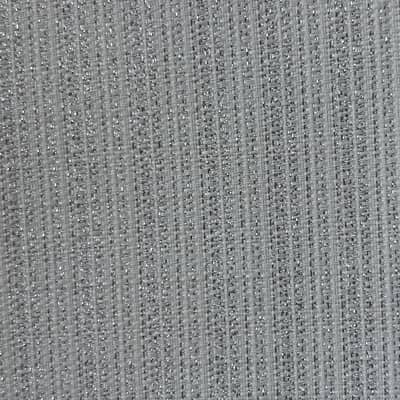
Metallic-Yarn Linen-Look Fabric
The Question Behind the Print Brief
A retail buyer rarely arrives with a fabric brief. They arrive with a question: can a printed curtain base carry a seasonal story without turning into a reorder problem six months later? The print is the visible part of that question, but it is not the part that decides whether the collection survives. The base decides.
That distinction matters because retail collections are judged on two clocks at once. The first is the selling clock: does the print read from a hanging position, at a distance, under store lighting? The second is the replenishment clock: if the print sells, can the same base be produced again at the same specification? A print that wins the first clock and fails the second is not a collection item; it is a one-off.
What Our Own Search Signals Show, and What They Do Not
Searches for custom printed curtain fabric for retail collections have reached curtains.vip, but the volumes are small and the rows describe our own site, not the wider market. They tell us which questions buyers bring to our catalogue. They do not establish market size, share, growth or direction, and we do not treat them as evidence of a trend.
The useful signal is narrower. Buyers who reach us with this phrase tend to be evaluating a printed base for a defined retail programme, not browsing decorative prints in general. That is a first-party observation about our own traffic. Any statement beyond it, about what retail buyers globally are doing, would be inference rather than evidence, and we keep the two separate.
Three Retail Buyer Segments, Three Different Print Questions
A department-store or specialty retailer buying a printed curtain collection is usually buying a colour story. The print has to sit inside a seasonal palette and photograph consistently across a lookbook. The base is secondary until the first reorder, at which point it becomes the whole conversation.
An e-commerce or marketplace seller is buying a thumbnail. The print has to read at small scale, which favours larger motifs and higher contrast over fine linework. The base matters here for a different reason: a textured surface can soften a motif in product photography, which is either an asset or a liability depending on the intended read.
A private-label programme is buying the right to change. It needs a base that can carry several prints across several seasons without the buyer re-specifying the roll each time. That is a base decision first and a print decision second, and it is the segment where print compatibility is least negotiable.
Where Print Compatibility Actually Bites
Print compatibility is product-specific, not a category-wide property. A base that accepts a dense floral repeat cleanly may show a softer edge on a fine geometric, and the same base may behave differently again under a different ink route. The practical implication for a retail collection is that the print file and the base have to be approved together, not sequentially.
This is also where a retail buyer's timeline usually collides with the print development process. A collection calendar is fixed months ahead. Custom print development on a new base is not. The buyers who manage this well tend to shortlist two or three bases early, print the same artwork across all of them, and compare the results side by side rather than approving a base and then discovering a print problem.
A Concrete Example: One Printable Base, One Non-Printable Surface
The 27-001-F Navy Floral Polyester-Linen Fabric (SKU 27-001-F-PRINT) is a 150 GSM, 92% polyester / 8% linen base supplied as a printed floral. It is a useful reference point for a retail buyer because it shows what a printable polyester-linen base looks like when the print is already resolved: the buyer is evaluating a finished surface, not a print programme.
Polyester-Linen Textured Fabric
27-001-F Navy Floral Polyester-Linen Fabric
At the other end, the 27-1759-B Metallic-Yarn Linen-Look Fabric is a 125 GSM, 88% polyester / 12% metallic yarn base and is not printable. A retail buyer who wants both a printed floral story and a metallic accent story in the same collection is therefore looking at two different bases, not one base with two finishes. That is a range-architecture decision, not a print decision, and it is better made before the collection is costed.
What to Test Before a Printed Base Earns Range Space
First, test the print on the actual base, not on a screen or a paper proof. A metre of printed yardage on the shortlisted base, hung vertically under the lighting the product will sell under, answers more than a colour reference. Second, test the reorder question directly: ask the supplier to confirm the base specification that will be run in bulk, and confirm that it matches the sample. Third, test the range logic: confirm that no two printed SKUs in the collection are doing the same job for the same buyer clock, because duplicated roles dilute volume without widening the offer.
Where a pilot run is needed before a full collection commitment, the usual reference MOQ is 2,000 m per SKU, and orders below 2,000 m are accepted with a slightly higher unit price. That allows a single print or a single colourway to be validated in the market before the wider collection is committed.
Two Implications to Watch
The first is whether the printed base and the accent base in a collection can be sourced from the same specification family. If they cannot, the buyer is managing two reorder risks instead of one, and that should be priced into the collection plan rather than discovered at the second season.
The second is whether the print development timeline is being treated as part of the collection calendar or as a step that happens after it. Retail buyers who treat print development as a calendar input rather than a calendar output tend to avoid the common failure mode: a collection approved on a swatch that cannot be reproduced at the specification the swatch implied. Shaoxing Haowen Textile Clothing Co., Ltd. (the company behind the curtains.vip team) develops curtain, shower-curtain and table-linen fabrics including custom print development, and buyers evaluating a printed base for a retail collection can review the verified range at /products or raise a specific brief through /contact.