
Strike-Off Approval on a Custom Print Order: The Base Cloth Signs the Panel Too
A strike-off panel is usually signed as a colour decision. On a structured base it is also a construction decision, because the weave decides where the ink sits and how the motif reads once the cloth is gathered. This field note moves from the panel on the table to what has to be measured, tested and priced, using verified printable bases as boundary cases.

PRODUCTS
Products in this report
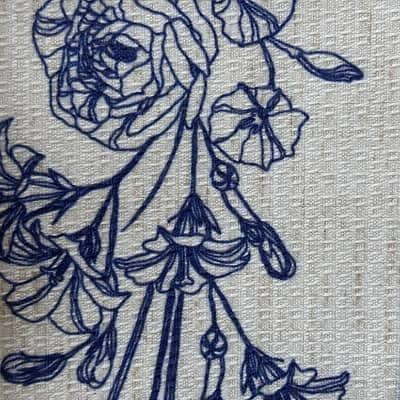
27-001-F Navy Floral Polyester-Linen Fabric
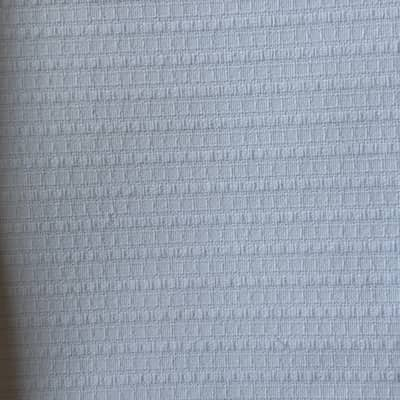
Fine Textured Jacquard Fabric
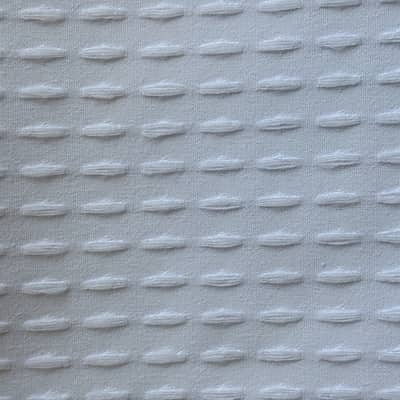
Raised Dash Jacquard Fabric
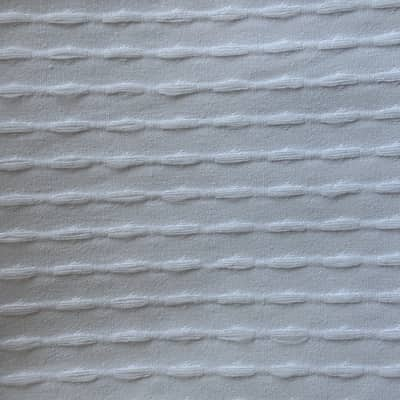
Vertical Dash Jacquard Fabric
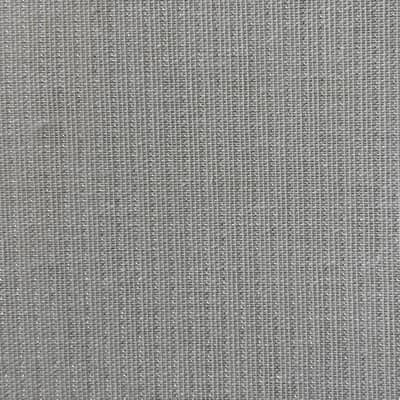
Polyester-Cotton Silver Metallic Fabric A
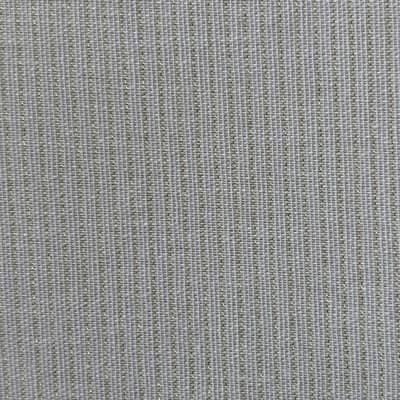
Polyester-Cotton Gold Metallic Fabric A
The Panel That Looks Settled Until You Tilt It
A strike-off comes back from the printer as a cut panel, maybe half a metre square, motif running across it. Laid flat under a sample-room lamp it reads clean: the ground is even, the repeat sits where the file placed it, and the colour is close to the proof. Pick the panel up by one corner and tilt it toward the window, and the surface starts to answer. On a fine grid jacquard the ink sits in shallow cells and the ground between them stays slightly lighter. On a raised dash the motif breaks across the ridges and reads a shade softer where the structure lifts.
The colour has not moved. The way light meets the base has. That is the first thing worth saying about textile strike off approval for custom print orders: the buyer signs the panel as a colour decision, but on any structured cloth the panel is also a construction decision. The base decides where the ink lands, how much of the motif is interrupted by yarn, and how the print will read once the cloth leaves the table and gathers on a rail.
What the Strike-Off Actually Certifies
A strike-off certifies one thing well: that the intended motif can be printed on the base the printer used, at the scale and colour the file specified, under the conditions of that print run. It is a real and useful proof. It is not proof that the bulk roll will match, and it is not proof that the motif will read the same on a different base in the same range.
The gap matters most when a programme runs one motif across several bases, which is common in shower-curtain and table-linen ranges that have to read as a single specification. A navy floral approved on a flat 150 GSM polyester-linen will not read identically on a 190 GSM jacquard, even if the ink, the file and the printer are unchanged. The buyer is not comparing two prints. They are comparing two grounds.
Where the Base Rewrites the Motif
27-001-F-PRINT is a 150 GSM base, 92% polyester with 8% linen, listed as printable, carrying a navy floral print. Its linen content gives the surface a slight irregularity, so the ink crosses a ground that is not perfectly uniform. On a small low-coverage motif that reads as texture. On a dense all-over it can read as softness at the edges, which is either the point of the design or a problem, depending on what the buyer intended.
27-DS001-D is a different proposition: 100% polyester, 180 GSM, a fine textured jacquard, printable. The structure is regular and shallow, so a motif printed across it keeps its edges but picks up a faint grid from the ground beneath. 27-DS001-F, a raised dash jacquard at 185 GSM and 100% polyester, pushes further: the ink crosses ridges, and the motif reads differently at the crest of a dash than in the valley beside it.
Fine Textured Jacquard Fabric
Raised Dash Jacquard Fabric
None of these is better. Each one changes what the strike-off is being asked to prove. A buyer approving a floral on 27-001-F-PRINT is judging colour and coverage. A buyer approving the same floral on 27-DS001-F is judging colour, coverage and how much of the structure is allowed to show through the print.
The Weight Question That Sits Behind the Panel
Weight enters the strike-off conversation later than it should. A 150 GSM base and a 195 GSM base can carry the same motif at the same scale and still present differently once the finished curtain gathers. The lighter cloth folds more tightly, compressing the horizontal scale of the repeat; the heavier cloth holds a broader fold and the motif keeps more of its width. 27-DS001-E, a vertical dash jacquard at 195 GSM with 90% polyester and 10% cotton, sits at the heavy end of the printable range, and a motif printed on it will read at a different density on a rail than on a 150 GSM ground.
This is why the strike-off panel should be judged in the presentation the finished product will occupy. A flat panel on a table answers a colour question. A gathered panel on a rail answers the question the guest or the retail customer will actually ask.
The Bases That Cannot Take the Next Colourway
Two rolls in the range sit outside this conversation entirely. FAB-PC-SILVER-A and FAB-PC-GOLD-A are 165 GSM, 85% polyester with 10% cotton and 5% metallic yarn, and both are listed as non-printable. They are legitimate surfaces for a programme that will never need a print, a colourway or a logo on that cloth. They are the wrong base for a programme that might.
Polyester-Cotton Silver Metallic Fabric A
Polyester-Cotton Gold Metallic Fabric A
The practical consequence is a range decision, not a product verdict. If a shower-curtain or table-linen range is built entirely on non-printable metallics, the first seasonal print or private-label colourway forces a re-specification. If at least one printable base in the range has been strike-off tested with the actual motif, the programme has somewhere to go. That is why print status belongs in the strike-off conversation even when the current order carries no print at all.
What Has to Be Measured, Tested and Priced
Three things belong in the approval note. The first is the base: SKU, GSM, composition and print status, stated for the exact roll the panel came from. The second is the presentation: was the panel judged flat, folded or gathered, and under which light source. The third is the reference: a retained panel from the same roll, kept as the comparison for the next delivery.
Pricing follows from the same facts. A heavier printable jacquard costs more per metre than a 150 GSM ground, and the difference has to be weighed against what the structure buys in the finished product. Where a programme is testing a single property or a pilot run, the usual reference MOQ is 2,000 m per SKU, and orders below that are accepted with a slightly higher unit price, which lets a buyer prove a base before committing a full range to it. The usual reference MOQ is 2,000 m per SKU; orders below 2,000 m are also accepted, with a slightly higher unit price.
Where Our Own Search Rows Sit
Our own Search Console rows for this phrase show no impressions and no clicks in the last 28 days. That is a first-party observation about curtains.vip only. It does not describe global or regional demand for strike-off approval, market size, share or direction, and we do not present it as any of those things. What it does tell us is that buyers are more likely to arrive with a related phrase, such as a printed-fabric approval question, than with this exact wording.
The wider inference, clearly labelled as inference, is that strike-off approval is a step most buyers handle inside an existing supplier relationship rather than search for as a standalone topic. Shaoxing Haowen Textile Clothing Co., Ltd. (the company behind the curtains.vip team) develops curtain, shower-curtain and table-linen fabrics including custom print development, so the approval conversation usually happens against a named base rather than in the abstract. Buyers can review the printable range at /products or raise a specific base through /contact.
Questions buyers ask
Should a strike-off be approved on the exact base that will ship?
Yes. A strike-off proves that a motif can be printed on the base the printer used. If the bulk order ships on a different construction, the panel proves less than the buyer assumes. Name the SKU, GSM, composition and print status in the approval note.
How many printable bases should a custom print range carry?
There is no universal number, but a range with one printable base has a single point of failure for every future colourway. Two printable bases that have each been strike-off tested with the actual motif give the programme somewhere to move.
Does a non-printable metallic base rule out a custom print programme?
Not for the current order, but it does close the door on a later print, colourway or logo on that cloth. A programme that expects any of those should keep at least one printable base in the range and test it before the first bulk commitment.