
Strike Off Approval Is a Colour Decision, Not a Print Decision
A strike off is usually treated as the gate that clears a custom print order. It confirms colour on one base. It does not confirm that the motif will hold across a production run or a second base. This note works through the variables that change the answer.

PRODUCTS
Products in this report
The Approval That Gets Treated as a Green Light
A strike off is the small printed sample a mill produces before a custom print order is released. It is the buyer's first sight of the actual motif on the actual base, and it is usually signed with a relief that has nothing to do with what has been proven. The relief is understandable: after weeks of artwork files and base shortlists, a printed panel that looks right feels like the end of the risk.
That reading is useful in exactly one situation. When the motif is a low-coverage repeat, the base is a flat non-directional ground, and the strike off has been produced on the same base, at the same scale, and in the same print method that will run in bulk. Under those conditions, the strike off is a reliable confirmation of colour and registration, and the order can proceed on it.
It fails the moment any of those conditions changes. A strike off proves what one print pass did on one piece of cloth. It does not prove that the motif will hold across a full roll, that a second base will accept the same ink the same way, or that the colour will read the same once the panel is gathered on a rail. The buyer who treats the strike off as a print decision is approving a colour and hoping for a product.
What the Strike Off Actually Proves, and What It Leaves Open
A strike off is a colour and registration instrument. It answers a narrow question: does this ink, on this base, produce the tone and edge the buyer asked for? That is a real question and it deserves a real answer, because colour drift between the artwork file and the printed cloth is one of the most common causes of a rejected first delivery.
What it does not answer is repeatability. A strike off is typically a small panel, often printed on a sample table or a short run. A production order runs metres of the same base through the same process, and the variables that matter over metres are not visible on a panel. Ink lot, base lot, table tension, drying consistency and the way the base behaves where it is folded or gathered all sit outside the strike off's frame.
This is the gap that catches custom print programmes. The strike off is approved, the bulk order is placed, and the first delivery arrives with a motif that reads correctly flat but differently once the cloth is hung. Nothing in the strike off was wrong. The strike off was simply asked to answer a question it was never designed to answer.
The Variables That Change Whether the Strike Off Is Enough
The first variable is base structure. A flat, fine, non-directional ground prints predictably, and a strike off on that base travels well into production. A base with visible slub, a jacquard cell, a crosshatch grid or a directional weave changes how ink sits on the surface, and the strike off has to be judged on that structure rather than on the artwork alone. A motif that reads crisp on a flat base can read softer where the yarn thickens and thins.
The second variable is coverage. A low-coverage repeat leaves most of the base exposed, so the base's own surface remains part of the design and small print variations are absorbed. A high-coverage or all-over print covers the base and makes the print itself the surface, which raises the stakes on colour consistency across the run.
The third variable is presentation. A strike off is judged flat. The finished product is judged gathered, folded or laid. Where the cloth turns, the repeat compresses horizontally and the motif can read more densely than it did on the panel. This is not a print fault, but it is a print consequence, and it belongs in the approval conversation rather than in a post-delivery dispute.
The fourth variable is the number of bases. A programme that will run the same motif on more than one base needs more than one strike off, because print compatibility is product-specific. A base that accepts ink well and a base that accepts it poorly can carry the same file to two different results, and one approved strike off cannot cover both.
Where a Second Base Changes the Approval
Consider a programme that intends to carry one motif across two printable bases. 27-001-F is a 150 GSM polyester-linen at 92% polyester and 8% linen, printable, and already carrying a navy floral print. 55# is a 165 GSM polyester-linen at 95% polyester and 5% linen, printable, with a large jacquard floral motif in a natural ivory register. Both are printable and both are polyester-linen, which is exactly why a buyer might assume one strike off covers the pair.
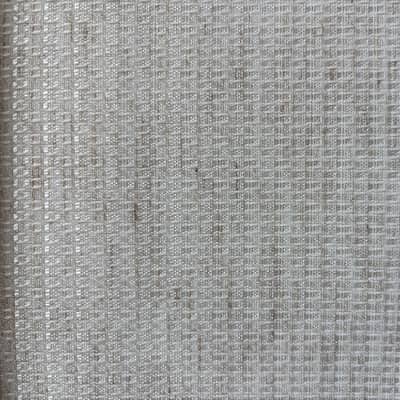
Polyester-Linen Textured Fabric
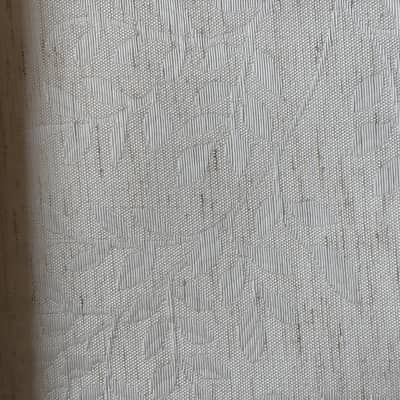
55 Large Floral Jacquard Fabric
It does not. The two bases differ in weight and in surface. A strike off on 27-001-F confirms how the ink behaves on that construction; it says nothing about how the same ink will sit on the jacquard structure of 55#. Where a programme intends to print both, the approval has to name both SKUs and both strike offs, because the second base is a separate print question.
The same logic applies at the boundary. A non-printable base such as 27-1759-B, an 88% polyester and 12% metallic yarn linen-look at 125 GSM, cannot enter the print programme at all, whatever a strike off on a neighbouring roll might suggest. Print status is a property of the specific roll, not of the range it sits in.
The Buyer Scenarios That Decide How Much Approval Is Needed
A retail programme refreshing a motif every season needs a strike off that has been viewed in the presentation the shopper will see, because the motif is the product's main visual argument and a colour shift is a shelf problem. For that buyer, the strike off is a starting point and a gathered panel from the same roll is the real evidence.
A hotel or contract programme that may add a logo or colourway later needs the strike off to sit alongside a print-status confirmation for the base, because a base that prints correctly now but cannot be reprinted in the same specification is a reorder risk. The strike off answers the current motif; the base specification answers the next one.
A private-label programme running several colourways from one file needs the strike off to be repeatable across colourways, which means the approval should record the base, the weight, the composition and the print status, not only the approved tone. That record is what lets the second colourway be judged against evidence rather than against a memory of the first.
What Our Own Search Rows Do and Do Not Show
Searches for print-approval and strike-off terms have reached curtains.vip, but the volumes are small and the rows describe our own site only. They tell us which questions buyers bring to our catalogue. They do not establish market size, market share, growth or any wider industry trend, and we do not treat them as evidence of one.
The useful signal is narrower. Buyers arrive at the print conversation holding a strike off and a delivery date, and the question underneath is usually about repeatability rather than colour. That is a question a supplier can answer with a second sample, not with a certificate.
The Conditional Answer
Choose strike off approval alone when the motif is low-coverage, the base is flat and non-directional, the print will run on one base only, and the strike off was produced on the same base at the same scale in the production method. Under those conditions the strike off is a sufficient gate and the order can move.
Choose a fuller approval when any of those conditions fails. That means a strike off on every base in the programme, a printed panel viewed in the presentation the customer will actually handle, and an approval note that names the SKU, the weight, the composition and the print status. Shaoxing Haowen Textile Clothing Co., Ltd. (the company behind the curtains.vip team) develops curtain, shower-curtain and table-linen fabrics, including custom print development, and can produce strike offs against a named base rather than a generic swatch. Where the programme is still open, the next step is to review the printable bases at /products and confirm which ones the motif is expected to run on before the approval is signed.
Questions buyers ask
Does a strike off confirm that a custom print will repeat in bulk?
It confirms colour and registration on the base it was printed on. It does not confirm repeatability across a full production run, across a second base, or in the gathered presentation the finished product will be seen in.
Can one strike off cover two printable bases?
No. Print compatibility is product-specific, so each base in the programme needs its own strike off, even when both bases are printable and share a fibre family.