
Disperse Printing Considerations for Curtain Fabric: The Ground the Ink Meets
Disperse ink does not sit on polyester; it enters it. This field note moves from the surface a buyer can see to the ground the ink actually meets, compares verified printable bases, and closes on the one sample question that decides approval.

PRODUCTS
Products in this report
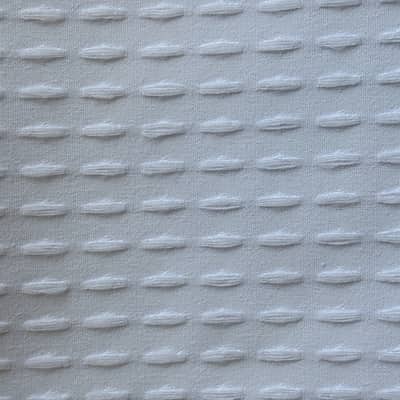
Raised Dash Jacquard Fabric
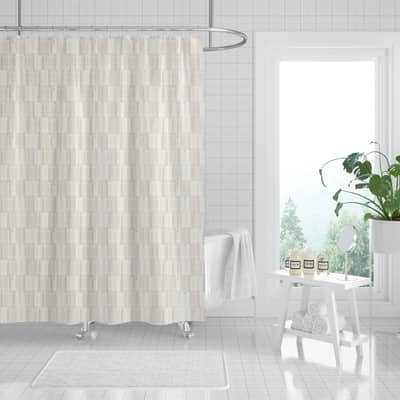
Woven Stripe
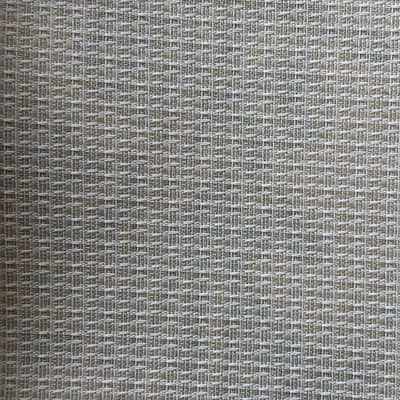
Crosshatch Linen-Look Fabric
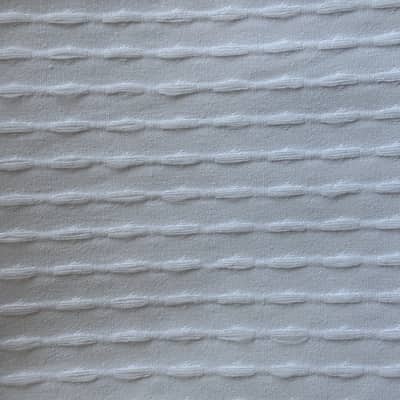
Vertical Dash Jacquard Fabric
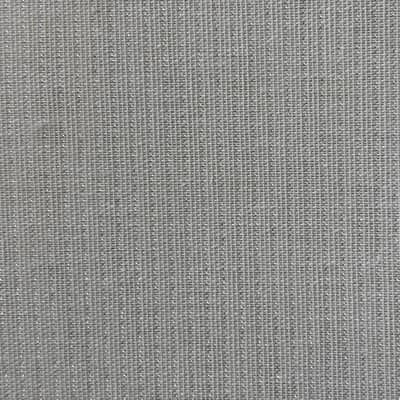
Polyester-Cotton Silver Metallic Fabric A
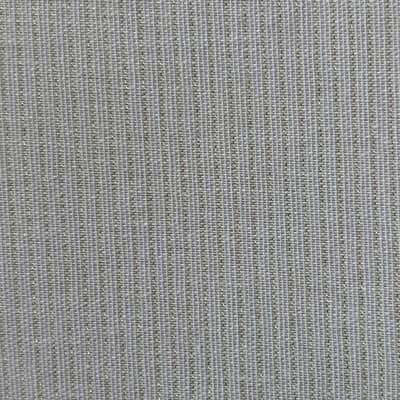
Polyester-Cotton Gold Metallic Fabric A
The Ground You Approve Is Not the Ground the Ink Meets
Hold a metre of 27-DS001-F up to a window and the raised dash jacquard catches light in small vertical cells. Lay the same roll flat on a table and the surface reads almost plain. Run a thumb across it and the structure answers back in ridges that run one way. None of those impressions is a print specification, but all three describe the ground a disperse print will have to cross.
Disperse printing on polyester is not a coating operation. The dye is carried onto the cloth, then heat opens the fibre and the colour enters the polymer. What the buyer approves as a flat swatch is a surface; what the printer works with is a construction. The gap between the two is where most print programmes get their first surprise.
Where the Ink Actually Goes
Because disperse colour enters the fibre rather than sitting on top of it, the base construction decides how the motif reads before any artwork is discussed. A flat, even ground lets the ink distribute uniformly. A structured ground — a jacquard cell, a slub, a woven stripe — interrupts that distribution, and the interruption is not a defect. It is the surface doing what it was built to do.
This is why two rolls can both be marked printable and still need different conversations. Printable status describes whether a base can accept disperse ink at all. It does not describe how the ink will sit once the cloth is gathered on a rail, folded on a shelf or laid on a table. Those are separate questions, and they belong to the buyer, not the printer.
Three Verified Grounds and What Each Does to a Motif
27-001-E is a 100% polyester crosshatch linen-look at 155 GSM, listed as printable. Its surface is fine and even, and a disperse print on it reads close to the artwork file because there is little structure to interrupt the ink. For a programme where the motif is the product's main visual argument, that evenness is the point.
27-DS001-F is a 100% polyester raised dash jacquard at 185 GSM, also printable. The raised dash gives the ink a three-dimensional ground, so a motif printed across it will read differently where the cells rise and where the ground between them lies flat. That is a deliberate trade: the surface carries part of the design, and the print sits within it rather than dominating it.
27-DS001-E is a 90% polyester and 10% cotton vertical dash jacquard at 195 GSM, printable, and the heaviest of the three. The cotton share and the vertical structure both change the way a disperse print presents, and the weight puts it in a different drape conversation from the two lighter rolls. A buyer shortlisting it is buying structure first and print second.
What the Buyer Can See, and What Only a Printed Panel Shows
A flat swatch shows tone, surface and structure. It does not show how a repeat behaves once the cloth gathers, how the ink reads across a raised cell, or whether the printed surface still looks deliberate in the position the finished curtain will occupy. Those answers only appear on a printed panel from the actual roll.
The practical consequence is that a print approval should retain a printed reference panel, not a plain one. A plain panel proves the base; a printed panel proves the base and the ink together, which is the combination the next delivery will be judged against.
Two Bases That Sit Outside the Disperse Conversation
Not every roll in a range belongs in a print programme. FAB-PC-SILVER-A and FAB-PC-GOLD-A are both 85% polyester, 10% cotton and 5% metallic yarn at 165 GSM, and both are listed as non-printable. The metallic yarn is the reason: the surface is built to catch light, and a disperse print over it would compete with the effect the base was chosen for.
Polyester-Cotton Silver Metallic Fabric A
Polyester-Cotton Gold Metallic Fabric A
Those two rolls are useful as a boundary case. They show that print status is a range decision rather than a quality grade. A buyer who needs a metallic accent and a future colourway is looking at two different SKUs, not one roll that can do both.
Where Our Own Search Rows Sit, and Where They Stop
Searches for disperse printing terms have reached curtains.vip, but the volumes involved are small and the rows describe our own site rather than the wider market. They tell us which questions buyers bring to our catalogue. They do not establish market size, share or direction, and we do not treat them as evidence of a trend.
The useful signal is narrower: buyers arrive with a print question attached to a specific base. That is the question this note is built around.
The Sample Question That Decides the Print Programme
Before a printable base is approved for a disperse print programme, one question does most of the work: can the supplier show the intended motif printed on the exact base you are shortlisting, on a panel from the same roll, in the presentation the finished curtain will actually occupy, and retain that printed panel as the reference for the next delivery?
If the answer is yes, the print is testable and the second order can be judged against evidence rather than memory. If the answer is no, the programme is being approved from a flat swatch, and the ground the ink meets will only be discovered at the cutting table. Shaoxing Haowen Textile Clothing Co., Ltd. (the company behind the curtains.vip team) develops curtain, shower-curtain and table-linen fabrics including custom print development, and the verified rolls above can be reviewed at /products or discussed through /contact. The usual reference MOQ is 2,000 m per SKU, and orders below that are accepted with a slightly higher unit price, which lets a single print trial be run before a full programme commitment. The usual reference MOQ is 2,000 m per SKU; orders below 2,000 m are also accepted, with a slightly higher unit price.
Questions buyers ask
Does printable status guarantee a good disperse print result?
No. Printable status describes whether a base can accept disperse ink. How the ink reads once the cloth is gathered, folded or laid depends on the construction, and that has to be tested on a printed panel from the actual roll.
Can a metallic base be used in a disperse print programme?
The verified metallic rolls in our range, FAB-PC-SILVER-A and FAB-PC-GOLD-A, are listed as non-printable. A programme that needs both a metallic accent and a future colourway is usually looking at two separate SKUs.
What should a print approval retain?
A printed reference panel from the approved roll. A plain panel proves the base; a printed panel proves the base and the ink together, which is what the next delivery is compared against.