
Two Rolls, One Print File: What Separates Custom Printed Curtain Fabric Orders
Two rolls can look interchangeable on screen and still be specified differently once a print file enters the brief. This comparison works through observation, base-versus-ink behaviour, sample testing and the acceptance decision for custom printed curtain fabric orders.

PRODUCTS
Products in this report
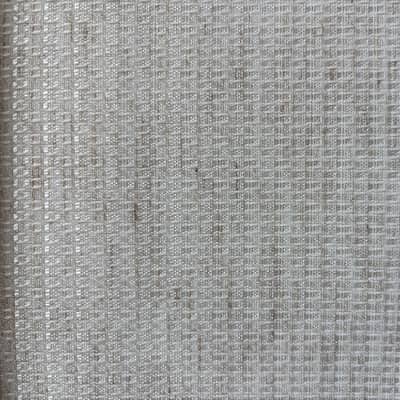
Polyester-Linen Textured Fabric
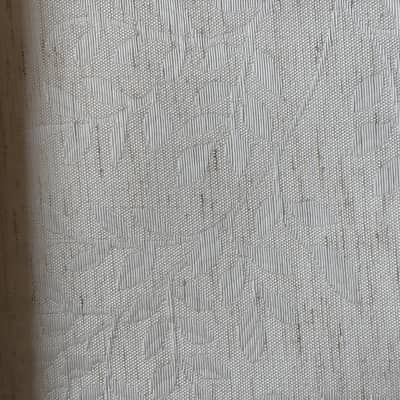
55 Large Floral Jacquard Fabric
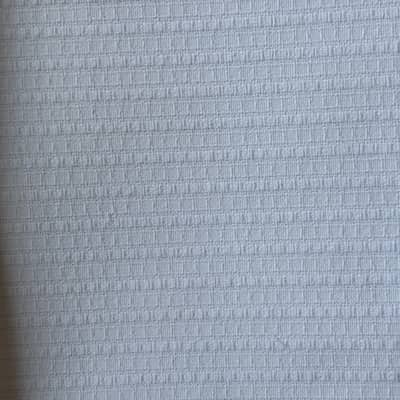
Fine Textured Jacquard Fabric
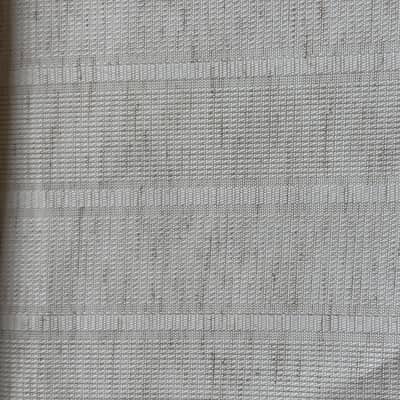
Polyester-Linen Stripe Fabric
Woven Stripe
Two Rolls That Photograph the Same and Specify Differently
27-001-F and 55# sit close together on a screen. Both are polyester-linen blends, both carry a natural-leaning surface, and both are listed as printable. A buyer scanning a catalogue could reasonably file them under the same heading and move on.
Polyester-Linen Textured Fabric
55 Large Floral Jacquard Fabric
The practical question that separates them is not weight or price. It is what the roll has to do after the print file arrives: hold a motif on a surface that already carries its own structure, or present a clean ground that lets the artwork do all the talking. That question belongs to the buyer, not the printer. A print file is fixed once approved; the base is the variable you control.
What the Two Bases Actually Carry Into the Print
27-001-F is a 150 GSM fabric, 92% polyester and 8% linen, supplied as a navy floral print. The motif is already on the cloth, which means the buyer is evaluating a finished surface rather than a blank one. For a programme that wants a floral story without a separate print-development cycle, that is a shorter route to a sample. The limitation to validate is whether the existing colourway can be matched or extended for a second season, because a printed base is only as repeatable as the ink-to-cloth relationship behind it.
55# is a 165 GSM jacquard, 95% polyester and 5% linen, with a large floral motif in natural ivory. It is also listed as printable. The distinction that matters is that the surface already has a woven structure, so any additional print lands on top of an existing pattern rather than on a plain ground. That can be an advantage for a layered, textural look and a complication for a fine-line motif that needs an even field.
Neither fact makes one roll better. They make one roll better suited to a specific brief, and the brief usually arrives as a print decision rather than a construction decision.
Where the Ink Meets the Structure
A common mistake is to treat printability as a yes-or-no property. On these two rolls it is a spectrum. 27-001-F already demonstrates that the base accepts a floral print; the question is whether a new file would sit on the same surface with the same clarity. 55# carries a woven motif, so a subsequent print has to negotiate with the jacquard rather than replace it.
This is where a buyer should separate two variables that are often bundled together: composition and surface. Both rolls are polyester-dominant with a small linen share, and both sit within 15 GSM of each other. Composition and weight therefore explain very little about how a print will read. Surface structure explains most of it.
The useful comparison is not 150 GSM against 165 GSM. It is a printed ground against a woven ground, and which one your motif was designed for.
Two More Bases That Widen the Print Decision
27-DS001-D is a 100% polyester fine-textured jacquard at 180 GSM, listed as printable. It sits at the heavier end of the printable group and carries a fine texture rather than a large motif, which makes it a candidate where a print needs a subtle ground and a slightly firmer hand.
27-008-3 is a 92% polyester, 8% linen woven stripe at 130 GSM, also printable. The stripe introduces a directional element: a print placed over a stripe has to work with the line, not against it. For a buyer who needs custom printed curtain fabric and wants the base to contribute part of the design, that is a deliberate choice rather than a neutral one.
Polyester-Linen Stripe Fabric
Woven Stripe
Set beside 27-001-F and 55#, these four rolls cover four different relationships between base and ink: existing print, woven motif, fine texture and directional stripe. A shortlist that names only one of them is not a shortlist; it is a single point of failure for the next colourway.
The Sample Test That Settles the Choice
A generic print swatch proves very little. The test that matters is the actual motif, on the actual base, viewed in the position the finished curtain will occupy. For a drape, that means hung and folded, not flat on a table. For a shower curtain, it means held against light at the distance a user stands. For a table linen application, it means folded and re-laid.
Two questions should be answered on the sample table. First, does the motif hold its registration where the surface changes, whether that is a jacquard cell, a stripe line or a slub? Second, does the printed area read the same as the unprinted ground under the project's own lighting, or does the ink shift the tone of the base?
The limitation to validate on any printable base is repeatability, not capability. A roll can accept a print once and still drift on the second run if the reference panel is not retained. That is why the sample should come from the production roll, not a separate swatch library.
Where the Order Actually Gets Specified
Shaoxing Haowen Textile Clothing Co., Ltd. (the company behind the curtains.vip team) develops curtain, shower-curtain and table-linen fabrics, including custom print development and finished shower curtain OEM/ODM, so a print brief can be worked across the three end uses against one development conversation rather than three.
The commercial structure is straightforward. The usual reference MOQ is 2,000 m per SKU, and orders below that are accepted with a slightly higher unit price, which lets a buyer pilot a single motif on one base before committing the range. The usual reference MOQ is 2,000 m per SKU; orders below 2,000 m are also accepted, with a slightly higher unit price.
What belongs in the RFQ is narrower than most buyers expect: the exact SKU, the GSM, the composition, the print status, the intended motif and the viewing position. Without those five items, a quotation is a price without a specification, and the second order has nothing to be judged against.
Questions buyers ask
Can I order custom printed curtain fabric on a base that already carries a woven motif?
Yes, where the base is listed as printable. 55# is a 165 GSM jacquard with a large floral motif and printable status, so an additional print can be developed over the existing structure. The practical check is whether your motif needs an even ground or can work with the woven pattern underneath. That is settled on a sample, not on a specification sheet.
Does a higher GSM mean a better print result?
Not on its own. The printable rolls in this comparison range from 130 GSM to 180 GSM, and the variable that changes print behaviour is surface structure rather than weight. A 130 GSM woven stripe and a 180 GSM fine jacquard will each hold a motif differently because of what the surface does, not because of the number.
What should I send with a custom printed curtain fabric enquiry?
Send the SKU, the GSM, the composition, the print status and the intended motif, plus the position the finished curtain will occupy. If the base is directional or carries a woven pattern, say so, because that affects how the motif is placed. A reference panel from the approved roll should be retained for the next order.