
A Calibration Brief for a Printed Polyester Programme: The Target the Buyer Has Not Named
This is a planning scenario, not a client case. A contract buyer wants a printed polyester surface across a shower-curtain and table-linen range and has not decided what the colour target should be measured against. The note follows the brief from requirements to shortlist, sample plan, quotation inputs and approval.

PRODUCTS
Products in this report
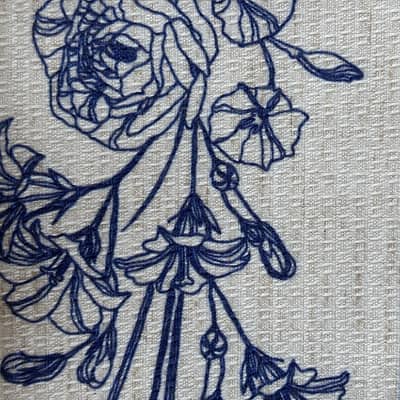
27-001-F Navy Floral Polyester-Linen Fabric
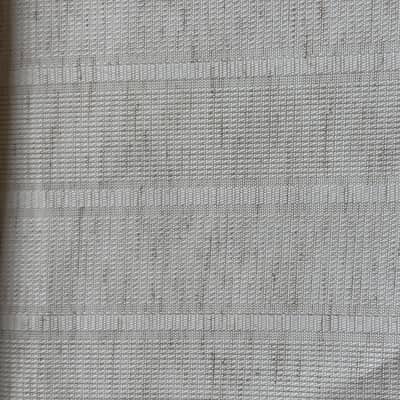
Polyester-Linen Stripe Fabric
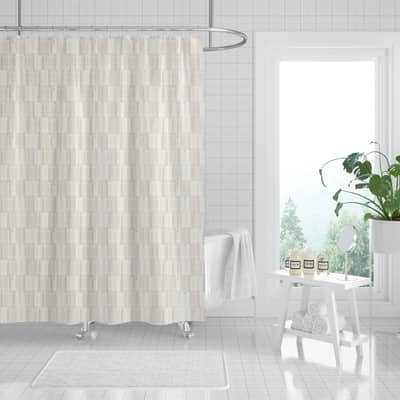
Woven Stripe
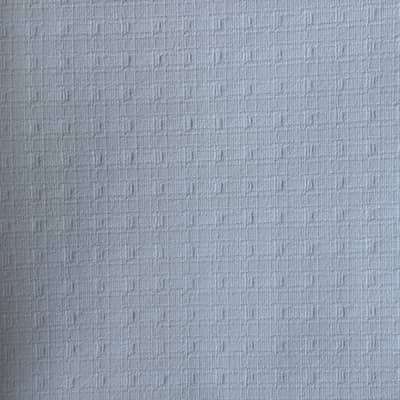
Fine Grid Jacquard Fabric
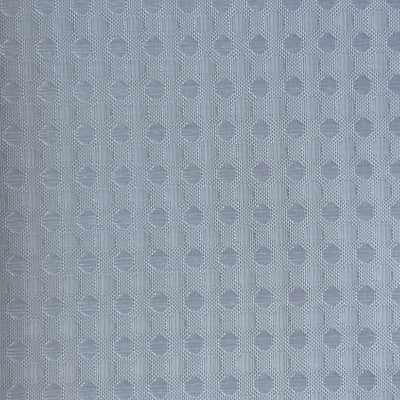
Dotted-Waffle Polyester Fabric
The Brief: One Printed Polyester Surface, Two End Uses, No Agreed Target
A mid-size contract buyer is building a printed polyester programme for a serviced-apartment operator. The visual direction is settled: a soft mid-tone motif on a light ground, quiet enough to sit behind a white basin and a stainless rail, and legible enough that a guest sees a deliberate print rather than a tinted cloth. The same print is expected to run across shower curtains and table linen so the bathroom and the dining area read as one specification.
What is not settled is the colour target. The buyer has a screen file, a printed paper proof and a verbal reference to 'the same as last time', and none of those three agree once the cloth is in the room. That unresolved question is the whole subject of digital print colour calibration on polyester fabric. The buyer is not choosing a motif here; the motif is approved. They are deciding what the colour will be measured against, on which base, under which light, and who signs it off.
The brief also carries a constraint the buyer has not written down yet: the two end uses may not use the same base. A shower curtain and a tablecloth can share a print file and still meet the ink on different constructions, which means one calibration target may not cover both.
Why the Target Has to Be Named Before the Shortlist
Most print programmes shortlist bases first and argue about colour later, when the strike-off arrives and everyone is looking at a panel they have already half-committed to. In this brief that order is reversed. The colour target decides which bases are even candidates, because a target measured on a flat, low-structure ground behaves differently from the same target measured on a raised jacquard.
There is a second reason the target comes first. Polyester takes disperse ink into the fibre rather than laying it on the surface, so what the buyer approves as a flat swatch is a surface, and what the production run delivers is the same surface after the ink has entered the polymer. Calibration is the process of holding that entry point steady from sample to bulk. If nobody has said what 'steady' means, the second delivery is judged against memory.
Forming the Shortlist: Four Printable Polyester Bases
With the target framed as 'a soft mid-tone on a light ground, repeatable on both end uses', the shortlist narrows to printable polyester bases that can plausibly carry it. Four verified rolls are worth putting on the table, and each one would be rejected for a different reason as easily as selected.
27-001-F-PRINT, a navy floral polyester-linen at 150 GSM, is the closest thing in the range to a finished printed reference. It is printable and already carries a floral print, which makes it useful as a comparison panel: it shows how a motif reads on a 92% polyester / 8% linen ground at that weight. It would be rejected if the buyer's motif needs a heavier hand for the table-linen side, because 150 GSM is the lightest of the four.
27-008-3, a polyester-linen woven stripe at 130 GSM, is printable and reads as a linen look in a natural ivory register. It is the natural candidate for a light ground, and it would be rejected where the stripe itself fights the motif — a directional structure under a soft all-over print can read as a second pattern.
Polyester-Linen Stripe Fabric
Woven Stripe
27-DS001-H, a 100% polyester fine grid jacquard at 190 GSM, is printable and carries visible white texture. It suits the shower-curtain side where a little structure helps the cloth read as material, and it would be rejected on the table side if the buyer wants the print to sit flat and uninterrupted.
FAB-WAFFLE-DOT-120, a 100% polyester dotted-waffle at 120 GSM, is printable and the lightest option. It is worth including as a boundary case: if the calibration target cannot hold on a 120 GSM waffle, that is useful evidence about how much the target depends on the base rather than on the ink.
The Sample Plan: What Each Candidate Has to Prove
A sample plan for this brief is not four swatches in an envelope. Each candidate has to answer the same three questions in the same order, so the panels can be compared against each other rather than admired one at a time.
The first question is whether the motif reads at the intended scale on that base. The second is whether the approved colour target survives the base's structure — a grid, a stripe or a waffle will shift how a mid-tone reads before anyone adjusts a printer. The third is whether the panel still holds the target when it is gathered on a rail or laid on a table, because that is the only presentation the guest or the diner will ever see.
The handoff matters as much as the test. Each panel should carry the SKU, the GSM, the composition, the print status and the light source it was judged under, and one panel from each base should be retained as the reference for the next delivery. Without that retained panel, the calibration conversation restarts at every reorder.
What Goes Into the Quotation Request
The quotation request for this programme is short, and most of it is not about price. It asks for the print to be quoted on each shortlisted base separately, so the buyer can see what the base choice costs rather than what an average metre costs. It asks which base the supplier would use as the calibration reference if the programme runs on more than one. And it asks for the retained reference panel to be named in the quotation, so the approval has something to attach to.
This is also where the commercial structure belongs. The usual reference MOQ is 2,000 m per SKU, and orders below that are accepted with a slightly higher unit price, which lets a buyer run a single property or one pilot table setting through the actual print before committing the range. For a programme that has not yet agreed its colour target, that pilot is the cheapest way to find out whether the target is achievable on the base the buyer prefers. The usual reference MOQ is 2,000 m per SKU; orders below 2,000 m are also accepted, with a slightly higher unit price.
Approval, and the One Answer Still Missing
Approval for this brief should name the SKU, the GSM, the composition, the print status and the colour target as measured on that base under a named light source. It should retain a reference panel from the approved roll and state which base is the reference if the programme runs on two. That is a complete approval for a single-base print.
It is not complete for this brief, because the brief has two end uses and the buyer has not said which one sets the colour target. If the shower-curtain side sets it, 27-DS001-H becomes the reference base and the table side is judged against a target measured on a 190 GSM grid jacquard. If the table side sets it, 27-008-3 or 27-001-F-PRINT becomes the reference and the shower side inherits a target measured on a lighter, flatter ground. Those are different programmes with different rejection risks, and the buyer has to pick one before the sample plan is worth running.
Shaoxing Haowen Textile Clothing Co., Ltd. (the company behind the curtains.vip team) develops curtain, shower-curtain and table-linen fabrics including custom print development, so a brief like this can be worked across both end uses in one print conversation rather than two. The remaining step is to review the printable bases on /products, shortlist two or three, and send the colour target with the end use that sets it. The calibration question cannot be answered before that.
Questions buyers ask
Can one colour target cover both a shower curtain and a tablecloth in the same print programme?
It can, but only if the buyer names which base the target is measured on and accepts that the other base is judged against a target set elsewhere. The four shortlisted rolls here range from 120 to 190 GSM and differ in structure, so the same mid-tone will not read identically on all of them.
Does printable status mean a polyester base will hold a colour target in bulk?
No. Printable status means the base can accept ink. Holding a target from sample to bulk is a calibration question, and it is answered by a retained reference panel from the approved roll, judged under a named light source, not by the printable flag alone.
When should the colour target be agreed relative to sampling?
Before the shortlist is finalised in this brief, because the target decides which bases are candidates. In practice many buyers agree it after the first strike-off, which works when the programme runs on one base and fails when two end uses meet the ink on different constructions.