
A Graphite Grid Fabric Brief: The Printability Decision That Reshapes the Shortlist
This is a planning scenario, not a client case. A contract buyer wants a graphite grid surface for a shower-curtain and table-linen programme and has not decided whether the range must stay printable. The note follows the brief from requirements to shortlist, sample plan, quotation inputs and approval.

PRODUCTS
Products in this report
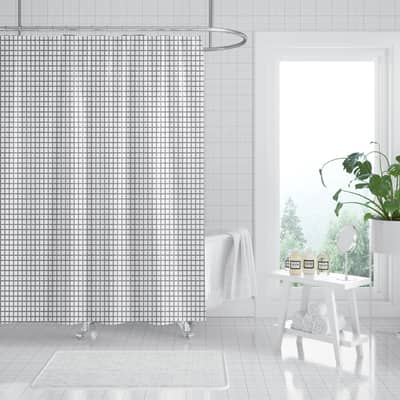
Graphite Grid
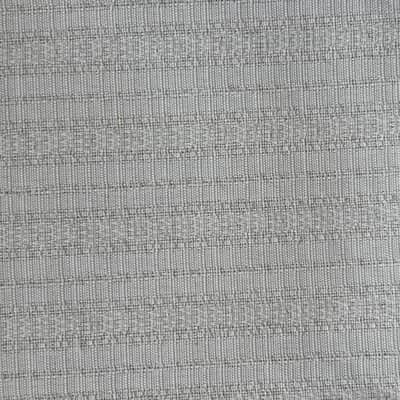
Micro-Grid Polyester-Cotton Jacquard Fabric
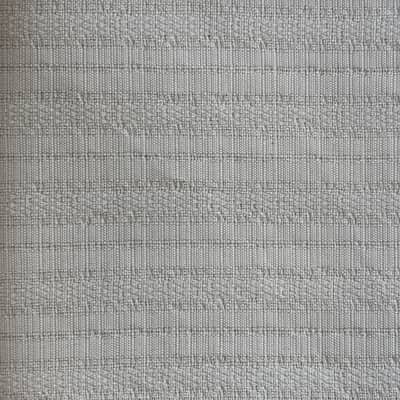
Dot-Grid Polyester-Cotton Jacquard Fabric
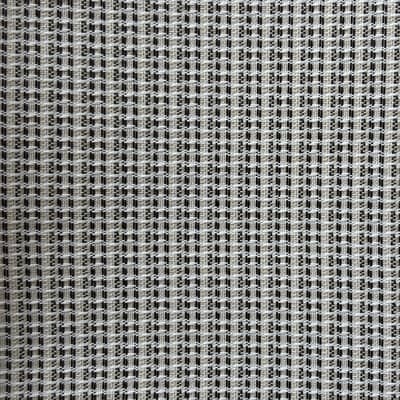
Contrast Grid Linen-Look Fabric
The Brief: A Graphite Grid, Two End Uses, One Unresolved Question
A mid-size contract buyer is assembling a shower-curtain and table-linen programme for a serviced-apartment operator. The visual direction is already fixed by the interior team: a graphite grid. The surface should read as a fine, regular grid in a dark neutral register, quiet enough to sit behind a white basin and a stainless rail without competing with either, and structured enough that a guest standing a metre away sees a deliberate material rather than a plain dark cloth. The same graphite grid is expected to carry across both end uses so the bathroom and the dining area read as one specification.
What is not settled is printability. The operator has not decided whether the range must accept a future print, colourway or property logo, or whether the graphite grid itself is the whole visual argument and the surface can stay unprinted for the life of the programme. That single unresolved question sits before the shortlist, because it decides which rolls are even eligible. This is a planning scenario built from supplied specification facts, not a record of a real client case.
Two practical constraints frame the exercise. The programme is expected to reorder, so whatever is approved has to be repeatable at the same specification. And the two end uses put different pressure on the same surface: a shower curtain is gathered and viewed close, while a tablecloth is laid flat and judged from across the room. A graphite grid that reads correctly in one position can read differently in the other.
Why Printability Sits Before the Shortlist, Not After It
Buyers often treat print status as a later decision, something to confirm once the surface is chosen. In practice it is a filter. A roll that cannot accept ink cannot absorb a seasonal colourway, a private-label mark or a property logo without a full re-specification, so if the operator's marketing team may later want a printed element, the non-printable candidates are excluded before sampling rather than after.
The reverse is also true. If the graphite grid is the product, and no print will ever arrive, then a non-printable surface can be judged purely on how it presents, and the buyer is not paying for a capability the programme will not use. The decision is not about which roll is better. It is about which roll matches the commercial life the programme expects.
This is where the brief still needs one answer from the buyer: which end use is expected to carry the next print, colourway or logo. Until that is named, the shortlist has two branches and the sample plan has two versions.
Forming the Shortlist: Grid Surfaces That Read in Graphite
Working from supplied specifications, the graphite grid direction points first at grid-structured surfaces rather than at plain or slub bases. 27-008-F is a micro-grid polyester-cotton jacquard at 120 GSM, 94% polyester and 6% cotton, and it is printable. Its sibling 27-008-F-3 is a dot-grid polyester-cotton jacquard at the same 120 GSM, 93% polyester and 7% cotton, also printable. Both carry a fine grid reading and both can accept a future print, which keeps the operator's options open.
Micro-Grid Polyester-Cotton Jacquard Fabric
Dot-Grid Polyester-Cotton Jacquard Fabric
27-001-C-1 is a contrast grid linen-look fabric, 100% polyester at 155 GSM, with a black accent in the grid. It is the closest match to a graphite grid read in a heavier register, and it is the roll most likely to be selected if the grid itself is the product. It is also the roll most likely to be rejected, because it is not printable. If the operator's marketing team later wants a printed property mark, 27-001-C-1 cannot carry it, and the programme would have to re-specify at the worst moment.
That is the trade-off the shortlist is built to expose: a heavier, more deliberate grid that cannot be printed, against lighter grid jacquards that can. Neither is wrong. They answer different commercial lives.
The Sample Plan: What Each Candidate Has to Prove
A shortlist is not a decision. Each candidate has to prove something specific before it moves to quotation, and the tests differ by end use.
For the shower-curtain side, the question is presentation under gathering. The grid should be shown on a rail at the width the finished curtain will actually be pulled to, under the operator's own bathroom lighting, because a grid that reads even flat can compress into vertical banding once the cloth gathers. For the table-linen side, the question is the laid and folded read: the same surface should be laid on a table and folded into quarters, because a grid that reads deliberate when laid can read as a crease line when folded.
Where a print is still possible, one further test applies. The intended motif, if one exists, should be shown on the exact base being shortlisted, on a panel from the same roll, in the presentation the finished product will occupy. A generic printed swatch on a different base does not answer the question.
A reference panel should be retained from the approved roll in every case. That panel is the only reliable comparison for the second delivery, particularly where a grid is directional or carries a contrast accent.
- Gathered rail test at finished width, under the property's own lighting, for the shower-curtain use.
- Laid and folded test on a table, for the table-linen use.
- Printed panel on the exact shortlisted base, only where a print or colourway is possible.
- Retained reference panel from the approved roll, named in the approval note.
What Goes Into the Quotation Request
Once the sample plan narrows the field, the quotation request should carry the facts that make the numbers comparable. It should name the SKU, the GSM, the composition and the print status for each candidate, because a quotation that omits print status is not comparable against one that includes it.
The request should also state the end use for each roll, since the same graphite grid may be quoted into a shower-curtain programme and a table-linen programme with different finishing expectations. Where the programme expects a future print, the printable status of the base belongs in the same request, so the quotation reflects the capability the programme is actually buying.
Volume planning belongs here too. The usual reference MOQ is 2,000 m per SKU, and orders below that are accepted with a slightly higher unit price, which allows a single property or a pilot room type to be tested before a group-wide commitment. That is a commercial input to the quotation, not a refusal threshold. The usual reference MOQ is 2,000 m per SKU; orders below 2,000 m are also accepted, with a slightly higher unit price.
Approval, and the One Answer Still Missing
Approval should name the SKU, the GSM, the composition and the print status, and it should state which roll is the reference and which rolls are judged against it. A programme with several baselines has none.
The brief still needs one answer from the buyer: which end use is expected to carry the next print, colourway or logo. If the answer is the shower-curtain side, the printable grid jacquards 27-008-F and 27-008-F-3 become the anchor and the contrast grid is a supporting surface. If the answer is that no print will ever arrive, 27-001-C-1 becomes the anchor and the lighter grid jacquards are the supporting rolls. Until that is settled, the shortlist has two valid shapes and the quotation has two valid bases.
Shaoxing Haowen Textile Clothing Co., Ltd. (the company behind the curtains.vip team) develops curtain, shower-curtain and table-linen fabrics, including custom print development, so the printability branch of this brief can be worked against the same range rather than across separate suppliers. Buyers who want to test the shortlist against their own brief can review the verified range at /products or raise the specific question at /contact.
Questions buyers ask
Can a graphite grid surface be printable and still read as a grid?
Printability is a product-specific fact, not a property of the grid pattern. In the supplied range, 27-008-F and 27-008-F-3 are grid jacquards listed as printable, while 27-001-C-1 is a contrast grid listed as not printable. The grid read and the print status are separate attributes, so the buyer should confirm print status per SKU rather than assume it from the surface.
Does the same graphite grid work for both a shower curtain and a tablecloth?
The same surface can be shortlisted for both, but it is judged in two different positions. A shower curtain is gathered and viewed close, while a tablecloth is laid flat and folded. The sample plan should test the gathered rail presentation and the laid-and-folded presentation separately before one roll is approved for both end uses.
What is the minimum order for a pilot property?
The usual reference MOQ is 2,000 m per SKU, and orders below that are accepted with a slightly higher unit price, which lets a single property or a pilot room type be tested before a group-wide commitment.