
Home Textile Assortment Planning: Three Buyer Clocks and the Rolls That Survive Each One
A hotel replaces textiles on a laundry cycle, a retailer on a seasonal reset, and a private-label programme on a brand promise. The same roll can serve all three and still be judged on completely different evidence. This is a scenario-led map of where verified fabrics fit, and where they quietly fail.

PRODUCTS
Products in this report
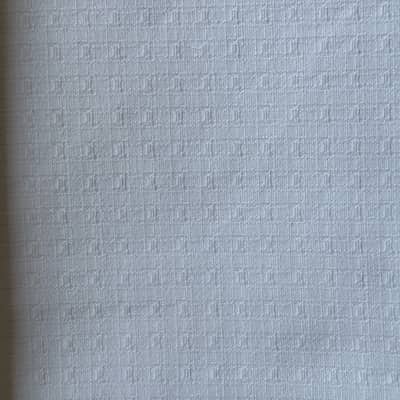
Polyester-Cotton Fine Grid Fabric
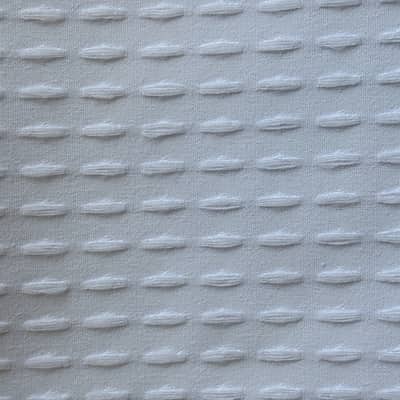
Raised Dash Jacquard Fabric
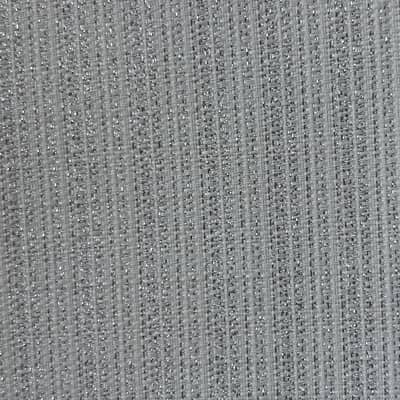
Metallic-Yarn Linen-Look Fabric
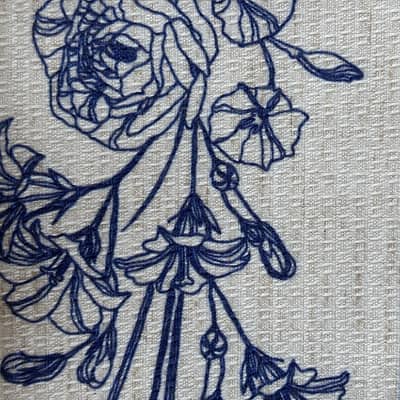
27-001-F Navy Floral Polyester-Linen Fabric
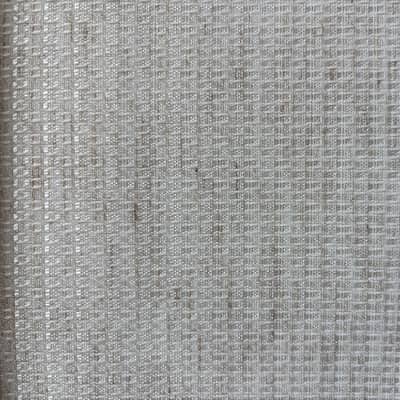
Polyester-Linen Textured Fabric
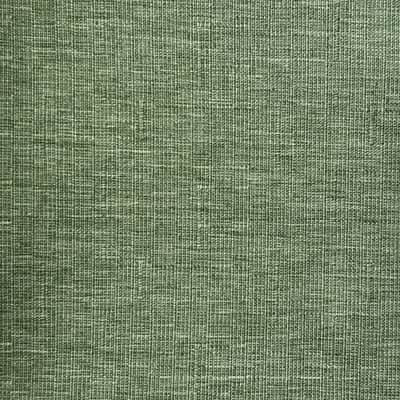
Green Polyester-Linen Slub Fabric
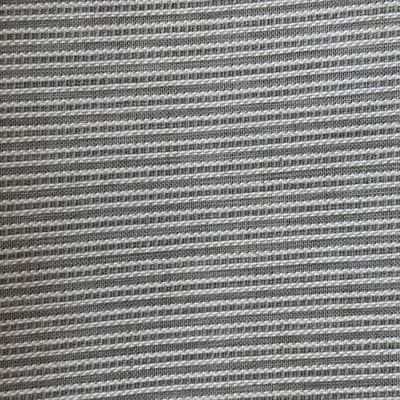
Vertical-Channel Polyester-Linen Fabric
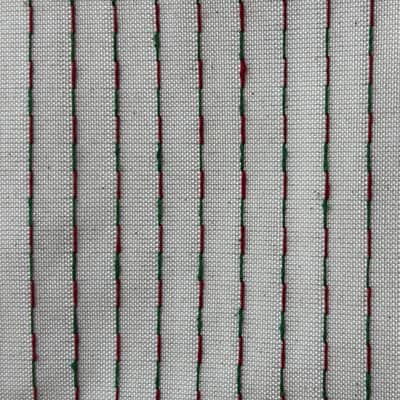
Colour-Yarn Stripe Fabric
Three Replacement Clocks, One Assortment Decision
A hotel housekeeping budget counts textiles in laundry cycles. A retail category manager counts them in seasonal resets. A private-label programme manager counts them in the number of seasons a design can carry before the brand needs a new story. Put the same roll in front of all three and the approval logic diverges before anyone opens a specification sheet.
That divergence is the real starting point for home textile assortment planning. The assortment is not a catalogue of surfaces; it is a set of answers to three different replacement rhythms. Get the rhythm wrong and a fabric can pass every internal check and still be dropped at the first reorder.
The practical consequence is that a single range rarely needs more fabrics. It needs clearly assigned roles: which SKUs absorb repeat volume, which carry the seasonal story, and which exist to prove a capability the buyer cannot get elsewhere.
Where a Hotel Programme Spends Its Reorder Money
Hotel purchasing is conservative by design. Once a property standard is approved, the goal is to reorder the same roll for years, in the same weight and the same neutral tone, without the guest noticing a change between floors. That pushes the assortment toward bases that read quietly and hold their appearance across many rooms.
The 27-DS001-C Polyester-Cotton Fine Grid Fabric is a reasonable anchor candidate here: 190 GSM, 88% polyester with 12% cotton, a soft white fine-grid surface, and printable. The grid gives a guestroom a little visual structure without becoming a motif a guest will tire of, and the weight sits in the range hotel buyers tend to associate with a substantial drape.
Its limitation is the same as its strength. A fine grid is a subtle surface, so it will not carry a property's identity on its own, and any hotel that wants a printed bedscape or a strong colour story will need a second, more expressive SKU beside it. The 27-DS001-F Raised Dash Jacquard Fabric, 185 GSM and 100% polyester, is printable and offers a more pronounced raised texture for corridors, suites or public areas where the surface is allowed to be noticed.
The trap in hotel assortment planning is treating every SKU as a reorder anchor. Most hotel ranges need one or two anchors and then a small number of accent rolls that are replaced on the property's own refresh cycle, not on the laundry cycle.
Retail Wants a Surface That Sells From a Hanging Position
A retail buyer judges the same roll in a completely different setting. The curtain hangs on a fixture, the shopper sees it from two or three metres, and the decision happens in seconds. Weight matters less than whether the surface reads as worth its ticket price from that distance.
This is where a metallic accent earns its place. The 27-1759-B Metallic-Yarn Linen-Look Fabric is 125 GSM, 88% polyester with 12% metallic yarn, and carries a silver accent across a linen-look ground. In a hanging position the metallic yarn catches light and separates the product from a wall of flat plain weaves.
The limit is important to state plainly: this roll is not printable. A retail programme that wants to change artwork every season cannot use it as a print base, and a buyer who assumes otherwise will discover the constraint after the design is signed off. Its natural role is the unprinted statement piece in a range, sitting beside printable bases that carry the seasonal artwork.
Retail also punishes narrow assortments less than hotels do. A retailer can rotate four or five surfaces a year, so the assortment can be built around change rather than continuity.
Private Label Buys the Base First and the Print Second
A private-label programme manager is buying two things at once: a base that will still be available next season, and the right to change what is printed on it. That makes printability a commercial requirement rather than a technical footnote.
The 27-001-F Navy Floral Polyester-Linen Fabric illustrates the pattern. It is 150 GSM, 92% polyester with 8% linen, and printable, with a navy floral already developed on the base. For a private-label buyer it can serve two roles: as a ready design for a first season, and as evidence that the base accepts a defined repeat before committing to new artwork.
27-001-F Navy Floral Polyester-Linen Fabric
Polyester-Linen Textured Fabric
The 27-MA Green Polyester-Linen Slub Fabric sits in a similar commercial position at 165 GSM, 95% polyester with 5% linen, printable, with the slub breaking light unevenly across the surface. The slub is the point: it gives a printed design a natural irregularity that a flat weave cannot reproduce, which is exactly the quality a private-label brand is often trying to buy.
The limitation is that a slub is not a neutral canvas. Fine linework and small type can soften against the irregularity, so the artwork has to be chosen for the base rather than adapted to it after the fact.
The Roll That Sits Between Scenarios
Some rolls are useful precisely because they do not belong to one clock. The 27-001-1-A Vertical-Channel Polyester-Linen Fabric is 165 GSM, 93% polyester with 7% linen, printable, with a woven vertical channel that gives the surface direction.
In a hotel it can read as a tailored guestroom curtain. In retail it gives a hanging product a graphic rhythm without relying on print. In private label it offers a textured ground that can take a printed overlay or stand alone. That versatility is also its weakness: a roll that fits three scenarios rarely leads any of them, so it tends to sit in the middle of a range rather than at its head.
The 27-09-09 Colour-Yarn Stripe Fabric takes the opposite approach. It is 155 GSM, 92% polyester with 8% cotton, and not printable, with the stripe created in the yarn rather than applied later. A buyer who needs a stripe that will not shift or fade out of register has a reason to choose it; a buyer who needs seasonal artwork on the same SKU does not.
What Our Own Search Signals Do and Do Not Show
Our Search Console rows show that queries in this cluster have reached curtains.vip. They describe searches that arrived at our own pages, and nothing more. They are not evidence of global or regional market size, market share, growth, or where the wider industry is heading, and we do not treat them that way.
What they are useful for is a narrow internal check: which buyer questions are reaching us, and whether our range answers them clearly. Assortment planning questions tend to arrive alongside material and scenario questions rather than as a single clean query, which is consistent with buyers who are still deciding what role each SKU should play in their range.
For a buyer, the takeaway is modest. The signals tell you which conversations we are already having. They do not tell you what your own customers will reorder, and that is the only demand evidence that should shape your assortment.
A Shortlist Framework for Your Own Range
Before requesting swatches, assign every candidate roll to one of three roles and write the role next to the SKU. The role, not the fabric name, is what you are actually approving.
A reorder anchor has to be available across cycles, quiet enough to survive repetition, and specified tightly enough that the next run matches the last. A seasonal carrier has to be printable, or deliberately unprintable in a way that makes the surface itself the seasonal story. An accent roll exists to prove a capability, and it should be judged on whether that capability is worth a slot in the range at all.
Then test the range against the three clocks. If a hotel programme is holding most of the volume, most SKUs should be anchors. If retail is the main channel, the range can carry more seasonal carriers and one or two statement surfaces. If private label dominates, printability moves from a preference to a gate.
Two practical checks close the exercise. First, confirm that no two SKUs in the range are doing the same job in the same clock, because duplicated roles dilute volume without widening the offer. Second, confirm that every roll you shortlist can be reordered at the same specification, which is where the usual reference MOQ of 2,000 m per SKU becomes relevant: orders below that are accepted with a slightly higher unit price, which is workable for a pilot but should be planned for rather than discovered at quotation. The usual reference MOQ is 2,000 m per SKU; orders below 2,000 m are also accepted, with a slightly higher unit price.
Shaoxing Haowen Textile Clothing Co., Ltd. (the company behind the curtains.vip team) develops curtain, shower-curtain and table-linen fabrics, including custom print development and finished shower curtain OEM/ODM. When the roles are clear, the next useful step is to review the rolls at /products against your own role assignments, or send the shortlist to /contact with the target weight, composition and print status for each slot.
Questions buyers ask
How many fabrics should a home textile assortment actually carry?
Fewer than most first drafts. The useful number is driven by how many distinct roles your channels need, not by how many surfaces look different in a sample room. A range with one or two reorder anchors, a small number of seasonal carriers and one or two accent rolls usually covers hotel, retail and private-label demand without duplicating volume across SKUs that do the same job.
Can one fabric serve a hotel programme and a retail line at the same time?
Sometimes, but the two buyers judge it on different evidence. A hotel buyer is asking whether the roll can be reordered unchanged across many rooms and cycles, while a retail buyer is asking whether it reads as worth its ticket price from a hanging position. A printable mid-weight base such as 27-001-1-A can sit in both conversations, but it will rarely lead either one, so it should be assigned a supporting role rather than treated as the range's centre.
What should a private-label buyer check before building a range around a printed base?
Confirm that the base itself is printable and that the artwork suits its surface. A slub base such as 27-MA gives a print natural irregularity but can soften fine linework, while a metallic-yarn roll such as 27-1759-B is not printable at all and belongs in an unprinted role. Deciding which SKUs are print carriers and which are surface statements is the step that prevents a design being signed off against the wrong roll.
Does search interest in assortment planning prove demand for a particular fabric?
No. Our own Search Console rows only show searches that reached curtains.vip, and they say nothing about market size, share or direction. They are a record of conversations arriving at our pages, not a forecast. Your own reorder history and your customers' replacement cycles remain the only demand evidence worth building an assortment on.