
Lab Dip Approval for Custom Dyed Curtain Fabrics: The Dye Lot You Approve Is Not the Roll You Receive
A lab dip is a small, controlled dyeing judged under a lamp the buyer did not choose. This field note separates what the chip proves from what the bulk roll must still answer, uses verified bases as boundary cases, and closes on the single sample question that makes lab dip approval for custom dyed curtain fabrics enforceable.

PRODUCTS
Products in this report
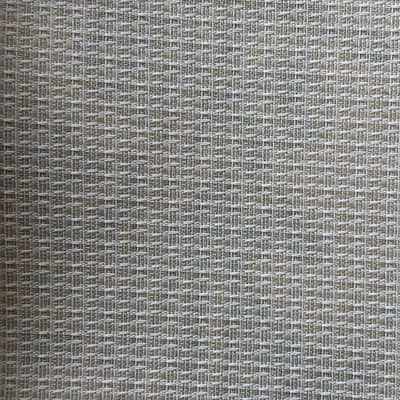
Crosshatch Linen-Look Fabric
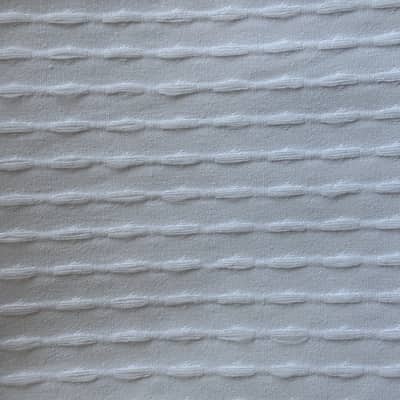
Vertical Dash Jacquard Fabric
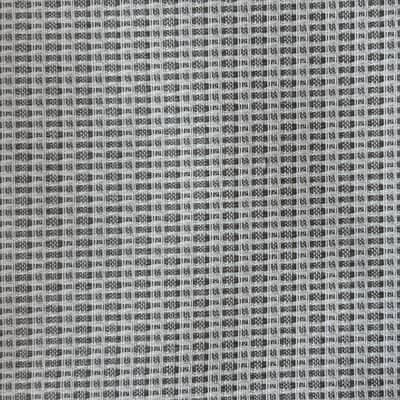
Vertical-Stripe Polyester-Cotton Linen-Look Fabric
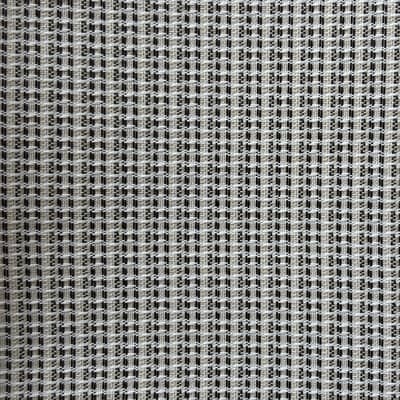
Contrast Grid Linen-Look Fabric
The Chip Is Flat, the Curtain Is Not
A lab dip arrives stapled to a card, a square of cloth maybe ten centimetres across, the shade reference written beside it in biro. Laid on a desk it reads even and closed. Pick it up and tilt it toward a window and the surface starts to answer: a faint crosshatch on a linen-look base, a raised dash on a jacquard, a slight sheen where the yarn turns. The colour has not moved. The way light meets the structure has.
That small shift is the whole problem behind lab dip approval for custom dyed curtain fabrics. The buyer signs the chip as a decision about a curtain, but the chip is a decision about a few square centimetres of cloth dyed under conditions the dyehouse controlled. The curtain is metres of the same base, dyed in a bulk lot, gathered on a rail, lit from a window on one side and a downlight on the other. Approval has to bridge that distance, and most approval notes do not say how.
What the Dip Actually Certifies
A lab dip certifies one thing well: that the target shade is achievable on the base the mill chose for the dip, under a small controlled dyeing. That is a real and useful fact. It tells the buyer the colour is not a fantasy, and it gives the dyehouse a reference to aim at.
It does not certify the bulk lot. Between the dip and the roll sit fibre variation, base structure, dye-lot chemistry, machine load and the light the finished curtain will live under. None of those is visible on the card. A signed dip is a starting point for a shade conversation, not the end of one, and treating it as the end is how a second delivery arrives a half-step off with no agreed way to judge it.
This is where the distinction between product-specific facts and general decision questions matters. The base you shortlist carries its own structure, and that structure changes how a given shade reads. The questions about tolerance, light source and reorder reference belong to the buyer and should be written down before the chip is signed, not argued about after the roll lands.
Where the Structure Rewrites the Shade
Take 27-001-E, a 155 GSM 100% polyester crosshatch linen-look base, printable. Dyed to a warm neutral, the crosshatch breaks the surface into small cells, and from a metre away the colour reads soft and slightly broken. That brokenness is the product, but it also means the same shade will never read as a flat panel would. A buyer who approves a dip on a flat card and expects a flat curtain has approved the wrong object.
Now set 27-DS001-E beside it: 195 GSM, 90% polyester and 10% cotton, a vertical dash jacquard, printable. The raised dash runs one way, and under a downlight the ridges catch the shade differently from the recesses between them. A custom dye on this base has to be judged with the structure in view, because the structure is doing part of the colour work.
27-001-B sits between them: 160 GSM, 94% polyester and 6% cotton, a vertical-stripe linen-look, printable. The stripe gives the eye a direction, and a dyed shade on a directional base reads differently gathered than flat. Three bases, three different shade conversations, and one dip card cannot answer all three.
What Has to Be Measured, Tested and Priced
Once the shade is agreed in principle, the buyer's job is to convert the chip into something the bulk lot can be judged against. That means naming the light source the finished curtain will actually be seen under, because a neutral approved under a warm sample-room lamp can read cool in a corridor with daylight tubes. It means asking for a bulk-lot panel, cut from the roll that will ship, compared against the retained dip. And it means writing a tolerance, however simple, so the second delivery has a number rather than a memory.
Pricing follows the same logic. A custom dye on a structured base carries more risk than on a flat one, and the buyer should know whether the quotation assumes a single dye lot or allows for a re-dye if the first bulk run misses. That is a commercial question the dip card never raises.
Where a programme is small, the usual reference MOQ of 2,000 m per SKU applies, and orders below that are accepted with a slightly higher unit price. For a first custom shade on an unfamiliar base, a pilot run inside that structure is a legitimate way to see a real bulk lot before committing a full season to it. The usual reference MOQ is 2,000 m per SKU; orders below 2,000 m are also accepted, with a slightly higher unit price.
The Base That Cannot Take the Next Colourway
There is a second decision hiding inside the first. A custom-dyed curtain fabric is often dyed now and printed or over-dyed later, and the base has to be able to carry that. 27-001-C-1, a 155 GSM 100% polyester contrast grid linen-look, is not printable. That is a fact about the product, not a verdict on it. If the grid and its black accent are the whole visual argument and no future print is planned, the non-printable status costs nothing. If a private-label colourway is expected next season, the same status changes the shortlist.
So the question a buyer should ask before approving a custom dye is not only whether the shade is right, but whether the base can still carry the next chapter. A shade approved on a base that cannot take a print is a shade that may have to be re-sourced when the print arrives.
This is where the technical and the commercial meet, and it is the point at which a supplier's development scope becomes useful evidence rather than a sales line. Shaoxing Haowen Textile Clothing Co., Ltd. (the company behind the curtains.vip team) develops curtain, shower-curtain and table-linen fabrics, including custom print development, which means a custom dye and a later print can be discussed against the same base rather than two.
A Note on Our Own Search Rows
The search rows supplied for this topic record no impressions and no clicks for lab dip approval for custom dyed curtain fabrics on curtains.vip in the last 28 days. That is a first-party observation about our own site and nothing more. It does not show that buyers are not asking the question, and it is not evidence of market size, demand or direction. We treat it as a blank in our own record, not a signal about the wider trade.
What it does suggest is that the question is usually asked inside an enquiry thread rather than typed into a search box, which is exactly where an approval note should be doing its work.
The Sample Question That Makes Approval Enforceable
Before a custom shade is signed off, one question does most of the work: can the supplier cut a panel from the exact bulk lot that will ship, compare it against the retained dip under the light source the project will actually use, and report the difference on the base the programme will reorder?
If the answer is yes, the chip becomes a measured reference and the second delivery can be judged against evidence. If the answer is no, the signature on the card is a hope with a shade number attached. Buyers who want to work through that question against a specific base can review the range at /products or raise the shade and the light source together through /contact.
Questions buyers ask
Does an approved lab dip guarantee the bulk roll will match?
No. A lab dip shows the shade is achievable on a small controlled dyeing. The bulk lot still has to be compared against the retained dip under the project's light source, and that comparison is what makes approval enforceable.
Should the light source be named before the dip is signed?
It should be named before the bulk lot is judged, and ideally before the dip is approved. A neutral that reads correctly under a warm sample-room lamp can read differently in a corridor with daylight tubes, and the structure of the base changes how that shift appears.
Can a non-printable base still be right for a custom dye?
Yes, when the surface itself is the product and no future print or colourway is planned. It becomes a problem only when the programme expects a later print on the same base, because the base cannot carry it.