
Private Label Shower Curtain Range Architecture: The Base You Commit to Before the First Print File
A private label shower curtain range is decided by the base cloth, not the artwork. This field note moves from what a buyer can see on a roll to the print status, weight band and sample evidence that determine whether a range repeats order after order.

PRODUCTS
Products in this report
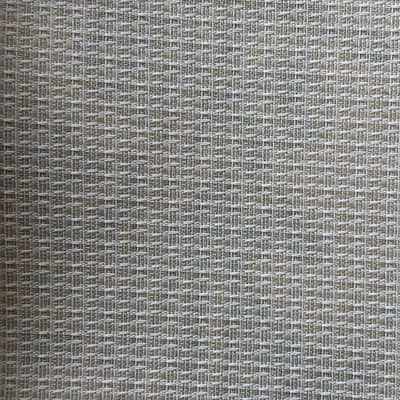
Crosshatch Linen-Look Fabric
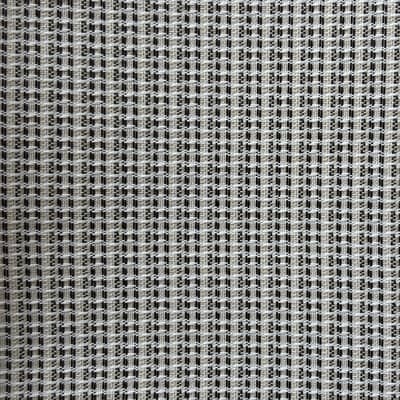
Contrast Grid Linen-Look Fabric
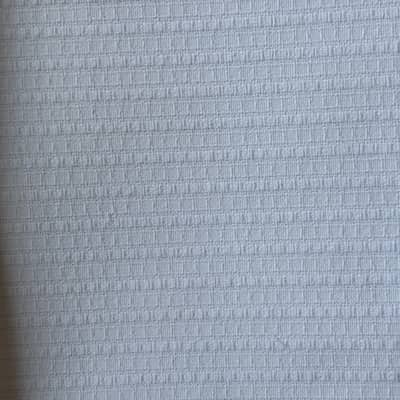
Fine Textured Jacquard Fabric
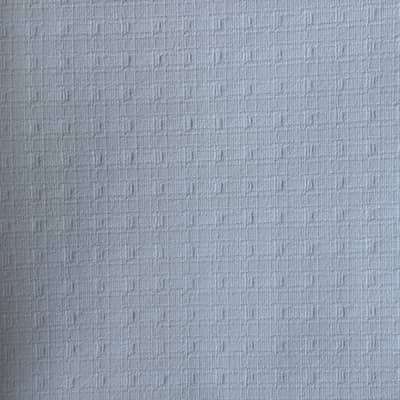
Fine Grid Jacquard Fabric
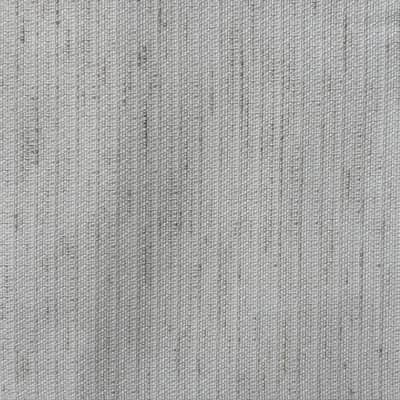
Crosshatch Linen-Look Fabric
The Surface You Can Read Before Anyone Opens a Spec Sheet
Unroll a metre of crosshatch linen-look cloth and hold it against a window. The weave breaks light into a fine, even grid, and the surface reads as flat and quiet from a metre away. Fold the same metre in half and the crease holds a faint shadow where the yarn crosses. That shift, from flat to folded, is where a private label shower curtain range is actually decided.
A private label shower curtain range architecture is not a list of prints. It is the set of base cloths a programme commits to before the first artwork is approved, because the base determines what the print can do, how the curtain hangs in a bathroom, and whether the second order matches the first. A buyer who chooses the print first and the base second is choosing a range that will need re-specification the moment a colourway changes.
Why the Base Comes Before the Artwork in a Private Label Programme
In a private label arrangement, the buyer owns the brand and the design direction, and the supplier owns the construction. That split means the base cloth is the one variable both sides must agree on in numbers, because the print file can be revised cheaply and the roll cannot. The practical consequence is that print status is not a preference. It is a hard limit that decides which SKUs in a range can carry a seasonal story and which can only earn their place on surface alone.
Two verified rolls make the point without exaggeration. 27-001-E Crosshatch Linen-Look Fabric is 100% polyester at 155 GSM and printable. 27-001-C-1 Contrast Grid Linen-Look Fabric sits at the same 155 GSM and the same 100% polyester composition, carries a black contrast accent in the grid, and is not printable. On a specification sheet they are neighbours. In a range plan they occupy different roles: one is a carrier for future colourways, the other is a finished look that has to sell on its surface for the life of the programme.
What Has to Be Measured, Tested and Priced
Once the buyer accepts that print status is structural, the range conversation becomes narrower and more useful. Weight band, composition and print status are the three facts that travel from the roll to the quotation without interpretation, and they are the facts a range should be built on.
A printable base and a non-printable base in the same weight band are not interchangeable, and pricing them as if they were is where private label programmes lose margin quietly. The printable base carries the cost of print development and the risk of a colourway that does not sell. The non-printable base carries neither, but it also cannot be refreshed without a new construction. A range that mixes both should say so in the plan, not discover it at the second season.
This is also where a private label programme has to decide how many printable bases it can support. One printable base means every future colourway or seasonal story runs through a single SKU, which concentrates both volume and risk. Two printable bases in different weight bands give the programme room to move a design between a lighter hanging curtain and a heavier one without renegotiating the construction.
Two More Bases That Widen the Range Without Duplicating It
A range built only on linen-look surfaces will read as one idea repeated. The verified jacquard options show what a second and third base can add when the construction, not the colour, is doing the work.
27-DS001-D Fine Textured Jacquard Fabric is 100% polyester at 180 GSM and printable, with a fine texture that reads as a quiet surface rather than a motif. 27-DS001-H Fine Grid Jacquard Fabric is 100% polyester at 190 GSM and printable, with a fine grid structure that sits heavier in the hand. Placed beside a 155 GSM linen look, these two rolls give a private label range three distinct weight and surface positions, all printable, without repeating a single surface idea.
Fine Textured Jacquard Fabric
Fine Grid Jacquard Fabric
The trade-off is not aesthetic. A 190 GSM jacquard and a 155 GSM linen look will not hang the same way in the same bathroom, and a range that carries both has to be honest about which position each one occupies. The buyer who can describe that difference in numbers is the buyer who can defend the range in a review.
Where the Sample Table Replaces the Specification Sheet
A swatch proves colour and hand feel. It does not prove that the base you are shortlisting is the base you will receive, and it does not prove that the print you intend to run will sit on that surface the way the artwork suggests. For a private label range, the sample has to do more than look right.
The useful test is a printed panel on the exact base, hung or laid as the finished curtain will be used, compared against a retained reference panel from the same roll. That comparison is the only reliable check for the second order, because it replaces memory with evidence. Where a surface is directional or carries a contrast accent, the reference panel matters more, not less.
What Our Own Search Signals Show, and What They Cannot
Searches for private label shower curtain range architecture have reached curtains.vip, but the volumes involved are small and the rows describe our own site rather than the wider market. They tell us which questions buyers bring to our catalogue. They do not establish market size, share, growth or direction, and we do not present them as evidence of a trend.
The wider inference is separate and should be labelled as such. Buyers arriving with range-architecture questions tend to arrive with a base already in mind and a print decision still open, which is a useful signal for how we structure sampling. It is not a claim about the shower curtain market as a whole.
The One Sample Question That Decides the Range
Before a private label shower curtain range is approved, one question does most of the work: can the supplier show the intended print on the exact base you are shortlisting, on a panel from the same roll, and retain a reference panel from that roll for the next order?
If the answer is yes, the range is testable and the second season can be judged against evidence. If the answer is no, the programme is being approved on a swatch, and the base you commit to is the base you will live with. Shaoxing Haowen Textile Clothing Co., Ltd. (the company behind the curtains.vip team) develops curtain, shower-curtain and table-linen fabrics, including custom print development and finished shower curtain OEM/ODM, so a range brief can be worked through against a catalogue that covers the other textiles in the same project. The usual reference MOQ is 2,000 m per SKU, and orders below that are accepted with a slightly higher unit price, which lets a programme pilot a base before committing the range to it. Review the verified fabrics at /products or raise the sample question through /contact. The usual reference MOQ is 2,000 m per SKU; orders below 2,000 m are also accepted, with a slightly higher unit price.
Questions buyers ask
Should a private label shower curtain range include more than one printable base?
If the programme expects more than one seasonal story or colourway, a single printable base concentrates all of that volume and risk in one SKU. Two printable bases in different weight bands, such as a 155 GSM linen look and a 180-190 GSM jacquard, let a design move between positions without renegotiating the construction.
Can a non-printable base still hold a place in a private label range?
Yes, provided the range plan treats it as a finished look rather than a carrier for future artwork. A non-printable surface such as a contrast grid linen look has to earn its place on surface alone, and it cannot be refreshed with a new colourway without a new construction.
What should the approval sample prove before a range is committed?
It should show the intended print on the exact base being shortlisted, on a panel from the same roll, and the supplier should retain a reference panel from that roll. That retained panel is the only reliable comparison for the next delivery.