
Student Housing Shower Curtain Fabric Decisions: The Cloth That Has to Survive a September Handover
A student residence shower curtain is bought in volume, replaced on a calendar and judged by people who did not choose it. This field note moves from the surface of a roll to the tests, tolerances and pricing questions that decide a student housing programme.

PRODUCTS
Products in this report
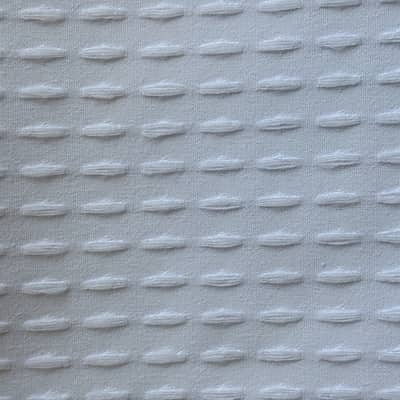
Raised Dash Jacquard Fabric
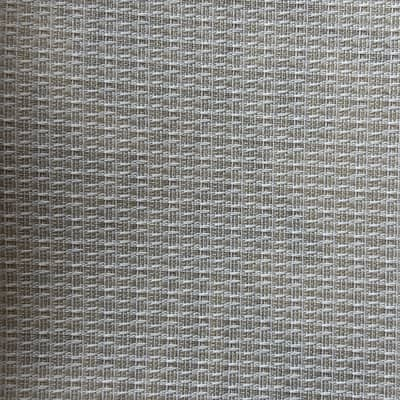
Crosshatch Linen-Look Fabric
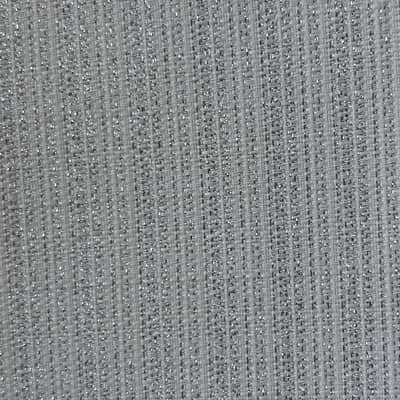
Metallic-Yarn Linen-Look Fabric
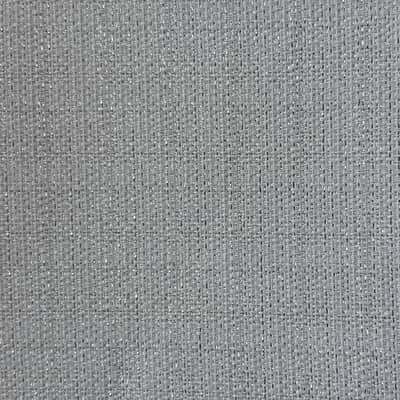
Metallic-Yarn Linen-Look Fabric
The Roll That Reads Quiet Until the Light Comes Through It
A raised dash jacquard laid flat on a cutting table looks almost plain: a soft white face with a faint regularity you notice only when the light rakes across it. Lift the same roll toward a window and the dash structure organises into small vertical cells, each one casting a thin shadow. Nothing about the yarn has changed. The viewing condition has, and in a student residence the viewing condition is a small bathroom with one hard light source and a resident standing close enough to see the weave.
That is where shower curtain fabric decisions for student housing begin, and it is not where most buying desks start. The desk starts with a price per metre and a replacement cycle. Both matter, but neither tells you what the resident will see in February, or what the maintenance team will be looking at when they decide whether a curtain can last another intake.
What a Residence Actually Asks a Curtain to Do
A student bathroom is a high-traffic, low-supervision space. The curtain is pulled several times a day, handled by people who did not read a care label, and cleaned on a schedule set by a facilities contractor rather than a housekeeping department. The cloth therefore has to answer three questions at once: how it reads in a small hard-lit room, whether it can carry a future colourway or residence logo, and whether the panel geometry survives whatever wash cycle the site actually runs.
Only the first of those can be judged on a swatch. The second is a print-status question that belongs to the base, not the artwork. The third is a measurement question that no catalogue photograph will settle. Keeping the three separate is the discipline this note is about; conflating them is how a residence ends up re-specifying mid-year.
Print Status Is a Programme Decision Wearing a Product Costume
Many student housing operators begin with a neutral white or ivory and discover, two intakes later, that they want a residence colour or a logo on the curtain. If the base was bought non-printable, that ambition forces a full re-specification: new base, new sampling, new approval, and a mismatch between the old panels still in service and the new ones arriving.
This is why print status should be settled before the shortlist narrows. A printable base does not commit a buyer to printing anything. It keeps the option open at the cost of a slightly different surface and, often, a different weight band. A non-printable base with a strong surface can be the right answer for a residence that has genuinely fixed its visual identity. The mistake is assuming the two are interchangeable because they photograph alike.
Where Verified Rolls Make the Trade-Off Concrete
The range we develop includes both kinds of base, and the contrast is useful. 27-DS001-F is a 185 GSM, 100% polyester raised dash jacquard listed as printable, which makes it a candidate where a residence expects to add a colourway or mark later. 27-001-E is a 155 GSM, 100% polyester crosshatch linen-look base, also printable, and reads quieter and lighter in the hand.
Raised Dash Jacquard Fabric
Crosshatch Linen-Look Fabric
At the other end sit 27-1759-B and 27-1759-B1, both 125 GSM, 88% polyester with 12% metallic yarn, both carrying a linen-look surface with a silver accent and both non-printable. These are not worse rolls; they are rolls with a narrower job. A metallic accent earns its place where the surface itself is the visual argument and no future print is planned. Put the same roll into a programme that later wants a residence logo and the buyer has bought a dead end.
Metallic-Yarn Linen-Look Fabric
Metallic-Yarn Linen-Look Fabric
Notice what has not been claimed here. None of these specifications tells you how the cloth behaves after a wash cycle, how it hangs at a given rail width, or what it costs landed. Those are separate questions, and the next section is about the ones a buyer can actually put to a mill.
From Surface to Specification: What Has to Be Measured
Once a shortlist exists, the conversation moves from appearance to numbers. For a student housing programme the useful ones are panel geometry, wash behaviour and repeatability across deliveries.
The panel question is concrete: at the rail width the residence will install, with the heading type specified, how much usable width remains after side hems and eyelet spacing, and does the finished drop clear the floor line with the shrinkage allowance included? A curtain that draws up at the hem is a maintenance ticket, not a design failure, and the allowance should be a measured figure rather than an assumption.
The wash question belongs to the site. Ask which cycle the contractor will actually run, and request that a finished-size panel from the exact shortlisted roll be put through that cycle and reported at the hem, the heading and the body separately. This is a test request, not a performance claim; what comes back is evidence for your programme, not a general property of the fabric.
Repeatability is the third. A residence replaces curtains in batches across several buildings and intakes. If the second delivery reads a shade or a surface away from the first, the property has a visible mismatch in rooms that sit side by side. The practical control is a retained reference panel from the approved roll, named in the approval note, with a person or role responsible for comparing future deliveries against it.
The Commercial Handoff and the Volume Question
Pricing follows the same logic. A student housing programme usually buys across multiple buildings, so the quotation should state the SKU, the GSM, the composition, the print status and the panel size the price is built on. Where a pilot is wanted for one building before a wider release, our usual reference MOQ is 2,000 m per SKU, and orders below that are accepted with a slightly higher unit price, which makes a single-building trial a legitimate way to test a base before committing the estate. The usual reference MOQ is 2,000 m per SKU; orders below 2,000 m are also accepted, with a slightly higher unit price.
Shaoxing Haowen Textile Clothing Co., Ltd. (the company behind the curtains.vip team) develops curtain, shower-curtain and table-linen fabrics, including shower curtain fabrics and roll goods, custom print development and finished shower curtain OEM/ODM. That matters here mainly because a residence programme often needs the base and the finished panel settled in one conversation rather than two. The product range is at /products, and specific enquiries can go through /contact.
The One Question Worth Asking First
Before a student housing base is approved, the question that does most of the work is not about weight or price. It is this: can the supplier show the shortlisted roll as a finished panel at the residence's own rail width and heading, under that bathroom's lighting, and retain a reference panel from the same roll for the next intake? If the answer is yes, the surface, the panel geometry and the repeatability question are all testable, and the second delivery can be judged against evidence rather than memory. If the answer is no, the programme is being approved from a flat swatch, and the first thing the residence will notice is the thing nobody measured.
Questions buyers ask
Should a student housing shower curtain base be printable even if no print is planned yet?
It depends on whether the residence's visual identity is genuinely fixed. A printable base keeps a future colourway or logo option open without committing to a print; a non-printable base with a stronger surface is a reasonable choice where no print will ever be added. The error is treating the two as interchangeable because they look alike on a swatch.
What should a buyer ask a mill to test before approving a student housing curtain?
At minimum, a finished-size panel from the exact shortlisted roll, run through the wash cycle the site's contractor actually uses, with movement reported at the hem, heading and body separately, and the panel presented at the residence's rail width and heading. These are test requests rather than performance claims, and the results apply to your programme.
How does order volume work for a multi-building residence programme?
Our usual reference MOQ is 2,000 m per SKU, and orders below that are accepted with a slightly higher unit price. That structure allows a single-building pilot to be tested before the wider estate is committed.