
Fabric Packing Methods for Export Roll Goods: Two Rolls That Leave the Mill Looking the Same
Packing is usually settled after the price and before the booking, which is the wrong order. This comparison treats fabric packing methods for export roll goods as a material decision, using verified rolls to show where roll form, surface and print status change what the packing has to protect.

PRODUCTS
Products in this report
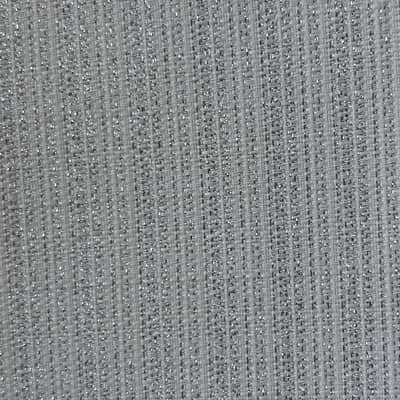
Metallic-Yarn Linen-Look Fabric
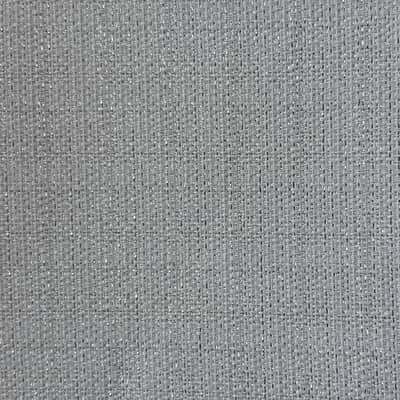
Metallic-Yarn Linen-Look Fabric
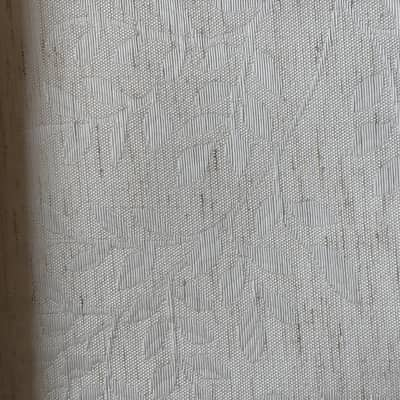
55 Large Floral Jacquard Fabric
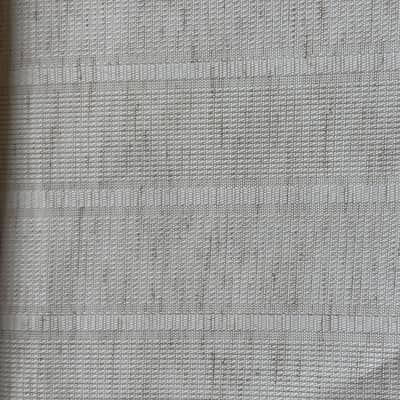
Polyester-Linen Stripe Fabric
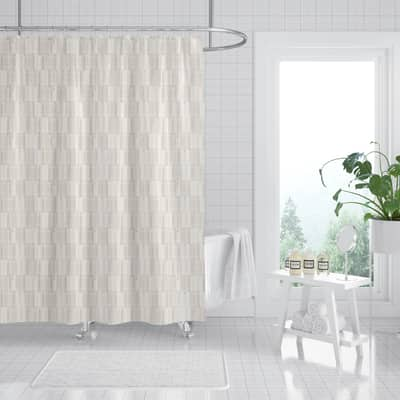
Woven Stripe
Two Rolls on the Loading Dock, One Question That Separates Them
Two rolls come off the same inspection frame and are photographed side by side for the shipping file. Both are white, both are wound to a similar diameter, both carry a paper band and a shipping mark. On screen they are the same object. In a container they are not.
The practical question is not which packing is cheaper per roll. It is what each roll has to survive between the mill door and the buyer's cutting table, and which of its properties will show the damage first. A 125 GSM metallic-yarn linen-look and a 185 GSM raised dash jacquard fail in different ways, and the packing that protects one can quietly work against the other.
What Packing Is Actually Being Asked to Protect
Packing has three jobs on roll goods, and buyers tend to name only the first. It keeps the cloth clean. It keeps the roll's shape. And it keeps the surface from being pressed into a memory of itself.
The third job is the one that gets skipped, because it does not show up on arrival. A roll that has been compressed hard enough will look fine when the band comes off and reveal a flattened face two days later, once the cloth has been cut and hung. That is why packing belongs to the material conversation rather than the freight conversation. The cloth decides what the packing has to do.
Where the Roll Form Changes the Answer
Roll diameter, winding tension and the way the roll is stood or laid in the container are usually treated as the forwarder's business. They are not. A tightly wound roll of a structured jacquard stores the structure under compression for the whole voyage. A loosely wound roll of a lighter linen-look travels well but can slump and oval under its own weight if it is stood on end for weeks.
Neither outcome is visible in a pre-shipment photograph. Both are predictable from the construction, which is why the packing specification is easier to write once the shortlist is fixed.
Three Verified Rolls, Three Different Packing Pressures
The verified range makes the trade-off concrete because the rolls differ in exactly the properties packing acts on.
27-1759-B and 27-1759-B1 are both 125 GSM, 88% polyester with 12% metallic yarn, linen-look with a silver accent, and both are non-printable. The metallic yarn is the point. A crease pressed into a metallic accent tends to stay visible in a way that a crease in a plain polyester face does not, so these rolls argue for a packing that protects the face rather than one that simply contains the roll. The limitation to validate is whether the accent marks under the compression the chosen packing applies; that is a question for a wound sample, not a datasheet.
Metallic-Yarn Linen-Look Fabric
Metallic-Yarn Linen-Look Fabric
55# is a different case again: 165 GSM, 95% polyester with 5% linen, a large floral jacquard in natural ivory, and printable. A large jacquard motif is a raised structure, and raised structure is what a tight wind flattens. The same roll is printable, which means the packing also has to keep the face clean enough that a later print programme is not judged against a marked ground.
Where Print Status Rewrites the Packing Brief
A printable roll and a non-printable roll can be packed identically and still carry different risk. On a non-printable surface, a scuff or a light soil is a cosmetic problem the buyer may accept on a face that will be cut around. On a printable surface, the same mark sits in the ground that a motif will later be printed onto, and the print development has to work around it or reject the roll.
That is not an argument for heavier packing across the range. It is an argument for naming print status in the packing specification, so that the rolls which will carry ink are protected at the standard the print programme needs. 27-008-3, at 130 GSM, 92% polyester with 8% linen, a woven stripe in natural ivory and printable, is a useful example: a lighter roll where the packing has to protect a directional surface and a printable ground at the same time.
The Sample Test That Replaces the Packing Clause
A packing clause on a purchase order describes materials: poly bag, kraft paper, woven sack, banding. It rarely describes outcome. The test that does is simpler and more useful. Ask for a wound roll of the exact SKU, packed to the proposed method, held for a period that resembles the voyage, then unwound and inspected at the face.
What the buyer looks for is not damage in the ordinary sense. It is memory: a flattened jacquard cell, a pressed metallic accent, a band crease that has set into a printable ground. Those are the failures that survive the arrival inspection and surface at the cutting table. A roll that passes this test has been judged on the property the packing was meant to protect.
The Acceptance Decision and the RFQ Note
Approval should name the SKU, the GSM, the composition, the print status and the packing method, and it should state which property the packing is intended to protect. Where more than one roll is in the programme, it should say which roll sets the packing standard and which rolls are judged against it. A programme with several packing baselines has none.
For the RFQ, write the outcome rather than the materials: the roll form, the surface protection the cloth requires, and the inspection point at which the packed roll will be judged. Shaoxing Haowen Textile Clothing Co., Ltd. (the company behind the curtains.vip team) develops curtain, shower-curtain and table-linen fabrics and roll goods, and the product pages at /products carry the construction facts a packing brief has to start from. The usual reference MOQ is 2,000 m per SKU, and orders below that are accepted with a slightly higher unit price, which matters here only because small trial rolls are often the ones worth packing to the full export standard before a programme commits. The usual reference MOQ is 2,000 m per SKU; orders below 2,000 m are also accepted, with a slightly higher unit price.
Questions buyers ask
Does packing method need to be agreed before the sample is approved?
It is worth naming at the same time. A roll approved flat and then packed to a method that compresses its surface has been approved in a condition it will not travel in. Naming the packing method alongside the SKU, GSM and print status keeps the approval and the shipment describing the same object.
Is heavier packing always safer for export roll goods?
No. Heavier packing protects against handling and moisture but can add compression, and compression is the failure mode that matters most on structured jacquards and metallic accents. The right packing is the one matched to what the specific roll needs protected, which is why print status and surface structure belong in the brief.
How should a buyer compare packing quotations from two suppliers?
Compare the outcome, not the materials list. Ask each supplier to describe the wound roll, the compression applied, how the roll is stood or laid in the container, and how the face will be inspected after transit. Two quotations naming the same poly bag can still describe very different protection.