
Private Label Tablecloth Fabric Development: The Base You Choose Before the Print File Arrives
Private label tablecloth development starts with the base, not the artwork. This field note moves from the surface a buyer can see to the construction, print status and sample evidence that decide whether a tablecloth programme repeats order after order.

PRODUCTS
Products in this report
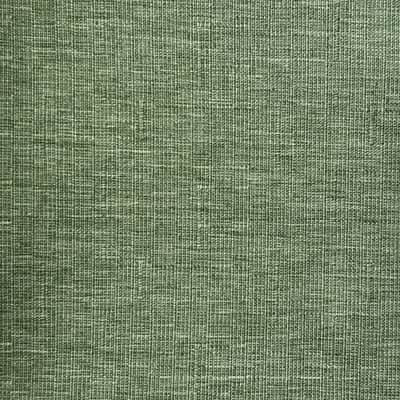
Green Polyester-Linen Slub Fabric
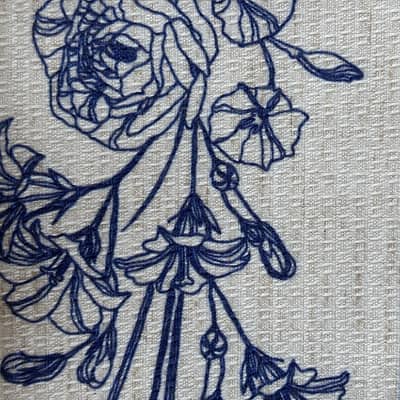
27-001-F Navy Floral Polyester-Linen Fabric
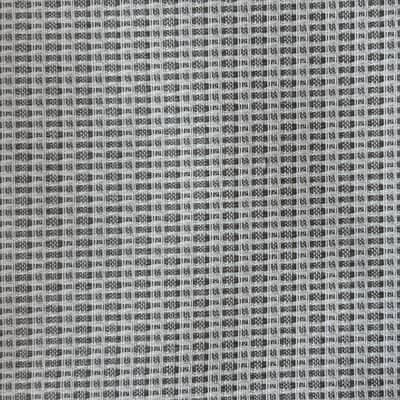
Vertical-Stripe Polyester-Cotton Linen-Look Fabric
A Slub Reads Differently on a Table Than in the Hand
Hold a metre of 27-MA up to a window and the green polyester-linen slub breaks light into small uneven patches. Lay the same cloth flat on a table under a dining room downlight and those patches become a surface. Fold it into quarters and the slub that read as a soft irregularity now reads as a ridge along the crease.
That shift is where private label tablecloth fabric development actually begins. The buyer is not choosing a colour or a print file yet. The buyer is choosing a base whose surface will still make sense after the cloth has been folded, stacked, laid and re-laid through a service cycle. A surface that photographs well flat can look restless on a set table, and a surface that looks flat on the roll can look inert once it is draped.
What the Base Has to Carry Before the Print Is Discussed
A private label tablecloth programme usually arrives with artwork already in mind, because the brand has a story to tell and a print is the cheapest way to tell it. The mistake is to treat the base as a substrate that will accept whatever file is sent. The base decides how the print reads at table distance, how the cloth folds, and whether the same specification can be reordered next season without a visible change in surface.
Three things have to be settled before the print conversation is useful. First, is the base printable at all, because print status is a product-specific fact and not a category assumption. Second, what is the construction — composition and weight together, not weight alone — since a 150 GSM polyester-linen behaves differently from a 165 GSM polyester-linen even when the names sound interchangeable. Third, does the surface carry a directional structure, because a stripe or a grid will show its orientation the moment two cloths are laid side by side.
Print compatibility is where a private label brief most often stalls. A base that is not printable cannot be rescued by a better file, and a base that is printable may still hold a motif differently depending on how much slub or structure sits under the ink. That is a question for the sample table, not for the quotation.
Two Verified Bases That Make the Trade-Off Concrete
The 27-001-F-PRINT Navy Floral Polyester-Linen Fabric is a 150 GSM base at 92% polyester and 8% linen, supplied as a printed fabric with a navy floral repeat. It shows what a developed print looks like when the base and the file have already been matched. The 27-MA Green Polyester-Linen Slub Fabric is a 165 GSM base at 95% polyester and 5% linen, printable, with a slub surface and a green tone. It shows what a private label programme is actually buying when it wants to develop its own print: a base with a surface character that will sit under the artwork.
The comparison matters because the two rolls are close in weight and close in composition, yet they are not the same proposition. One is a finished print direction. The other is a development base. A private label buyer who confuses the two will either pay for a print they did not need or commit to a base whose slub fights the motif they intend to run.
A third roll sits between them. The 27-001-B Vertical-Stripe Polyester-Cotton Linen-Look Fabric is 160 GSM at 94% polyester and 6% cotton, printable, and carries a woven vertical stripe. It is a useful reminder that a linen-look surface does not have to be a linen blend, and that a stripe is a construction decision made at the loom rather than a print decision made later.
Where the Sample Table Replaces the Spec Sheet
A spec sheet can confirm GSM, composition and print status. It cannot confirm whether a motif holds its edge where the slub crosses it, whether a stripe lines up when two cloths are laid end to end, or whether the surface still reads as intended once the cloth is folded and stacked. Those are the questions a private label tablecloth programme has to answer before it commits.
The practical test is narrow. Print or place the intended motif on the shortlisted base, lay the sample on a table under the lighting the finished cloth will actually meet, fold it, stack it, and unfold it. Then compare the sample against a retained reference panel from the same roll. If the surface changes character between the flat view and the folded view, that is a base decision, not a print decision, and it is cheaper to make it now.
This is also the point where the commercial terms belong. The usual reference MOQ is 2,000 m per SKU, and orders below that are accepted with a slightly higher unit price, which lets a brand test one base and one motif before committing a full tablecloth range to it. The usual reference MOQ is 2,000 m per SKU; orders below 2,000 m are also accepted, with a slightly higher unit price.
What Our Own Search Signals Do and Do Not Show
Searches for private label tablecloth fabric development have reached curtains.vip, but the volumes involved are small and the rows describe our own site rather than the wider market. They tell us which questions buyers bring to our catalogue. They do not establish market size, market share, growth or direction, and we do not present them as evidence of a trend.
The useful signal is narrower. Buyers arrive with a surface in mind and a specification they have not yet written down. The work is to turn that surface into a base decision — composition, weight, print status and construction — that can be repeated on the next order. Shaoxing Haowen Textile Clothing Co., Ltd. (the company behind the curtains.vip team) develops curtain, shower-curtain and table-linen fabrics, including custom print development, so a tablecloth brief can be worked through against a range that also covers the other textiles in the same project.
The Sample Question That Decides the Programme
Before a private label tablecloth base is approved, one question does most of the work: can the supplier show the intended motif on the exact base you are shortlisting, laid and folded as the finished cloth will be used, and retain a reference panel from that same roll? If the answer is yes, the specification is testable and the next order can be judged against evidence. If the answer is no, the programme is being approved on a flat swatch, and the surface will be renegotiated at the table.
When that sample is in hand, the next step is to review the verified table-linen and curtain bases at /products, or contact curtains.vip through /contact with the base, the motif and the quantity you intend to test.
Questions buyers ask
Does a private label tablecloth programme need a printable base?
Only if the programme intends to print. Print status is product-specific: some verified bases are printable and some are not, so the base has to be confirmed against the intended motif before the print file is treated as the deciding factor.
Can a tablecloth base be tested below the reference MOQ?
The usual reference MOQ is 2,000 m per SKU, and orders below that are accepted with a slightly higher unit price, which allows a single base and motif to be tested before a full range commitment.