
Table Linen Fabric Sampling and Specification: What the Cloth Does When It Is Folded, Not Just Laid
A tablecloth spends most of its life folded, stacked and re-laid, not displayed flat. This field note moves from the surface you can see to the numbers a table linen fabric specification has to carry, and ends on the one sample question that decides approval.

PRODUCTS
Products in this report
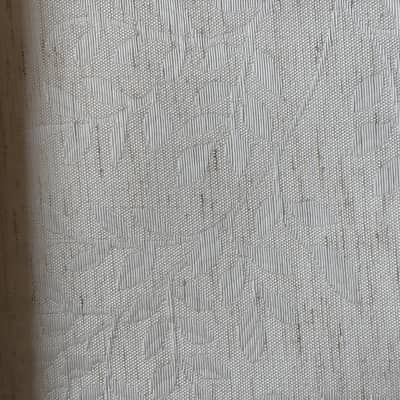
55 Large Floral Jacquard Fabric
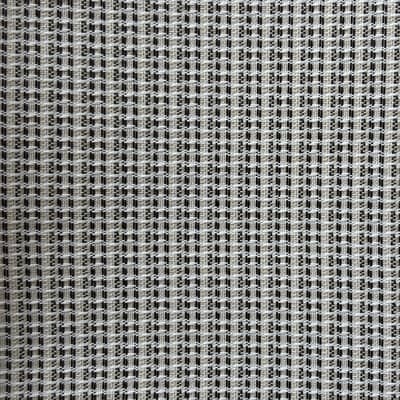
Contrast Grid Linen-Look Fabric
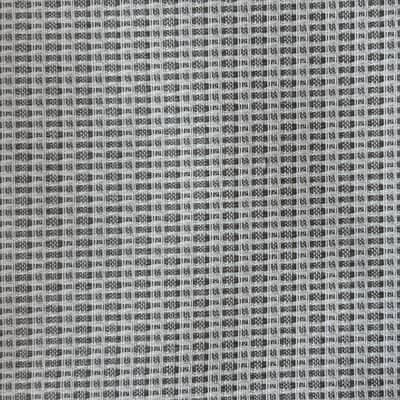
Vertical-Stripe Polyester-Cotton Linen-Look Fabric
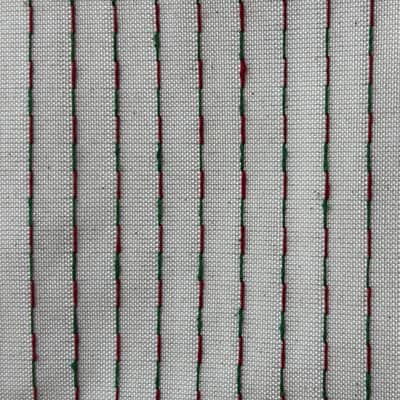
Colour-Yarn Stripe Fabric
The Cloth You See Flat Is Not the Cloth You Buy
Lay a tablecloth flat and it presents one way. Fold it in quarters, stack it under three others, and pull it out two days later, and the same cloth presents another. The crease line across the middle holds a shadow. The slub that read as a soft irregularity on the table now reads as a ridge. A raised motif that looked deliberate at arm's length looks flattened where the fold crossed it.
That change is the first thing a table linen buyer should look at, because most table linen is stored folded and judged in service after it has been unfolded. The surface a supplier photographs is the flat state. The surface a hotel or restaurant guest meets is the recovered state, and the two are not the same specification.
So the buyer's opening question is not which cloth looks best. It is which cloth still reads correctly after the fold, the stack and the re-lay. That question sits underneath every other decision in table linen fabric sampling and specification, and it is usually the one that gets deferred until a sample arrives and someone finally folds it.
Why Table Linen Diverges From Curtain and Shower Textiles
The same mill can weave a curtain base, a shower curtain base and a table linen base from comparable yarns, and the three will not be judged on the same evidence. A curtain is read vertically, in drape, from a distance, usually under directional light. A shower curtain is read as a hanging panel with opacity and a print or texture that has to hold at close range. A tablecloth is read horizontally, at close range, under overhead light, and it is handled constantly.
That difference changes what the surface has to do. On a curtain, a slub or a jacquard motif can carry the whole visual argument. On a table, the same surface competes with plates, glassware and a table setting, and it is seen from above rather than from across a room. A texture that reads as refined on a drape can read as busy under a table setting.
It also changes what has to be measured. Drape is a vertical property. Fold recovery, surface flatness after pressing, and how a motif behaves across a crease are horizontal properties, and they belong to the table linen brief rather than to the curtain brief. Buyers who carry a curtain specification straight across to a table programme tend to discover this at the first banquet, not at the sample stage.
Surface, Weight and the Fold Line
Weight is the number buyers reach for first, and it is useful, but it is not the number that predicts fold behaviour. Two cloths in the same weight band can recover differently depending on yarn structure, weave density and how the surface was built. A plain, tightly woven base tends to fold cleanly and re-lay flat. A base with a raised jacquard motif or a heavy slub can hold a crease along the motif line, because the raised areas compress differently from the ground.
This is where a verified example helps. 55 Large Floral Jacquard Fabric, SKU 55#, is a 165 GSM base at 95% polyester and 5% linen with a large floral jacquard motif and a natural ivory tone. The motif is the point of the cloth, and it is also the variable a table programme has to test: whether the raised floral structure still reads after the cloth has been folded across it and re-laid. The same 165 GSM figure on a flat plain weave would tell the buyer almost nothing about that.
A second example shows the opposite trade-off. 27-001-C-1 Contrast Grid Linen-Look Fabric is a 100% polyester base at 155 GSM with a contrast grid and a black accent, and it is not printable. The grid is a graphic structure rather than a raised motif, so the fold question shifts from motif compression to whether the grid lines stay visually straight when the cloth is re-laid slightly off-square. Neither cloth is better. They fail differently, and the sample has to be designed to expose which failure matters to your setting.
Print Status Changes the Sampling Plan
Print status is the decision that most often reshapes a table linen sampling plan, because it determines whether the buyer is sampling a finished surface or a base that will be printed later. A printable base can be sampled now and printed in a later development round, which means the surface may change. A non-printable base is sampled as the final surface, which means the sample is closer to what will ship but the design range is fixed.
Both routes carry a hidden cost. With a printable base, the buyer approves a surface that is not yet the delivered surface, so the print development round becomes a second approval gate. With a non-printable base, the buyer approves the delivered surface but accepts that any future colourway or pattern change means a different cloth rather than a different print file. In a table programme that runs seasonal colourways, that second route can quietly close a door the buyer assumed was open.
The verified range shows both sides. 27-001-B Vertical-Stripe Polyester-Cotton Linen-Look Fabric is a 160 GSM base at 94% polyester and 6% cotton, printable, with a vertical stripe. 27-09-09 Colour-Yarn Stripe Fabric is a 155 GSM base at 92% polyester and 8% cotton with a woven colour-yarn stripe, and it is not printable. The two sit close in weight and composition, and they diverge on exactly this point: one can carry a later print development, the other carries its stripe in the yarn and cannot be printed over. A buyer comparing them on weight alone would miss the decision that actually separates them.
What the Sample Has to Prove, and What It Cannot
A table linen sample has to prove three things that a flat swatch cannot: how the surface recovers after folding, how it reads under the lighting the table will actually use, and whether the base can carry the colourway or print the programme needs. A flat swatch proves none of these, which is why a table linen sampling round that ends with a flat swatch has not really ended.
It also cannot prove the two things buyers most want proved. It cannot prove that the next roll will match, because a sample is cut from one roll and a reorder is cut from another. And it cannot prove service life, because a sample has not been through the handling a tablecloth receives. Those two questions belong to the specification and the reorder terms, not to the sample itself.
This is where the specification document has to carry more than the sample can. It should name the SKU, the GSM, the composition, the print status and the surface structure, and it should state whether the surface is directional. A directional surface, or a motif that has a clear top and bottom, will behave differently when a cloth is cut and laid, and that belongs in writing rather than in a sample-room conversation.
Where the Specification Meets the Order
Once the surface questions are settled, the commercial terms become straightforward rather than negotiable. The usual reference MOQ is 2,000 m per SKU, and orders below that are accepted with a slightly higher unit price, which lets a single venue or a pilot table programme be tested against the real cloth before a group-wide commitment. That is a useful structure for table linen specifically, because a table programme is often rolled out property by property rather than all at once. The usual reference MOQ is 2,000 m per SKU; orders below 2,000 m are also accepted, with a slightly higher unit price.
Shaoxing Haowen Textile Clothing Co., Ltd. (the company behind the curtains.vip team) develops curtain, shower-curtain and table-linen fabrics, including custom print development and finished shower curtain OEM/ODM, so a table linen brief can be worked through against a range that also covers the other textiles in the same project. The relevant point for a table buyer is narrower: the print status, GSM and composition attached to each SKU are stated, which means the specification conversation can start from a fixed record rather than from a photograph.
What that does not do is decide the surface for you. A supplier can confirm what a roll is. It cannot confirm that a large floral jacquard belongs on your table under your lighting, or that a grid base will hold its geometry through your storage routine. Those remain buyer decisions, and they are made on the sample, not on the quotation.
Questions buyers ask
Should a table linen sample be judged flat or folded?
Both, but the folded state matters more for table linen. A flat swatch shows surface and colour. A folded and re-laid sample shows crease recovery, how a raised motif behaves across a fold line, and whether the cloth still reads correctly after storage. Ask for the sample to be folded and left before you judge it.
Does print status matter as much on table linen as on shower curtains?
It matters differently. On a printable table linen base, you are approving a surface that will still change during print development, so the sample is not the final cloth. On a non-printable base, the sample is closer to the delivered surface, but future colourway or pattern changes require a different cloth rather than a new print file.
What has to be written into a table linen specification?
At minimum the SKU, GSM, composition, print status and surface structure, plus whether the surface is directional. A directional surface or a motif with a clear top and bottom behaves differently when the cloth is cut and laid, and that belongs in the document rather than in a sample-room conversation.