
Private Label Textile Collection Planning: The Base-Cloth Handoff That Decides Whether a Season Repeats
A private label collection is usually planned as a colour story and a print file. The part that decides whether the second season ships on time is the base-cloth handoff between design, print and the mill. This field note follows that handoff from the surface you can see to the specification you have to freeze.

PRODUCTS
Products in this report
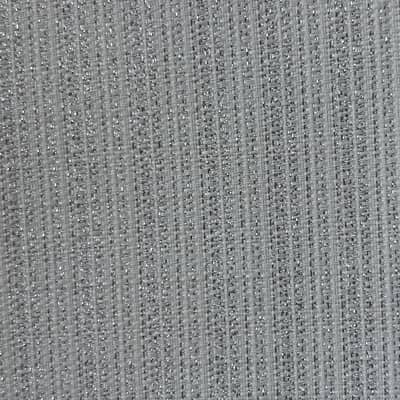
Metallic-Yarn Linen-Look Fabric
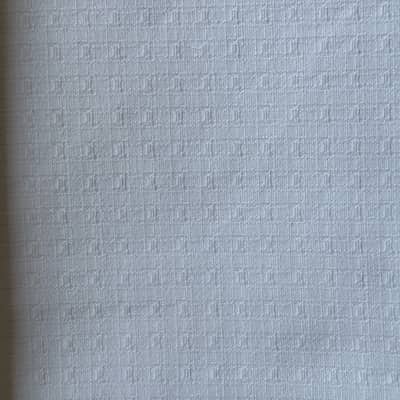
Polyester-Cotton Fine Grid Fabric
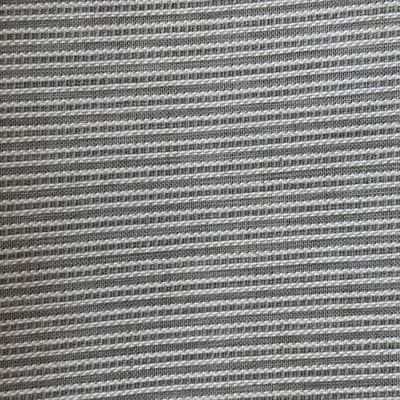
Vertical-Channel Polyester-Linen Fabric
The Surface You Approve Is Not the Surface You Will Reorder
Unroll a metre of a linen-look base on a cutting table and run a palm across it. The slub breaks the light into small uneven patches, and under a warm lamp it reads soft and slightly irregular. Fold the same metre in half and the ridge along the crease is now the first thing you see. That shift, from flat to folded, is where most private label textile collection planning quietly goes wrong.
The buyer approves the flat version. The retail floor, the hotel room and the second production run all present the folded or hanging version. If the collection plan does not name which presentation the base was approved in, the reorder is judged against memory rather than against evidence.
What the Collection Plan Has to Freeze Before Artwork Is Released
A private label collection is normally planned as three layers: a colour story, a print or texture direction, and a base-cloth platform. The first two are visible and easy to discuss in a design review. The third is the one that carries the commercial risk, because it is the layer that has to repeat.
Freezing the base means writing down four things that a mill can actually commit to: the exact SKU, the weight in GSM, the composition percentages, and whether that base is printable. Everything else in the collection plan, from the number of colourways to the packaging, sits on top of those four numbers. If any of them is left as a range rather than a value, the second season starts with a negotiation instead of a purchase order.
This is also where private label differs from a one-off retail buy. A single order can tolerate a base that is close enough. A collection that intends to run for several seasons cannot, because every future colourway and print file will be developed against the base that was frozen, not against the base that was sampled.
Where the Handoff Between Design and the Mill Actually Breaks
The handoff usually breaks in one of three places, and none of them is a printing problem.
The first is print status. A design team selects a surface for its texture, then a print file is developed for it later. If the base is not printable, the collection has to be re-planned around a different cloth, and the texture direction changes with it. A non-printable base is a legitimate choice for a texture-led collection, but it has to be declared at the point the base is chosen, not after the artwork is signed off.
The second is weight drift inside the collection. A range that mixes a 120 GSM base with a 190 GSM base will read as two different collections on the shelf unless the plan explains why. Weight is not a quality ladder; it is a presentation decision. A lighter base hangs and folds differently from a heavier one, and the difference shows up most clearly in the folded moment a customer actually handles.
The third is the assumption that one base can carry the whole collection. It can, and that is often the most efficient plan, but only if the base was selected for the widest job in the range rather than the narrowest.
Two Verified Bases That Make the Trade-Off Concrete
Consider two supplied bases that sit close together on weight and pull apart on everything else. The 27-1759-B Metallic-Yarn Linen-Look Fabric is 88% polyester with 12% metallic yarn at 125 GSM, and it is not printable. The 27-DS001-C Polyester-Cotton Fine Grid Fabric is 88% polyester with 12% cotton at 190 GSM, and it is printable.
Metallic-Yarn Linen-Look Fabric
Polyester-Cotton Fine Grid Fabric
For a collection plan, the difference is not which one is better. It is which one can carry the season's intent. A metallic linen-look base gives the collection a surface that catches light and reads as a deliberate accent, and it commits the programme to texture rather than print. A printable fine-grid base gives the collection a platform that can absorb a new print or colourway each season without a respecification, at the cost of a heavier, flatter hand.
A third supplied base shows the middle path. The 27-001-1-A Vertical-Channel Polyester-Linen Fabric is 93% polyester with 7% linen at 165 GSM and is printable, which makes it a candidate for a collection that wants a linen direction and still needs to run print. The point of naming these three is not to recommend one. It is to show that the base decision is a collection-architecture decision, and it should be made before the colour story is finalised.
What Has to Be Measured, Tested and Priced Before the Season Ships
Once the base is frozen, the plan moves from what can be observed to what has to be proven. Three checks belong in the collection file.
Measure the base in the presentation it will be sold in. If the collection hangs, view a vertical panel under the lighting the product will meet. If it is folded, fold it and look at the crease. A swatch viewed flat answers a question the customer never asks.
Test the print file on the exact base, not on a similar one. Print compatibility is product-specific, and a base that is marked printable is printable as that SKU, not as a category. The sample should carry the intended motif on the shortlisted base and retain a reference panel from the same roll.
Price the base as a platform, not as a line item. A collection that runs one printable base across several colourways carries one reorder risk. A collection that runs two or three bases carries two or three, and that should be visible in the collection plan rather than discovered at the second season. Where order volume is still being tested, the usual reference MOQ is 2,000 m per SKU, and orders below that are accepted with a slightly higher unit price, which allows a pilot season to be run before a full commitment. The usual reference MOQ is 2,000 m per SKU; orders below 2,000 m are also accepted, with a slightly higher unit price.
What Our Own Search Signals Show, and What They Cannot
Searches for private label textile collection planning have reached curtains.vip, but the volumes involved are small and the rows describe our own site, not the wider market. They tell us which questions buyers bring to our catalogue. They do not establish market size, market share, growth or direction, and we do not treat them as evidence of a trend.
The useful signal is narrower and more practical: buyers arrive with a collection idea and a base question attached to it. That is the question the plan has to answer, and it is answered with a specification rather than a forecast.
The One Specification Question That Decides the Season
Before a private label collection is signed off, one question does most of the work: can the supplier show the intended print or texture on the exact base you are freezing, in the presentation the customer will actually handle, and retain a reference panel from that same roll?
If the answer is yes, the base is testable and the next season can be judged against evidence. If the answer is no, the collection is being planned against a swatch, and the second order will be the one that reveals it. Shaoxing Haowen Textile Clothing Co., Ltd. (the company behind the curtains.vip team) develops curtain, shower-curtain and table-linen fabrics, including custom print development and finished shower curtain OEM/ODM, so a collection brief can be worked through against a range that covers more than one textile category. The next step is to shortlist the bases that can carry the season at /products, or send the base question to /contact and ask for the sample on the exact SKU.
Questions buyers ask
Should a private label textile collection run on one base or several?
One base is simpler to reorder and carries a single reorder risk, but it only works if that base can carry the widest job in the range. Several bases widen the texture and print options and multiply the specification risk, so the count should be a deliberate part of the collection plan rather than an accident of sampling.
When should print status be confirmed in the planning process?
At the point the base is selected, not after the artwork is signed off. Print compatibility is product-specific, so a base that is not printable commits the collection to a texture-led direction, and that decision changes the colour story, the sampling plan and the season calendar.