
Retail Shower Curtain Material Mix: Two 155 GSM Rolls and the Question That Separates Them
Two linen-look rolls can share a weight, a tone and a price band, yet only one belongs in a printed retail programme. This specification-lab comparison works through observation, comparison, sample test and acceptance decision for a retail shower curtain material mix.

PRODUCTS
Products in this report
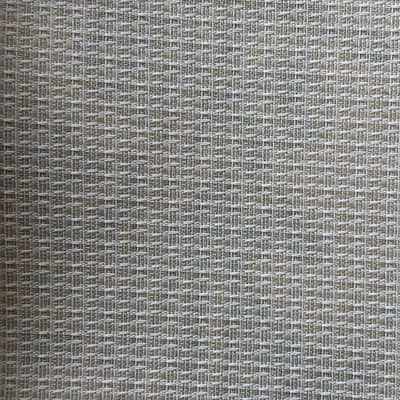
Crosshatch Linen-Look Fabric
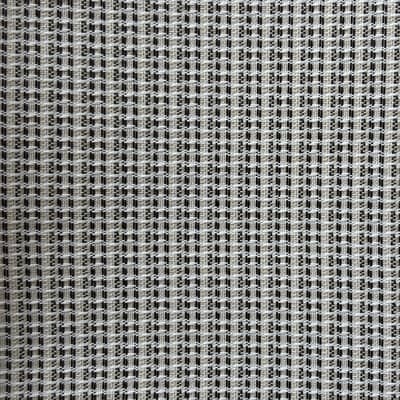
Contrast Grid Linen-Look Fabric
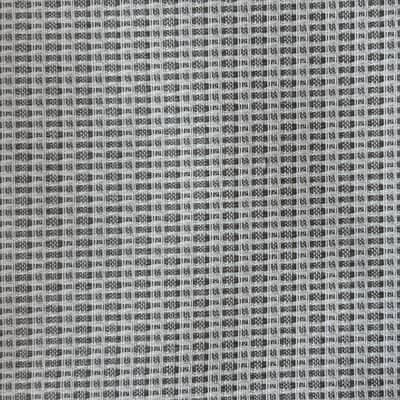
Vertical-Stripe Polyester-Cotton Linen-Look Fabric
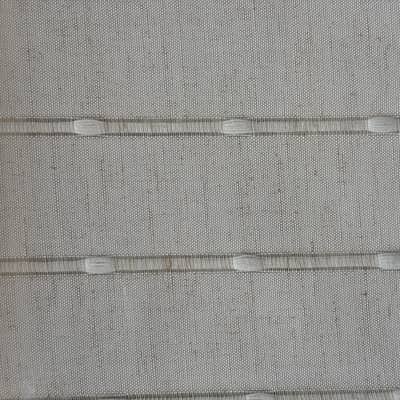
Horizontal-Slub Polyester-Linen Fabric
Two Linen-Look Rolls, One Print Decision
27-001-E and 27-001-C-1 sit at the same point on a specification sheet. Both are 100% polyester, both are 155 GSM, and both carry a linen-look surface in a natural register. On a screen they are near-interchangeable. In a retail shower curtain programme they are not, because one is printable and the other is not, and that single difference decides which roll can carry a seasonal print and which has to earn its place on surface alone.
Crosshatch Linen-Look Fabric
Contrast Grid Linen-Look Fabric
The practical question that separates them is not weight or composition. It is whether the roll has to accept ink at some point in its commercial life. A retail range that plans a printed story, a colourway refresh, or a private-label overlay needs a printable base. A range that sells on texture and tone can use either. That question belongs to the buyer, and it should be answered before the sample request goes out.
Where the Two Rolls Actually Diverge
27-001-E is a crosshatch linen-look polyester at 155 GSM, printable, with a natural texture. 27-001-C-1 is a contrast grid linen-look polyester at the same 155 GSM, with a black accent, and it is not printable. The weight parity is the trap: a buyer comparing GSM alone would see no reason to prefer one. The divergence sits in the surface construction and the print status.
The crosshatch reads as an even, low-contrast texture. The contrast grid reads as a graphic surface with a visible black line. In a retail hanging position, the grid makes a stronger first impression at distance and the crosshatch makes a quieter one. That is a merchandising difference, not a quality difference. The buyer has to decide which job the roll is being hired for before either surface can be judged.
The Print Status Question, and What It Costs the Range
A non-printable roll is not a lesser roll. It is a roll with a narrower commercial path. If the retail programme intends to run a printed design on the same base in a later season, 27-001-C-1 cannot serve that brief, and the range will need a second printable base alongside it. That is a duplication cost, and it should be recognised at shortlist stage rather than at the second season.
The reverse also holds. If the programme sells on surface and tone, a printable base can be specified without ever using the print capability, and the buyer has paid for an option that may not be exercised. Neither choice is wrong. The error is to treat print status as a default rather than a decision that follows from the range plan.
Two More Rolls That Widen the Mix
A retail shower curtain material mix rarely rests on two SKUs. 27-001-B is a vertical-stripe polyester-cotton linen-look fabric at 160 GSM, printable, with a 94% polyester and 6% cotton composition. It sits 5 GSM above the two linen-look rolls and introduces a cotton content plus a directional stripe. The stripe is a merchandising asset and a cutting consideration at the same time, because a directional surface has to be handled consistently across panels.
27-008-8-A is a horizontal-slub polyester-linen fabric at 140 GSM, printable, with 96% polyester and 4% linen. It is the lightest of the four and the only one with a horizontal slub direction. Used together, these four rolls give a retail range a quiet crosshatch, a graphic grid, a vertical stripe and a horizontal slub, with print capability on three of the four. The mix is defined by those differences, not by the shared linen-look language.
What the Sample Has to Prove Before Approval
A sample table settles more than a spec sheet can. For the printable rolls, the test is whether the intended motif reads cleanly on the actual base, and whether the surface still reads from the distance a retail customer actually stands at. For 27-001-C-1, the test is different: whether the black grid accent holds its graphic character when the curtain is gathered on a rod, because a contrast line that reads sharply flat can soften once the fabric is folded into a hanging position.
The sample should also be viewed as the finished product will be used, not flat on a table. A shower curtain hangs, gathers and is seen at an angle. Directional surfaces such as the vertical stripe on 27-001-B and the horizontal slub on 27-008-8-A need to be checked in that hanging position, because the direction that reads well flat may read differently once the panel is drawn.
What Our Own Search Signals Show, and What They Cannot
Searches for retail shower curtain material mix and adjacent terms have reached curtains.vip, but the volumes are small and the rows describe our own site only. They tell us which questions buyers bring to our catalogue. They do not establish market size, market share, growth or direction, and we do not present them as evidence of a wider trend.
The useful signal is narrower and more practical: buyers arrive with a material decision already half-formed and a print intention that is sometimes unstated. That is why the print status question is worth asking early. It is a buyer-side question, not a market claim, and it changes which rolls belong on the shortlist.
The Acceptance Decision and the RFQ Note
Approval should name the SKU, the GSM, the composition and the print status, and it should retain a reference panel from the approved roll. That panel is the only reliable comparison for the next delivery, particularly where a surface is directional or carries a contrast accent. Without it, the second order is judged against memory rather than against evidence.
When the sample is approved, the RFQ should state the SKU, the target quantity, the print intention and whether the base has to remain printable for a future colourway. The usual reference MOQ is 2,000 m per SKU, and orders below that are accepted with a slightly higher unit price, which allows a pilot run on a single retail door or a single print story before a wider commitment. Shaoxing Haowen Textile Clothing Co., Ltd. (the company behind the curtains.vip team) develops curtain, shower-curtain and table-linen fabrics, including custom print development and finished shower curtain OEM/ODM, so the print intention can be worked through against the same base that will carry it. Review the verified rolls at /products or send the specification through /contact. The usual reference MOQ is 2,000 m per SKU; orders below 2,000 m are also accepted, with a slightly higher unit price.
Questions buyers ask
Can a non-printable linen-look roll still work in a retail shower curtain range?
Yes, if the range sells on surface and tone rather than on print. 27-001-C-1 is a 155 GSM contrast grid linen-look polyester that is not printable, so it suits a graphic, texture-led position. It cannot carry a future printed design, and that limitation should be recognised at shortlist stage rather than at the second season.
Why do two 155 GSM rolls behave differently in a retail programme?
Weight parity does not mean commercial parity. 27-001-E and 27-001-C-1 share a 155 GSM figure and a 100% polyester composition, but 27-001-E is printable and 27-001-C-1 is not. The print status, not the GSM, decides which roll can serve a printed story and which has to earn its place on surface alone.
What should a sample approval record for a retail shower curtain base?
Record the SKU, the GSM, the composition and the print status, and retain a reference panel from the approved roll. View the sample in a hanging, gathered position rather than flat, because directional surfaces such as a vertical stripe or a horizontal slub can read differently once the panel is drawn.