
Shower Curtain Fabric Assortment Strategy: The Print-Status Gap That Splits a Range in Two
Most shower curtain ranges are built on surface and weight, then audited on price. The variable that actually splits an assortment is print status, because a non-printable roll cannot absorb a future colourway. This field note works from what a buyer can see on a roll to what has to be tested, priced and written into the brief.

PRODUCTS
Products in this report
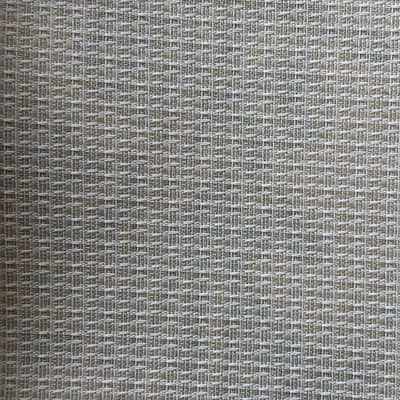
Crosshatch Linen-Look Fabric
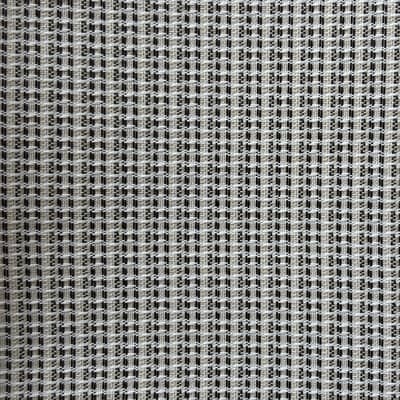
Contrast Grid Linen-Look Fabric

Fine Grid Jacquard Fabric
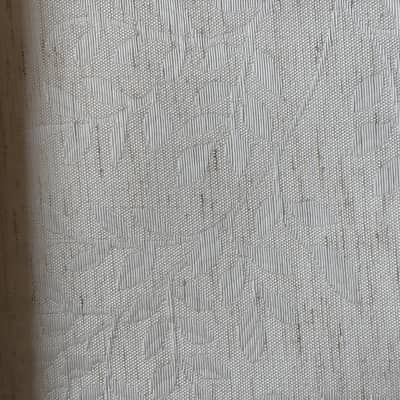
55 Large Floral Jacquard Fabric
The Roll That Looks Like the Rest of the Range
A crosshatch linen-look roll in a natural register reads almost the same as a plain slub beside it. Both are 155 to 165 GSM, both are polyester-dominant, both carry a surface that catches light in small uneven patches. Laid flat under a sample-room lamp, a buyer could reasonably file them under the same heading.
Then the range gets sorted by what each roll can actually do. One of those surfaces accepts ink; the other does not. That single difference decides whether the roll can carry a seasonal print, a private-label colourway or a hotel logo programme, or whether it has to earn its place on surface alone for the whole life of the assortment. Print status is rarely the first column on an assortment sheet. It is usually the column that explains why the range looks wider than it is.
Why Print Status, Not Weight, Is the Real Range Variable
Weight is visible and easy to compare, so it tends to dominate assortment conversations. But weight is a continuous variable: a 155 GSM and a 165 GSM roll sit close enough that most finished curtains will not expose the difference to a guest or a shopper. Print status is binary. A roll either accepts a print programme or it does not, and no amount of sampling, finishing or negotiation changes that.
This is why a range can hold eight or ten surfaces and still have only two or three rolls that can absorb the next design story. The rest are locked into the colour and surface they were woven with. When a retail buyer plans a seasonal print drop, or a hotel group wants a property-specific colourway, the assortment is effectively reduced to the printable subset. Everything else is width without optionality.
The practical implication is not that non-printable rolls are weaker. A contrast grid or a metallic accent can carry a room in ways a printable base cannot, and those rolls often justify their place on surface alone. The implication is that assortment strategy should count printable bases separately from total SKUs, because the two numbers answer different questions.
What the Catalogue Shows When You Sort It This Way
Sorting a working range by print status produces an uneven picture. The 27-001-E Crosshatch Linen-Look Fabric, a 100% polyester base at 155 GSM, is printable, so it can serve as a print carrier as well as a plain surface. The 27-001-C-1 Contrast Grid Linen-Look Fabric sits at the same 155 GSM and the same 100% polyester composition, carries a black accent in the grid, and is not printable. Two rolls, one weight band, one composition, opposite roles in the range.
Crosshatch Linen-Look Fabric
Contrast Grid Linen-Look Fabric
Further up the weight scale, the 27-DS001-H Fine Grid Jacquard Fabric is a 190 GSM 100% polyester jacquard that is printable, which makes it a candidate for programmes that want structure and a future print option in the same roll. The 55 Large Floral Jacquard Fabric, a 165 GSM 95% polyester and 5% linen blend with a large floral motif, is also printable, but its motif already occupies the design space a print would use. Printability there is a capability, not necessarily a plan.
Fine Grid Jacquard Fabric
55 Large Floral Jacquard Fabric
Read together, these four rolls describe a common assortment shape: a printable plain or near-plain base, a printable structured base, a non-printable accent, and a patterned roll where the pattern is the product. The gap appears when a range holds several non-printable accents and only one printable base. At that point every future colourway, logo programme or seasonal story runs through a single SKU.
The Sampling Question That Separates Capability From Result
A printable designation answers whether a base can accept ink. It does not answer how a specific motif will land on that base. A crosshatch surface and a fine grid jacquard will hold the same artwork differently, because the raised structure interrupts the print at a different scale. That difference is visible in a printed sample and invisible in a specification sheet.
So the sample request for an assortment decision is not a swatch of each roll. It is the intended motif, or a representative motif, printed on each printable base in the shortlist, then viewed at the distance the finished curtain will actually be seen: hanging in a bathroom, folded in retail packaging, or flat against a guestroom window. Two printable bases can both pass that test and still produce different commercial outcomes, because one may need a heavier ink laydown or a slower line speed to reach the same result.
That is where print status stops being a yes-or-no field and starts being a cost variable. The buyer who tests only the swatch discovers the difference at the first production run.
What Our Own Search Rows Do and Do Not Show
Searches for shower curtain assortment and specification terms have reached curtains.vip, but the volumes behind them are small and the rows describe our own site only. They tell us which questions buyers bring to our catalogue, not how large the category is, how it is growing, or what the wider market is doing. We do not treat them as market evidence.
What they are useful for is narrower: they confirm that assortment questions arrive attached to specification questions, not to price questions. Buyers who reach us with a range problem usually arrive with a print plan, a property count or a colourway calendar already in mind. That is a practical observation about our own traffic, and it is the reason this note treats print status as an assortment variable rather than a finishing detail.
Where the Assortment Decision Actually Lands
The decision is not how many rolls the range should hold. It is how many of those rolls can absorb change. A range with one printable base has a single point of failure for every future print, colourway or private-label story, and that risk is invisible in a catalogue that lists surfaces side by side.
The second question is whether the printable bases in the range are genuinely interchangeable or only nominally so. Two printable rolls at similar weights may behave very differently under the same motif, and the only way to know is to print the intended design on both. Shaoxing Haowen Textile Clothing Co., Ltd. (the company behind the curtains.vip team) develops curtain, shower-curtain and table-linen fabrics, including custom print development and finished shower curtain OEM/ODM, so a range review can be worked through against printable and non-printable bases in the same catalogue rather than across two suppliers.
Where a pilot is needed before a full range commitment, the usual reference MOQ is 2,000 m per SKU, and orders below that are accepted with a slightly higher unit price. That matters here because the cheapest way to test a print-status assumption is a small printed run on the exact base, not a broader order that locks in the wrong carrier. The usual reference MOQ is 2,000 m per SKU; orders below 2,000 m are also accepted, with a slightly higher unit price.
The One Specification Question to Settle First
Before the next range review, ask which roll in the assortment is expected to carry the next print, colourway or logo programme, and whether that roll has been tested with the actual motif rather than a generic swatch. If the answer names a single SKU, the range has a concentration risk worth pricing. If it names two or three printable bases that have each been printed and viewed in position, the assortment can absorb change without a respecification. That is the question that decides whether width in a shower curtain fabric assortment strategy is real optionality or just more surface.