
Superior Linen: Three Buyers, Three Different Rolls Behind the Same Word
The word superior does different work in a hotel replacement cycle, a retail facing and a private-label season. This note maps superior linen to three buyer scenarios, places verified linen-look and jacquard bases inside each, and closes with a shortlist framework rather than a recommendation.

PRODUCTS
Products in this report
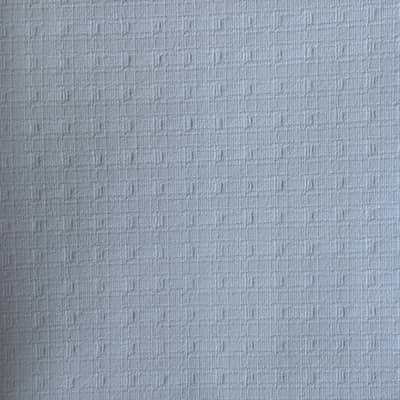
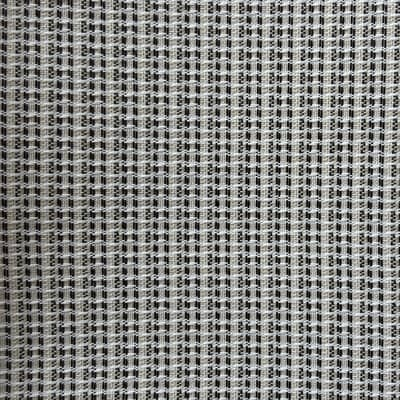
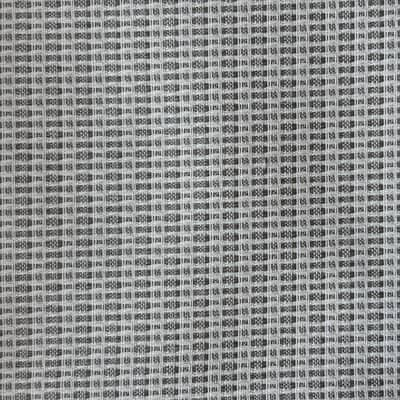
A Hotel, a Retail Shelf and a Private-Label Season Walk Into the Same Word
A property manager replacing guestroom shower curtains on a rolling cycle wants the new panel to look like the one it replaces, because a guest who notices the difference notices it as a mistake. A retail category buyer wants the facing to read as a considered natural cloth from three metres under store lighting, and to keep reading that way after the customer has handled it. A private-label manager wants a base that can take a new colourway next season without a full re-specification.
All three will describe what they want as superior linen. None of them means the same roll. The market consequence arrives before any textile term does: a supplier who answers the phrase with one fabric is answering three briefs with one object, and at least two of the three buyers will discover the gap at sampling or, worse, at the second order.
What the Word Is Doing in Each Brief
In the hotel brief, superior is a consistency claim. The cloth has to present the same way across a replacement cycle, in a bathroom with one hard light source and a guest standing close enough to see the weave. In the retail brief, superior is a distance claim: the surface has to earn its facing from where the shopper actually stands, then survive being folded and unfolded. In the private-label brief, superior is a flexibility claim, because the base is being bought partly for a colourway it has not met yet.
That is why the phrase is useful as a brief and dangerous as a specification. It names a standard without naming which property carries it. The buyer's first job is not to choose a linen-look surface. It is to decide which of those three claims the range is actually making.
The Hotel Roll: Consistency Before Surface
For a replacement programme, the linen-look surface is a means rather than the argument. What the property is buying is a panel that reads the same in room 214 as in room 308, and again in two years when the first rooms come due. A fine grid jacquard such as 27-DS001-H, a 190 GSM 100% polyester base listed as printable, suits that role because the structure is regular and legible at close range without being a feature. Its limitation is the same as its strength: a fine grid is a quiet surface, and a property that wants the bathroom to read as a design statement will find it understated.
Where the hotel brief also expects a future logo or colourway, print status belongs in the same decision. A base that presents correctly and cannot carry the next chapter forces a re-specification at the worst point in the opening or replacement calendar.
The Retail Roll: The Facing Is Judged From Three Metres
Retail pulls the decision the other way. The shopper meets the product hanging and folded, at a distance, under lighting the buyer did not choose. A contrast grid linen-look such as 27-001-C-1, a 155 GSM 100% polyester base with a black accent and a non-printable status, can carry a facing on surface alone because the accent gives the eye something to land on. The limitation is commercial rather than visual: a non-printable roll cannot absorb a seasonal print, so it has to keep earning its slot on the same surface season after season.
That trade is defensible in a range that already has a printable base for the print story. It is a concentration risk in a range where the accent roll is the only linen-look option and the next season arrives with a motif.
The Private-Label Roll: Bought for a Colourway It Has Not Met
Private label inverts the priority again. The base is chosen for what it will accept later, so print status moves ahead of surface character. A vertical-stripe polyester-cotton linen-look such as 27-001-B, a 160 GSM 94% polyester / 6% cotton base listed as printable, fits a programme that wants a directional linen read and expects to refresh the colourway. The limitation is that a stripe commits the range to a direction; it is not the neutral ground a buyer reaches for when the print file is still open.
This is where the phrase superior linen earns its keep or loses it. A private-label manager who buys a non-printable surface because it looked the most natural on the table has bought a one-season roll, whatever its hand-feel suggested.
Where the Three Briefs Refuse to Share a Roll
The scenarios overlap on tone and weight band and split on two facts: whether the surface has to repeat quietly, and whether it has to accept ink later. A range built on one roll will satisfy one brief and quietly under-serve the other two, usually without anyone writing down which one was sacrificed.
Our own Search Console rows are a thin signal here. The phrase superior linen reached curtains.vip once in the last 28 days, with no click and a position around 41. That is a first-party observation about our own site only; it says nothing about global or regional demand, market size or direction, and we do not present it as such. What it does suggest is that buyers are more likely to arrive through related linen-look and shower-curtain phrases than through this one, which is a reason to write the brief in scenario language rather than in one adjective.
A Shortlist Framework for Your Own Range
Sort the range by scenario before sorting it by surface. Name the roll that has to repeat quietly across a replacement cycle, the roll that has to earn a facing from three metres, and the roll that has to accept the next colourway. Then test for overlap: if two rolls answer the same scenario, one is diluting volume without widening the offer, and if a scenario has no roll, the range will acquire one informally at the next sample request.
The remaining question is the one worth carrying into the next range review: which roll in this assortment is expected to carry the next print, colourway or logo, and has it been tested with the actual motif rather than a generic swatch? Shaoxing Haowen Textile Clothing Co., Ltd. (the company behind the curtains.vip team) develops curtain, shower-curtain and table-linen fabrics, including custom print development, so that question can be worked against real bases rather than a catalogue page. The fabric range at /products lists the verified SKUs with composition, weight and print status for comparison.