
Woven Texture Direction for Home Textiles: Reading the Grain Before the Spec Sheet
Woven texture direction is decided by the loom, not the swatch card. This field note reads vertical channels, horizontal slubs and grid jacquards against the way each cloth is actually hung, folded and cut, and ends on the one sample question that decides approval.

PRODUCTS
Products in this report
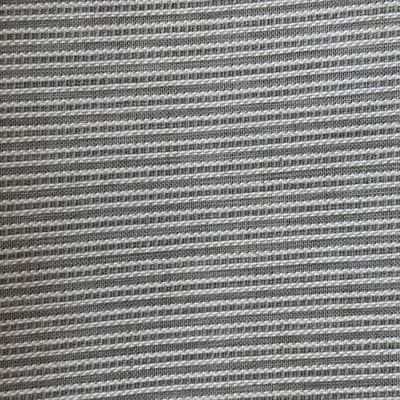
Vertical-Channel Polyester-Linen Fabric
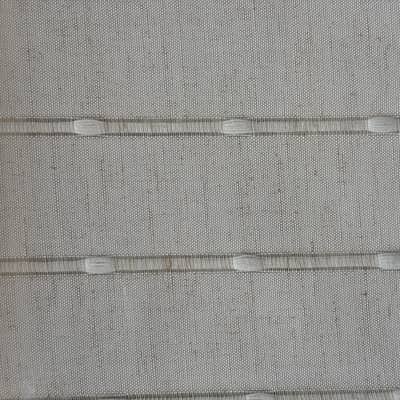
Horizontal-Slub Polyester-Linen Fabric
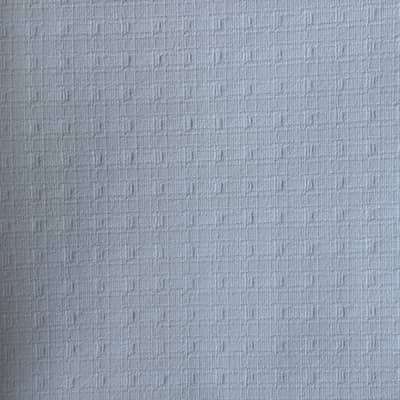
Fine Grid Jacquard Fabric
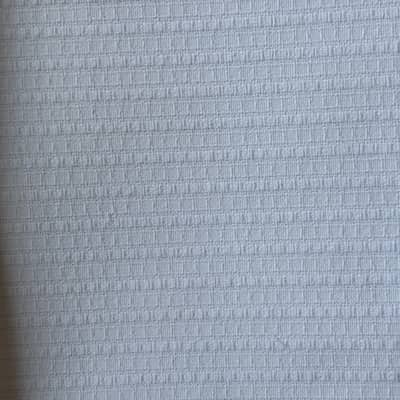
Fine Textured Jacquard Fabric
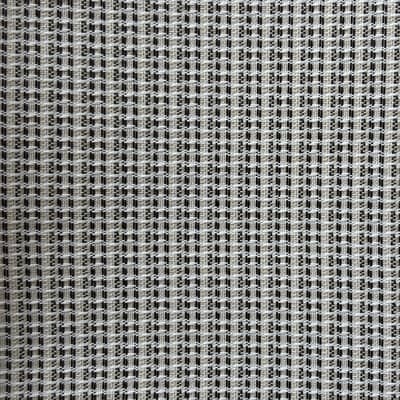
Contrast Grid Linen-Look Fabric
The Grain You Feel Before You See the Colour
Run a thumb across a vertical-channel cloth and the surface answers back in ridges that run one way. Turn the same roll ninety degrees and the ridges become rungs. Nothing about the yarn has changed, the composition is identical, the weight is identical, yet the cloth now reads as a different fabric. That is the whole of woven texture direction for home textiles in one gesture: the structure has an axis, and the axis is decided at the loom, not at the swatch card.
Buyers usually meet this problem late. A range is shortlisted on tone and weight, a sample is approved flat on a table under warm light, and the direction question surfaces only when the first panels are cut and hung beside each other. By then the roll is committed. The useful move is to read direction early, while the choice is still open, because direction changes how a cloth behaves in a drape, in a folded stack and in a cut plan.
Three Structures, Three Different Behaviours
Most woven texture in this category falls into three families, and each one carries its axis differently. Vertical structures run their interest up and down the cloth. Horizontal structures run it across. Grid structures do both at once, which is why they are the most forgiving on a flat surface and the most demanding on a cut plan.
The 27-001-1-A Vertical-Channel Polyester-Linen Fabric is a clean example of the first family. At 165 GSM and 93% polyester with 7% linen, it is printable, and its channels are built to fall with the drop. On a full-height curtain the channels reinforce the vertical line the eye already expects, so the cloth looks deliberate even when the folds are shallow.
The second family runs the other way. The 27-008-8-A Horizontal-Slub Polyester-Linen Fabric sits at 140 GSM with 96% polyester and 4% linen, and its slub crosses the cloth rather than climbing it. Hung as a drape, a horizontal slub can read as a series of faint bands stacked down the panel; laid as a tablecloth, the same bands run across the width and can fight a centred motif. The structure is not better or worse. It is simply pointed at a different job.
Where Direction Stops Being an Aesthetic Question
Direction becomes commercial the moment the cloth is cut. A vertical structure on a narrow roll yields panels with a consistent grain and very little waste. The same structure on a wide table-linen cut can leave the grain running across the table rather than down it, which is a specification error rather than a design choice. Buyers who treat direction as a styling note tend to discover it as a cutting-room note.
Grid structures sit in the middle. The 27-DS001-H Fine Grid Jacquard Fabric is 100% polyester at 190 GSM and printable, and its fine grid gives the surface a quiet regularity that reads the same from most angles. That evenness is an advantage on a table and a mild disadvantage on a long drape, where a grid can flatten the vertical rhythm the eye is looking for. The 27-DS001-D Fine Textured Jacquard Fabric, 100% polyester at 180 GSM and also printable, is the softer version of the same idea: less defined grid, more surface, and therefore more tolerant of a heading that gathers rather than pleats.
The Direction That Cannot Be Printed Over
One roll in this group changes the conversation entirely. The 27-001-C-1 Contrast Grid Linen-Look Fabric is 100% polyester at 155 GSM, and it is not printable. Its contrast grid is a black accent built into the weave, which means the direction of that grid is fixed and cannot be softened, recoloured or covered by a print programme. A buyer who shortlists it for a private-label print story has chosen the wrong base, not the wrong colour.
That single fact reshapes the shortlist. If the programme needs a printed motif, the printable bases carry the direction question and the print question together, and both have to be tested on the same panel. If the programme is selling the surface itself, the non-printable contrast grid can be the stronger choice precisely because the structure is doing all the work. The trade-off is not quality. It is whether the direction is allowed to be the product.
Two Buyer Scenarios Where the Axis Decides
A hotel guestroom brief and a retail table-linen brief can shortlist the same three rolls and arrive at different answers. The hotel brief is buying a vertical read at a distance, under fixed lighting, across a replacement cycle. There, a vertical channel or a soft jacquard earns its place because the structure supports the drop and the panel still reads correctly when the room is viewed from the door. The 27-001-1-A and the 27-DS001-D both fit that logic, at different weights and different levels of surface.
The retail table brief is buying a folded moment. The cloth is stacked, shelved and judged after it has been unfolded, so a horizontal slub or a fine grid can present better than a vertical channel, which tends to show a ridge along the crease. The 27-008-8-A and the 27-DS001-H sit closer to that brief. Neither answer is universal, and that is the point: direction is a scenario decision before it is a specification line.
What Our Own Search Rows Can and Cannot Tell You
Searches for woven texture and texture-direction terms have reached curtains.vip, but the volumes behind them are small and the rows describe our own site only. They tell us which questions buyers bring to our catalogue. They do not establish market size, market share, growth or any wider industry trend, and we do not present them as such. The honest reading is narrow: buyers arrive with a surface in mind and a direction they have not yet named.
That is a useful signal for a supplier and a misleading one for a forecast. It supports keeping directional bases in the range and documenting their axis. It does not support a claim about where the market is going. Shaoxing Haowen Textile Clothing Co., Ltd. (the company behind the curtains.vip team) develops curtain, shower-curtain and table-linen fabrics, including custom print development and finished shower curtain OEM/ODM, so a directional brief can be worked through against a range that covers the other textiles in the same project rather than a single cloth in isolation.
The Sample Question That Settles the Axis
Before a directional base is approved, one question does most of the work: can the supplier show the intended cloth cut on both axes, hung or laid as the finished product will actually be used, under the project's own lighting, and retain a reference panel from that same roll? If the answer is yes, the direction is testable and the next order can be judged against evidence rather than memory. If the answer is no, the programme is being approved on a flat swatch, and the axis will be discovered at installation.
The usual reference MOQ is 2,000 m per SKU, and orders below that are accepted with a slightly higher unit price, which makes a two-panel directional test a practical first step before a range commitment. Review the verified fabrics at /products, or send the brief through /contact with the axis, the end use and the print status you need confirmed. The usual reference MOQ is 2,000 m per SKU; orders below 2,000 m are also accepted, with a slightly higher unit price.
Questions buyers ask
Is woven texture direction the same as fabric grain?
They overlap but they are not identical. Grain describes the warp and weft alignment of the cloth. Texture direction describes how a raised or recessed structure reads along that alignment. A cloth can have a clean grain and still show a strong directional surface, which is why two rolls of the same weight and composition can behave differently in a drape.
Can a printable base carry a print over a directional structure?
Printability is product-specific, not universal, so the answer depends on the exact SKU. Among the rolls discussed here, the 27-001-1-A, 27-008-8-A, 27-DS001-D and 27-DS001-H are listed as printable, while the 27-001-C-1 is not. Even on a printable base, the structure can interact with the motif, so the print should be tested on the exact cloth and on the axis it will be used.
Does a horizontal slub rule out a curtain programme?
No. A horizontal structure can work well on a gathered or short-drop panel where the bands read as a soft surface rather than a stacked line. It becomes a problem mainly on full-height pleated drapes and on table linen where a centred motif has to sit against the grain. The scenario, not the structure, decides.